 Usuba
Usuba
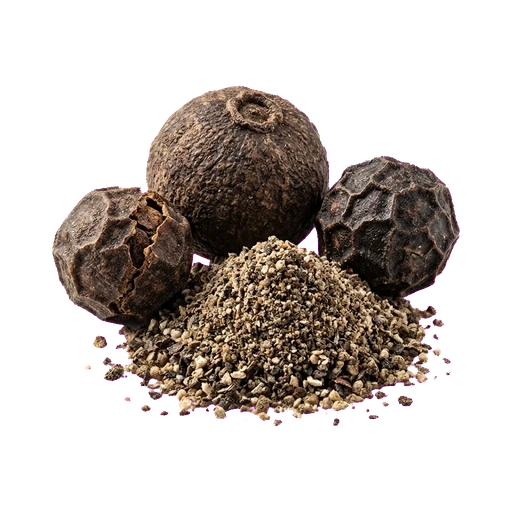
Ground black pepper
Ground black pepper is a spice with a sharp, slightly woody flavor and a characteristic pungent aftertaste, made from dried peppercorns. It is used in virtually all world cuisines as a universal seasoning for meat, fish, vegetables and soups, and is also included in spice blends for marinades and sauces. When selecting, pay attention to the freshness of ground pepper — it loses its aroma over time, so it is better to buy small portions and store in a tightly sealed container away from light and moisture.
Micronutrients
per 100 g
Minerals
About
Ground black pepper is the workhorse of any kitchen. It doesn't claim to be the star, but without it a dish often feels unfinished. Fine grinding releases the aroma faster than peppercorns, which is why ground pepper is more convenient to use in everyday cooking.
Aroma and Taste
Freshly ground pepper has a sharper and brighter aroma than pepper that has been sitting in a jar for a long time. When heated, its pungency becomes milder but more enveloping. You can taste woody notes and a slight sweetness in the flavor, which is often lost in old ground pepper. If the pepper smells musty or has no smell at all — it's time to replace it.
Where to use it
Ground pepper works everywhere: in soups, sauces, meat and fish dishes, vegetable side dishes. It is added at the end of cooking or directly into the plate to preserve its sharpness. On cold appetizers and salads, ground pepper looks neater than peppercorns and distributes more evenly.
Combinations with other spices
Black pepper gets along with everything. It enhances the warmth of ginger, highlights the sweetness of cinnamon, and balances the bitterness of turmeric. In classic blends — barbecue, Provençal herbs, Italian seasonings — it's always part of the mix, but never overpowers the other aromas.
How much to add
Start with a quarter teaspoon per serving and add to taste. Remember: ground pepper releases its heat quickly, so it's easier to overdo it than to underdo it. If you've added too much — butter, cream, or acid (lemon, vinegar) will help save the dish.
Selection and Storage
Choose pepper in a sealed package without lumps and mold odor. Store in a dark cabinet away from the stove and sunlight — heat and light destroy the aroma. Ground pepper loses freshness faster than peppercorns, so use it within a year. If possible — buy small portions more often than one large jar for several years.
Professional tip: if you cook often, try grinding peppercorns yourself. Whole peppercorns keep longer, and freshly ground pepper from whole peppercorns is a completely different level of flavor and aroma.
Nutrition
per 100 g
- Calories
- 251 kcal
- Protein
- 10.4 g
- Fat
- 3.3 g
- Carbs
- 64.8 g
Micronutrients
per 100 g
Macronutrients
- Fiber
- 25.3 g
- Sugars
- 0.64 g
- Saturated fat
- 1.392 g
- Monounsaturated fat
- 0.739 g
- Polyunsaturated fat
- 0.998 g
- Omega-3 (EPA + DHA)
- 0 g
- Cholesterol
- 0 mg
- Water
- 12.46 g
Minerals
- Sodium
- 20 mg
- Potassium
- 1329 mg
- Calcium
- 443 mg
- Magnesium
- 171 mg
- Phosphorus
- 158 mg
- Iron
- 9.71 mg
- Zinc
- 1.19 mg
- Copper
- 1.33 mg
- Manganese
- 12.75 mg
- Selenium
- 4.9 mcg
Vitamins
- Vitamin A (RAE)
- 27 mcg
- Vitamin D
- 0 mcg
- Vitamin E
- 1.04 mg
- Vitamin K
- 163.7 mcg
- Vitamin C
- 0 mg
- Vitamin B1 (thiamin)
- 0.11 mg
- Vitamin B2 (riboflavin)
- 0.18 mg
- Vitamin B3 (niacin)
- 1.14 mg
- Vitamin B5 (pantothenic acid)
- 1.4 mg
- Vitamin B6
- 0.29 mg
- Vitamin B9 (folate, DFE)
- 17 mcg
- Vitamin B12
- 0 mcg
Measure calculator
- Weight
- 100 g
- Calories
- 251 kcal
