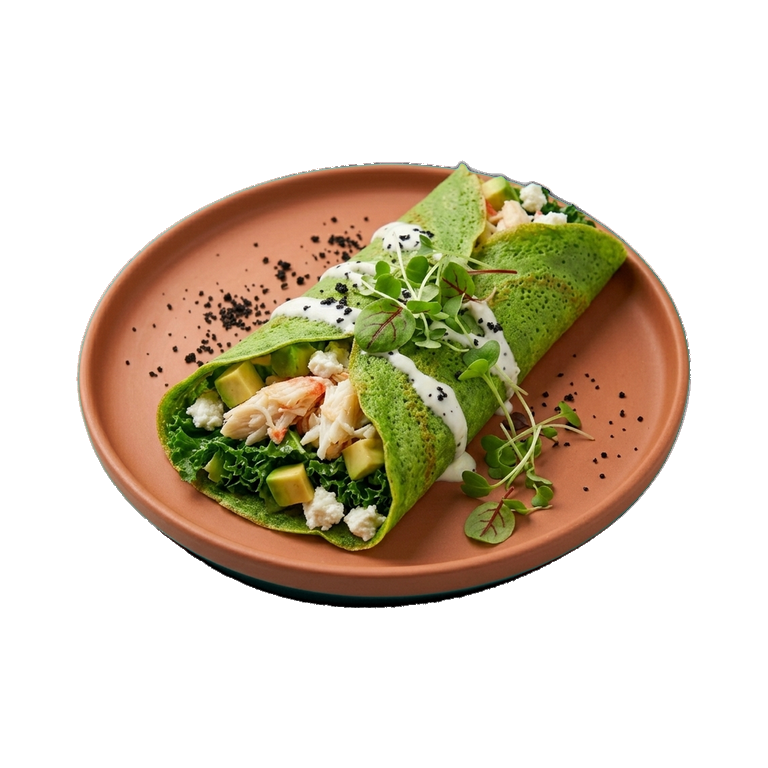
Usuba
Usuba
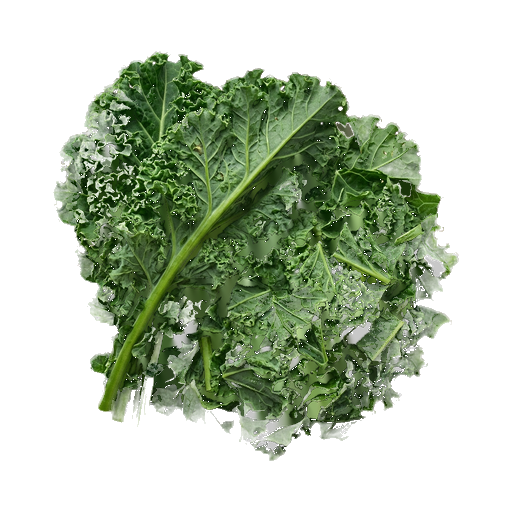
Kale
Leafy cabbage with characteristic wavy or curly dark green leaves, featuring a slightly bitter, rich flavor with nutty notes. Thanks to the dense leaf structure, it holds its shape well during heat treatment and is ideal for salads, smoothies, baking, and enriching soups. When selecting, pay attention to leaf firmness without yellow spots or wilting — young cabbage is more tender, while mature cabbage becomes tougher and requires longer cooking time.
Micronutrients
per 100 g
Minerals
About
Kale is not just a trendy vegetable, but a truly versatile ingredient that works in salads, smoothies, side dishes, and even crispy chips. Dark green curly leaves with a characteristic wavy texture are instantly recognizable on the shelf. Its main advantage in the kitchen is that it remains firm and doesn't soften during cooking, preserving its structure and flavor even after heat treatment.
Taste and aroma
Kale has a slightly bitter, herbaceous taste with nutty notes. The bitterness is not aggressive — it rather adds depth and interest to the dish. Young leaves are softer and less bitter than mature ones, so if you're cooking with kale for the first time, start with them. With proper preparation — massaging with oil, salt, or lemon — the bitterness softens, and the leaves become more pleasant to taste.
Role in dishes
Raw kale is an excellent base for powerful vitamin salads. Its dense leaves hold dressing well and don't become watery. If you add kale to a smoothie with fruits, it's barely noticeable but enriches the drink with micronutrients. On a skillet, the leaves wilt slightly but retain their firmness — making an ideal side dish or component for a complex dish.
Successful Combinations
- With lemon and olive oil — a classic combination for salad
- With garlic and hot spices — for pan-frying as a side dish
- With sweet fruits (banana, mango) — in smoothies for flavor balance
- With cheese (parmesan, feta) — adds saltiness and creaminess
- With nuts and seeds — for texture and nutrition in salads
Selection and Storage
Choose kale with bright green, firm leaves without yellow spots or signs of wilting. The leaves should be dense and slightly crispy. Store in the refrigerator in the vegetable compartment, wrapped in a damp towel or in an airtight container — this way it will keep for up to two weeks. Before use, rinse thoroughly under running water and dry.
The tough central vein is usually removed — hold the leaf by the stem and run your fingers along it, separating the leaf part. For salads, you can chop the leaves thinly or leave them in large pieces. If you're making a smoothie, chopping doesn't matter — the blender will handle whole leaves.
Kale is valued not for fashion, but for practicality: it stores well for a long time, withstands cooking well, combines easily with other ingredients, and adds an interesting bitter note to dishes that is often lacking in everyday meals.
Nutrition
per 100 g
- Calories
- 49 kcal
- Protein
- 4.3 g
- Fat
- 0.9 g
- Carbs
- 8.8 g
Micronutrients
per 100 g
Macronutrients
- Fiber
- 4.1 g
- Water
- 89.6 g
Minerals
- Sodium
- 53 mg
- Potassium
- 348 mg
- Calcium
- 254 mg
- Magnesium
- 32.7 mg
- Phosphorus
- 55 mg
- Iron
- 1.6 mg
- Zinc
- 0.39 mg
- Copper
- 0.05 mg
- Manganese
- 0.92 mg
Vitamins
- Vitamin A (RAE)
- 241 mcg
- Vitamin E
- 0.66 mg
- Vitamin K
- 390 mcg
- Vitamin C
- 93.4 mg
- Vitamin B1 (thiamin)
- 0.11 mg
- Vitamin B2 (riboflavin)
- 0.35 mg
- Vitamin B3 (niacin)
- 1.18 mg
- Vitamin B5 (pantothenic acid)
- 0.37 mg
- Vitamin B6
- 0.15 mg
Measures and weight
- 1 bunch
- 200 g
Measure calculator
- Weight
- 100 g
- Calories
- 49 kcal