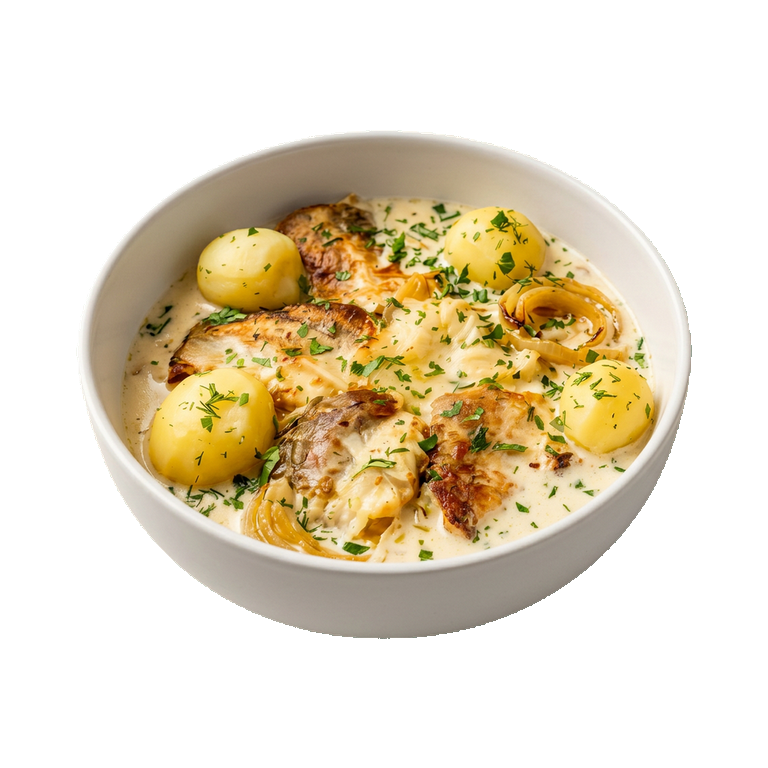
Usuba
Usuba
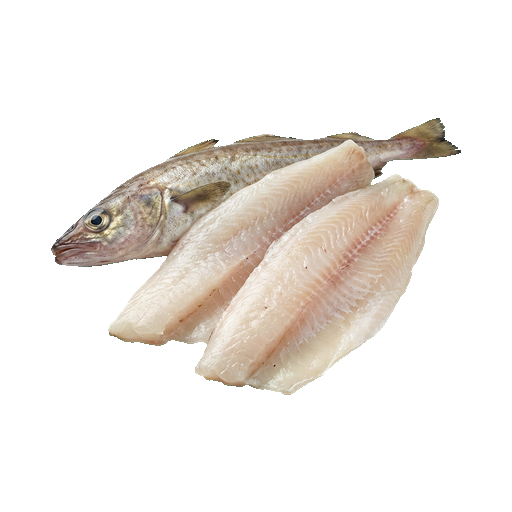
Pollock
Pollock is a white fish with a delicate, slightly sweet flavor and dense meat structure that holds its shape well during cooking. The fish has virtually no pronounced fishy smell and contains a minimum of bones, making it convenient for preparing soups, cutlets, fillets, and fish sticks. When selecting pollock, pay attention to light-colored meat without dark spots or unpleasant odor; frozen fillets are best thawed in the refrigerator to preserve juiciness.
Micronutrients
per 100 g
Minerals
About
Pollock is the workhorse of any kitchen, always on hand and never disappointing. White tender meat, minimal bones, neutral flavor, and affordable price make it an ideal choice for everyday lunches and festive tables. The fish cooks in minutes, absorbs any sauces and spices, and its light meat doesn't overburden the stomach.
Taste and Texture
Pollock has almost no fish smell — this is its main advantage for those who don't like a pronounced seafood taste. The meat is dense but tender, with delicate fibers that easily separate from the bones. When boiled or steamed, the fish becomes airy; when fried, it becomes slightly crispy on the outside. The taste is delicate, almost neutral, which makes it an ideal base for any culinary ideas.
How to cook pollock
- In a pan: quickly fry in oil on both sides, add lemon and herbs — ready in 5–7 minutes
- Steamed: pollock will retain all its tenderness if cooked for 10–12 minutes with vegetables
- In the oven: bake with tomatoes, onions and olive oil at 180 degrees for 15–20 minutes
- In soup: add fillet to boiling broth at the end of cooking so it doesn't fall apart
- Breaded: coat in flour or breadcrumbs and fry — you'll get a crispy crust
Perfect Pairings
Pollock works well with bright flavors that "awaken" its neutrality. Lemon and lime highlight freshness, garlic and ginger add depth, herbs like dill and parsley complement its delicate nature. A creamy sauce, tomato base, spicy seasonings — the fish handles everything equally well. Pollock pairs well with root vegetables, greens, and potatoes.
Selection and Storage
Fresh pollock should smell like the sea, not like "fish". Eyes are transparent, gills are pink, the flesh is firm and light. When choosing frozen fillets, select ones without an ice crust and ice inside the package — this is a sign of refreezing. Fresh fish can be stored in the refrigerator for a maximum of two days, frozen fish — for several months at a temperature of minus 18 degrees.
Tip: thaw pollock in the refrigerator rather than at room temperature — this way the fish will retain moisture and won't fall apart during cooking. Before cooking, pat it dry with paper towels to remove excess moisture and allow the meat to brown properly.
Nutrition
per 100 g
- Calories
- 72 kcal
- Protein
- 15.9 g
- Fat
- 0.6 g
- Carbs
- 0 g
Micronutrients
per 100 g
Macronutrients
- Saturated fat
- 0.128 g
- Monounsaturated fat
- 0.073 g
- Polyunsaturated fat
- 0.182 g
- Omega-3 (EPA + DHA)
- 0.165 g
- Cholesterol
- 46 mg
- Water
- 86.7 g
Minerals
- Sodium
- 333 mg
- Potassium
- 160 mg
- Calcium
- 15 mg
- Magnesium
- 16.1 mg
- Phosphorus
- 284 mg
- Iron
- 0.22 mg
- Zinc
- 0.31 mg
- Copper
- 0.03 mg
- Manganese
- 0.01 mg
- Selenium
- 15.9 mcg
Vitamins
- Vitamin A (RAE)
- 3 mcg
- Vitamin D
- 0.2 mcg
- Vitamin E
- 0.49 mg
- Vitamin K
- 0 mcg
- Vitamin C
- 0 mg
- Vitamin B1 (thiamin)
- 0.03 mg
- Vitamin B2 (riboflavin)
- 0.08 mg
- Vitamin B3 (niacin)
- 0.65 mg
- Vitamin B5 (pantothenic acid)
- 0.24 mg
- Vitamin B6
- 0.07 mg
- Vitamin B12
- 1.6 mcg
Measures and weight
- 1 pcs
- 350 g
Measure calculator
- Weight
- 100 g
- Calories
- 72 kcal