Usuba
Usuba
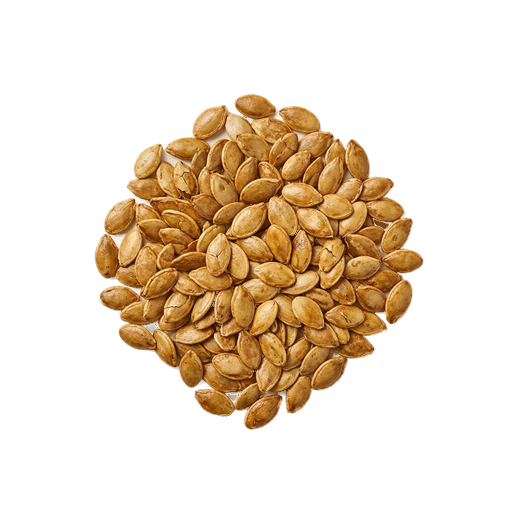
Peeled roasted pumpkin seeds
Roasted pumpkin seeds without shells — a ready-made snack with a nutty flavor and crunchy texture. They contain plenty of beneficial fats and minerals, which is why they are often used in salads, soup garnishes, baked goods, and muesli. During storage, seeds can absorb moisture, so it's best to keep them in an airtight container in a cool place and add them to dishes just before serving to maintain their crunch.
Micronutrients
per 100 g
Minerals
About
Cleaned roasted pumpkin seeds are a ready-to-eat ingredient that saves time in the kitchen and opens up numerous culinary possibilities. Without the shell, they are easier to add to dishes, and heat processing reveals their deep nutty flavor and makes the texture more crisp and pleasant to bite into.
Taste and Aroma
Roasting gives the seeds intensity and complexity. You will feel warm nutty notes with a slight sweetness, sometimes with a barely perceptible hint of caramel. Without the shell, the taste becomes more concentrated and pure — nothing distracts from the kernel itself.
The aroma upon opening the package immediately hints that this is not a raw product: it smells of toast, a light bitterness, and cozy warmth. Such an aroma instantly evokes an autumn mood and works as a signal of quality.
Where to use
- Salad topping — adds crunch and nutrition to vegetable and green compositions
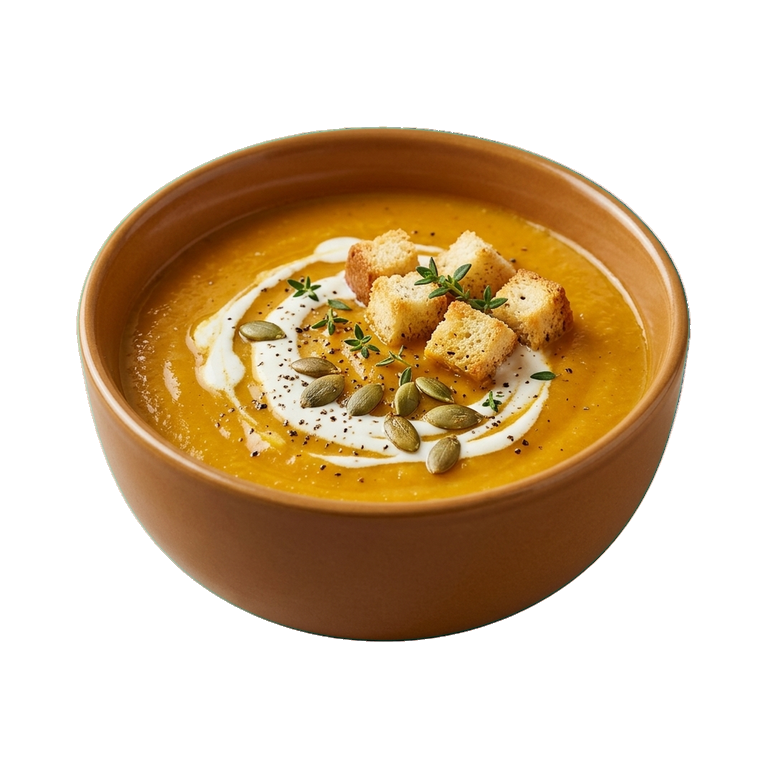
- Soup garnish — especially good in pumpkin cream soup or vegetable broths
- Muesli and granola component — mixed with cereals, dried fruits and honey
- Decoration for porridges and yogurts — adds texture and interest to breakfast
- Base for nut butters and sauces — ground in a blender with oil and spices
- Filling for baked goods — added to cookies, buns and pastries
- Breading — mixed with flour and spices for a crispy crust on fish or vegetables
Perfect Pairings
Pumpkin seeds love sweet and spicy companions: cinnamon, ginger, nutmeg, maple syrup and honey. With them, they reveal themselves with fullness and harmony. On the savory side, they work well with pumpkin, carrots, beets, leafy greens and sharp spices like paprika or black pepper.
In texture, they contrast with soft ingredients — cream cheeses, yogurt, avocado. Together with other nuts and seeds (sunflower, flax, sesame) they create a rich, interesting mixture that is both satisfying and fulfilling.
Selection and Storage
When purchasing, pay attention to the color — it should be uniform, from light brown to golden. Avoid dark or blackened seeds: this is a sign of over-drying or improper storage. Seeds should not smell like rancid oil or mold.
Store in an airtight glass jar or container in a cool, dark place — a pantry, cabinet, or refrigerator. Without exposure to air and light, they will retain their freshness and flavor for several months. If you notice that the seeds have started to lose their crunch or an oxidation smell has appeared, it's time to use them or replace them.
Fried peeled pumpkin seeds are an investment in convenience. You save time on cleaning, but don't lose any flavor or nutritional value.
Nutrition
per 100 g
- Calories
- 574 kcal
- Protein
- 24.5 g
- Fat
- 49 g
- Carbs
- 15 g
Micronutrients
per 100 g
Macronutrients
- Fiber
- 6.5 g
- Sugars
- 1.29 g
- Saturated fat
- 8.544 g
- Monounsaturated fat
- 15.734 g
- Polyunsaturated fat
- 19.856 g
- Omega-3 (EPA + DHA)
- 0 g
- Cholesterol
- 0 mg
- Water
- 2.03 g
Minerals
- Sodium
- 18 mg
- Potassium
- 788 mg
- Calcium
- 52 mg
- Magnesium
- 550 mg
- Phosphorus
- 1174 mg
- Iron
- 8.07 mg
- Zinc
- 7.64 mg
- Copper
- 1.27 mg
- Manganese
- 4.49 mg
- Selenium
- 9.4 mcg
Vitamins
- Vitamin A (RAE)
- 0 mcg
- Vitamin D
- 0 mcg
- Vitamin E
- 0.56 mg
- Vitamin K
- 4.5 mcg
- Vitamin C
- 1.8 mg
- Vitamin B1 (thiamin)
- 0.07 mg
- Vitamin B2 (riboflavin)
- 0.15 mg
- Vitamin B3 (niacin)
- 4.43 mg
- Vitamin B5 (pantothenic acid)
- 0.57 mg
- Vitamin B6
- 0.1 mg
- Vitamin B9 (folate, DFE)
- 57 mcg
- Vitamin B12
- 0 mcg
Measures and weight
- 1 tbsp
- 9 g
- 1 tsp
- 3 g
- 1 cup
- 150 g
Measure calculator
- Weight
- 100 g
- Calories
- 574 kcal