Usuba
Usuba
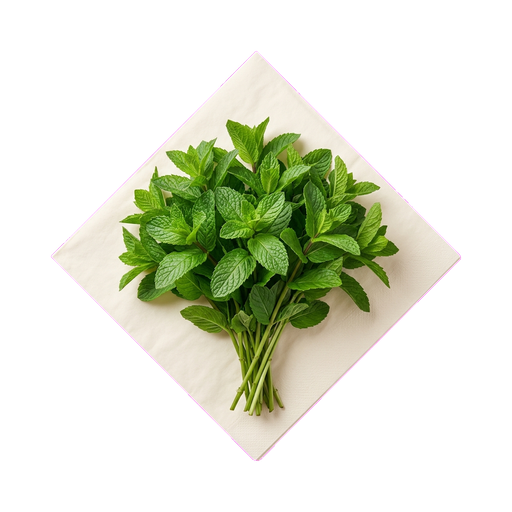
Peppermint
Peppermint is an aromatic herb with a refreshing, slightly sharp taste and a distinctive cooling effect on the tongue due to its high menthol content. In cooking, it is used for preparing beverages, desserts, sauces, and as a garnish for meat and fish dishes, as well as an ingredient for cocktails and teas. When selecting, prefer fresh leaves with an intense aroma, and when substituting with other types of mint, keep in mind that peppermint has a more pronounced flavor, so you need less of it than regular garden mint.
Micronutrients
per 100 g
Minerals
About
Peppermint is not just an aromatic herb for tea. It is a powerful ingredient capable of completely changing the character of a dish. Its piercing, slightly pungent taste with a cooling aftertaste makes it one of the most recognizable spices in the kitchen. Unlike regular mint, peppermint is more intense and not sweet — it demands respect and understanding when you add it to food.
Aroma and flavor
The main distinction of peppermint is its aggressive refreshing quality. When you chew a leaf, the taste begins with a sharp, almost peppery punch, followed by a characteristic cooling sensation on the tongue. This sensation is created by menthol, which is contained in the leaves in high concentration. The aroma is sharp, clean, slightly camphoraceous — it literally pierces the nose and instantly refreshes.
Fresh leaves smell much more vibrant than dried ones. If you dry mint yourself, it loses some of its volatile oils, but becomes more concentrated in flavor. Properly dried peppermint retains its strength for months, and sometimes even longer.
Where to use it
Peppermint works in three main directions. First, it's beverages — hot and cold. Peppermint tea warms and invigorates, while in summer cocktails and lemonades it creates a sense of freshness and coolness. Second, it's desserts and sweet dishes — mint in chocolate, ice cream, candies and baked goods sounds classic and is always appropriate.
The third direction is unexpected combinations. Peppermint works well in salads with vegetables and greens, in sauces for meat and fish, in soups. The key is not to overdo it. A single leaf is often enough to give a dish character. Too much mint will overpower other flavors and make the dish unpleasantly hot on the tongue.
Combinations and Proportions
Peppermint pairs well with lemon and lime — the acidity balances its pungency. With black pepper and ginger, it creates a warming effect. In sweet dishes, its partners are dark chocolate, vanilla, and caramel. It works selectively with fruits: well with strawberries and raspberries, but can overpower the delicate flavor of peaches or pears.
- For hot beverages: 3–5 leaves per cup, steep for 5–7 minutes
- For cold cocktails and lemonades: crush leaves in a glass to release the oils
- For salads and appetizers: tear leaves by hand right before serving, do not cut with a knife
- For sauces and creams: 1–2 tablespoons of fresh mint per 200 ml of base
Selection and Storage
When choosing fresh peppermint, pay attention to the leaves: they should be firm, bright green, without dark spots or signs of wilting. Rub a leaf with your finger — you should feel a strong, clean aroma. If the mint smells faint or musty, it's not what you need.
Store fresh mint in the refrigerator, wrapped in a damp paper towel and placed in a plastic bag. It will last a week or even two this way. For longer storage, dry mint in a dark, well-ventilated place by hanging bunches or laying them on a mesh. Store dried mint in an airtight glass jar, away from light and heat.
- Freezing: chop the leaves, place in ice cube trays with water or oil
- Peppermint oil: store in a cool place, use drop by drop for intensity
- Dried mint: check every six months for moisture
Peppermint is a tool, not just an herb. Master it, and it will become your helper in creating freshness, contrast, and character in any dish. Start small: add a leaf to your tea or place it on the edge of a plate with dessert. Gradually, you will feel when and how much of it you need, and it will stop being exotic and become a familiar tool in your kitchen.
Nutrition
per 100 g
- Calories
- 70 kcal
- Protein
- 3.8 g
- Fat
- 0.9 g
- Carbs
- 14.9 g
Micronutrients
per 100 g
Macronutrients
- Fiber
- 8 g
- Saturated fat
- 0.246 g
- Monounsaturated fat
- 0.033 g
- Polyunsaturated fat
- 0.508 g
- Cholesterol
- 0 mg
- Water
- 78.65 g
Minerals
- Sodium
- 31 mg
- Potassium
- 569 mg
- Calcium
- 243 mg
- Magnesium
- 80 mg
- Phosphorus
- 73 mg
- Iron
- 5.08 mg
- Zinc
- 1.11 mg
- Copper
- 0.33 mg
- Manganese
- 1.18 mg
Vitamins
- Vitamin A (RAE)
- 212 mcg
- Vitamin D
- 0 mcg
- Vitamin C
- 31.8 mg
- Vitamin B1 (thiamin)
- 0.08 mg
- Vitamin B2 (riboflavin)
- 0.27 mg
- Vitamin B3 (niacin)
- 1.71 mg
- Vitamin B5 (pantothenic acid)
- 0.34 mg
- Vitamin B6
- 0.13 mg
- Vitamin B9 (folate, DFE)
- 114 mcg
- Vitamin B12
- 0 mcg
Measures and weight
- 1 tbsp
- 4.5 g
- 1 tsp
- 1.5 g
- 1 cup
- 75 g
- 1 bunch
- 30 g
- 1 sprig
- 2 g
Measure calculator
- Weight
- 100 g
- Calories
- 70 kcal