Usuba
Usuba
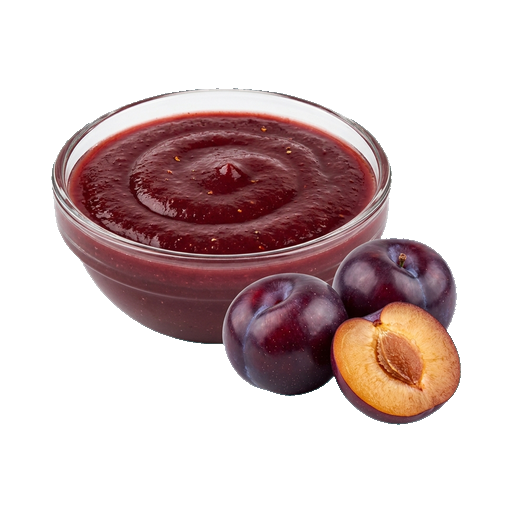
Plum Sauce
A sweet and sour sauce made from ripe plums with characteristic tanginess and deep fruity flavor, often with added spices and vinegar. Used as a versatile marinade and sauce for meat dishes, especially duck, pork, and poultry, as well as suitable for dipping and glazing. When choosing, pay attention to consistency — it should be thick enough to adhere well to the dish, and acidity should be balanced with sweetness for harmonious taste.
Micronutrients
per 100 g
Minerals
About
Plum sauce is one of those condiments that works both ways: it can be spicy and tangy, or sweet and mild, depending on how you prepare it. The base is simple: ripe plums, sugar, spices, and vinegar. The result is a thick, aromatic paste that complements meat, poultry, seafood, and even some vegetable dishes equally well.
Taste and Aroma
Plum sauce harbors an interesting balance: fruity sweetness meets acidity, and spices add depth. When sauce is made from ripe plums, it acquires natural sweetness and a light astringency. When ginger, cinnamon, or cloves are added, a warm, spicy note emerges. Spicy versions with chili or black pepper become more assertive and suit those who love contrasting flavors.
Where to use it
Plum sauce works well as a marinade for duck or goose — the fruity acidity helps tenderize the meat, while the sweetness caramelizes on the surface. It is served with fried or baked chicken, pork, and ribs. It also works with seafood: try it with shrimp or scallops. On the table, it can be a dipping sauce — for example, with stuffed pancakes or spring rolls. Some chefs add it to glazes for baked vegetables or use it as a base for dressing salads with duck meat.
- Marinade and sauce for duck, goose, chicken
- Glaze for baked meat and ribs
- Dipping sauce for pancakes and rolls
- Addition to seafood
- Dressing for salads with poultry
Selection and Storage
If you're buying a ready-made sauce, pay attention to its consistency — it should be uniform, without lumps or separation. The color varies from brown to dark red depending on the plum variety and additives. Check the ingredients: a good sauce should contain plums, sugar, and spices, without unnecessary thickeners and preservatives. Homemade sauce is stored in the refrigerator in a glass jar for up to two weeks, in the freezer — for up to three months. Keep an opened store-bought sauce jar in the refrigerator after opening and use it within a month.
Pairings with spices and ingredients
Plum sauce works well with warm spices: ginger, cinnamon, and clove highlight its fruity notes. Black pepper adds heat, while fresh chili brings brightness. If you're making the sauce at home, add a touch of soy sauce for umami, mustard for tanginess, or orange juice for freshness. It pairs beautifully with garlic and shallots — they deepen the flavor and make the sauce more complex. Try mixing it with other fruit purées, such as apricot or apple, if you want to mellow out the intensity.
The key to plum sauce is its versatility. It requires no complicated preparation, stores well, and always comes in handy when you need to quickly add brightness to a simple dish. Keep a jar on hand, and you'll find uses for it more often than you expect.
Nutrition
per 100 g
- Calories
- 150 kcal
- Protein
- 1 g
- Fat
- 0.5 g
- Carbs
- 35 g
Micronutrients
per 100 g
Macronutrients
- Fiber
- 0.7 g
- Saturated fat
- 0.153 g
- Monounsaturated fat
- 0.24 g
- Polyunsaturated fat
- 0.588 g
- Omega-3 (EPA + DHA)
- 0 g
- Cholesterol
- 0 mg
- Water
- 53.71 g
Minerals
- Sodium
- 538 mg
- Potassium
- 259 mg
- Calcium
- 12 mg
- Magnesium
- 12 mg
- Phosphorus
- 22 mg
- Iron
- 1.43 mg
- Zinc
- 0.19 mg
- Copper
- 0.08 mg
- Manganese
- 0.11 mg
- Selenium
- 0.4 mcg
Vitamins
- Vitamin A (RAE)
- 2 mcg
- Vitamin C
- 0.5 mg
- Vitamin B1 (thiamin)
- 0.02 mg
- Vitamin B2 (riboflavin)
- 0.08 mg
- Vitamin B3 (niacin)
- 1.01 mg
- Vitamin B5 (pantothenic acid)
- 0.06 mg
- Vitamin B6
- 0.08 mg
- Vitamin B9 (folate, DFE)
- 6 mcg
- Vitamin B12
- 0 mcg
Measures and weight
- 1 tbsp
- 16.5 g
- 1 tsp
- 5.5 g
- 1 cup
- 275 g
Measure calculator
- Weight
- 100 g
- Calories
- 150 kcal