Usuba
Usuba
Pumpernickel
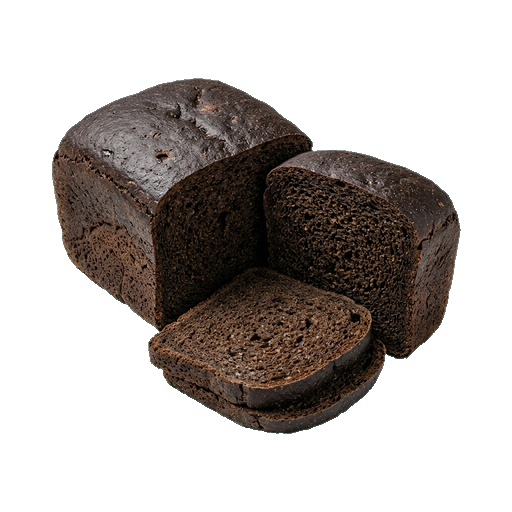
Pumpernickel is a dark, dense bread made from coarsely ground rye flour with a characteristic bitter taste and almost black color. Thanks to prolonged baking at low temperature, the bread acquires a dense structure and keeps well for a long time, making it ideal for sandwiches and canapés. When choosing, pay attention to the weight of the loaf — authentic pumpernickel should be heavy, and the crumb should hardly crumble at all.
Micronutrients
per 100 g
Minerals
About
Pumpernickel is a dense, almost black bread with a deep malty flavor and moist crumb. It is made from coarsely ground rye flour, often with molasses or caramel added for color and a slightly sweet taste. This bread keeps well for a long time, doesn't become stale, and only gets better with age.
Aroma and Taste
Pumpernickel has a pronounced rye character — slightly sour, with hints of malt and caramel. The crumb is very dense, almost chewy, with barely noticeable sweetness. The taste is intense, not neutral, so it requires careful selection of accompaniments. The crust is crispy, contrasting with the moist center.
Role in dishes
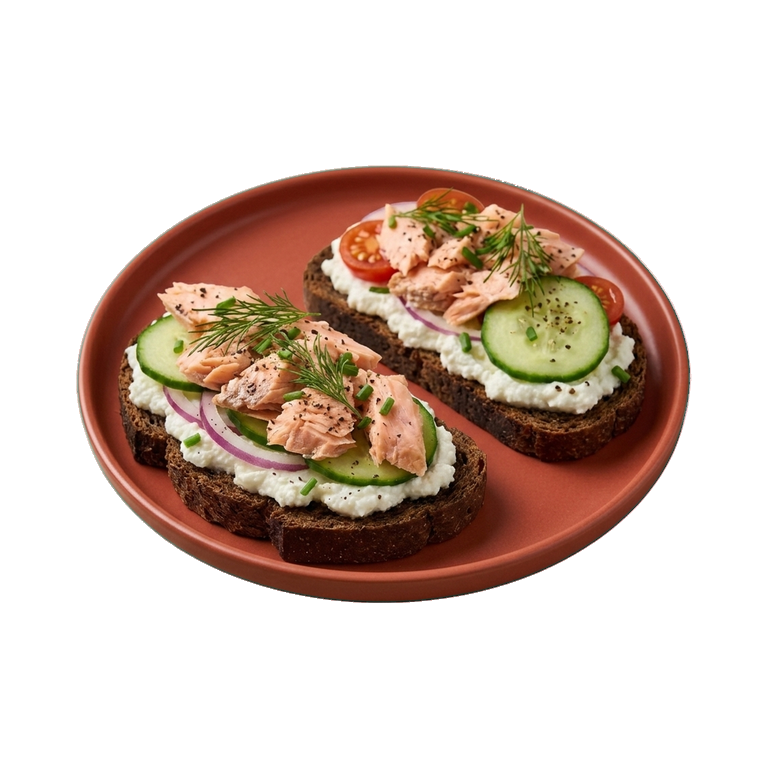
Pumpernickel is excellent as a base for open sandwiches with salted fish, smoked meat, or strong cheeses. Its density allows it to be sliced very thin without fear of the bread falling apart. It is often served simply with butter or pâté. Thanks to its moisture and ability to stay soft for a long time, it is ideal for canapés on a festive table.
Pairings
- Smoked salmon, herring, caviar — a classic choice
- Ham, prosciutto, smoked sausage
- Sharp cheeses, gorgonzola, blue varieties
- Butter, cream cheese, pâtés
- Mustard, horseradish, pickled vegetables
Selection and Storage
When purchasing, pay attention to the baking date — pumpernickel is often sold sliced in packages. The bread should be heavy for its size, without mold, and in an intact package. It keeps in a cool place in an airtight package for months thanks to its dense structure and low moisture content. After opening the package, it's best to store the bread in a bread box or wrapped in cloth — this way it won't dry out and won't absorb foreign odors.
If pumpernickel has become harder than desired, don't rush to throw it away. Lightly dampen the slice with water and keep it in a closed container for a few hours — the bread will regain its softness.
Nutrition
per 100 g
- Calories
- 250 kcal
- Protein
- 8 g
- Fat
- 1.5 g
- Carbs
- 50 g
Micronutrients
per 100 g
Macronutrients
- Fiber
- 6.5 g
- Sugars
- 0.53 g
- Saturated fat
- 0.437 g
- Monounsaturated fat
- 0.932 g
- Polyunsaturated fat
- 1.237 g
- Omega-3 (EPA + DHA)
- 0 g
- Cholesterol
- 0 mg
- Water
- 37.9 g
Minerals
- Sodium
- 596 mg
- Potassium
- 208 mg
- Calcium
- 68 mg
- Magnesium
- 54 mg
- Phosphorus
- 178 mg
- Iron
- 2.87 mg
- Zinc
- 1.48 mg
- Copper
- 0.29 mg
- Manganese
- 1.31 mg
- Selenium
- 24.5 mcg
Vitamins
- Vitamin A (RAE)
- 0 mcg
- Vitamin D
- 0 mcg
- Vitamin E
- 0.42 mg
- Vitamin K
- 0.8 mcg
- Vitamin C
- 0 mg
- Vitamin B1 (thiamin)
- 0.33 mg
- Vitamin B2 (riboflavin)
- 0.31 mg
- Vitamin B3 (niacin)
- 3.09 mg
- Vitamin B5 (pantothenic acid)
- 0.4 mg
- Vitamin B6
- 0.13 mg
- Vitamin B9 (folate, DFE)
- 134 mcg
- Vitamin B12
- 0 mcg
Measures and weight
- 1 slice
- 30 g
Measure calculator
- Weight
- 100 g
- Calories
- 250 kcal