 Usuba
Usuba
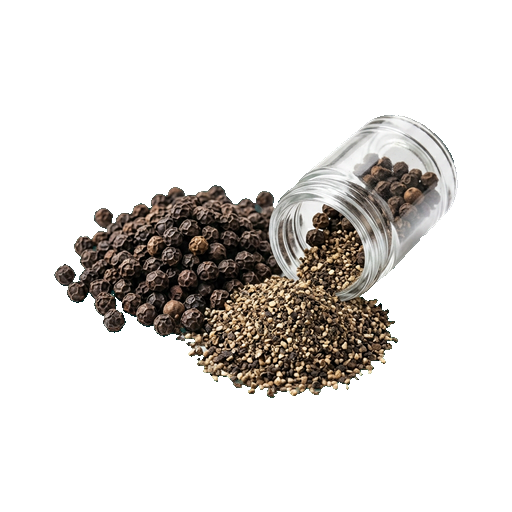
Freshly ground black pepper
Freshly ground black pepper has a sharp, slightly woody flavor with a hot aftertaste and a pronounced aroma that quickly fades during storage. It is added at the final stage of cooking or right before serving to preserve maximum aroma and pungency. Ground pepper loses its qualities faster than peppercorns, so it is best to grind it directly before use in a mill or mortar.
Micronutrients
per 100 g
Minerals
About
Freshly ground black pepper is not just a seasoning, but a living ingredient that transforms right before your eyes. Unlike pre-made powder that sits on shelves for months and loses its volatile oils, ground pepper retains all its sharpness and depth of flavor at the moment of grinding. When you turn the mill or press the grinder, essential oils are released, giving that very pungency and aroma that we value this pepper for.
Aroma and Taste
Freshly ground black pepper smells sharp and slightly woody — this is the smell of piperine and other volatile compounds that literally evaporate from the powder. In taste, it is not just sharp, but multi-layered: first a burning sensation, then a light sweetness and even coniferous notes. Compared to ground pepper from a jar, freshly ground pepper seems brighter, more lively, with a more pronounced bitterness.
Role in Dishes
Black pepper works everywhere, but freshly ground pepper is especially valued where it lands on the tongue at the end of cooking or even at the table. On meat and fish, it opens up completely, emphasizing the natural flavor and adding the right amount of heat. In soups and sauces, pepper is better added at the end of cooking to avoid losing the aroma during prolonged heat treatment.
Successful Combinations
- With sea salt on steaks and fish — a classic that always works
- With lemon and garlic in marinades and dressings for vegetables
- With cream and butter in sauces for pasta and poultry
- With hot spices like cayenne pepper or ginger in Asian dishes
- With herbs — parsley, thyme, rosemary in finishing touches
Selection and Storage
Buy peppercorns and grind them at home — this is the most reliable way to get a fresh product. If you choose already ground pepper, pay attention to the packaging date and the container's seal. Quality ground pepper should be dark, almost black, without lumps and foreign odors.
Ground pepper quickly loses its aroma when exposed to air, so store it in a tightly sealed container in a cool and dry place, away from sunlight. Peppercorns last longer — in an airtight jar they maintain their quality for several months. Ground pepper is best used within a month or two after grinding, while it still smells truly aromatic.
Tip: if possible, grind the pepper right before serving — even a few minutes spent exposed noticeably reduces the intensity of the aroma.
Nutrition
per 100 g
- Calories
- 251 kcal
- Protein
- 10.4 g
- Fat
- 3.3 g
- Carbs
- 64.8 g
Micronutrients
per 100 g
Macronutrients
- Fiber
- 25.3 g
- Sugars
- 0.64 g
- Saturated fat
- 1.392 g
- Monounsaturated fat
- 0.739 g
- Polyunsaturated fat
- 0.998 g
- Omega-3 (EPA + DHA)
- 0 g
- Cholesterol
- 0 mg
- Water
- 12.46 g
Minerals
- Sodium
- 20 mg
- Potassium
- 1329 mg
- Calcium
- 443 mg
- Magnesium
- 171 mg
- Phosphorus
- 158 mg
- Iron
- 9.71 mg
- Zinc
- 1.19 mg
- Copper
- 1.33 mg
- Manganese
- 12.75 mg
- Selenium
- 4.9 mcg
Vitamins
- Vitamin A (RAE)
- 27 mcg
- Vitamin D
- 0 mcg
- Vitamin E
- 1.04 mg
- Vitamin K
- 163.7 mcg
- Vitamin C
- 0 mg
- Vitamin B1 (thiamin)
- 0.11 mg
- Vitamin B2 (riboflavin)
- 0.18 mg
- Vitamin B3 (niacin)
- 1.14 mg
- Vitamin B5 (pantothenic acid)
- 1.4 mg
- Vitamin B6
- 0.29 mg
- Vitamin B9 (folate, DFE)
- 17 mcg
- Vitamin B12
- 0 mcg
Measures and weight
- 1 tbsp
- 9 g
- 1 tsp
- 3 g
- 1 cup
- 150 g
Measure calculator
- Weight
- 100 g
- Calories
- 251 kcal
