Usuba
Usuba
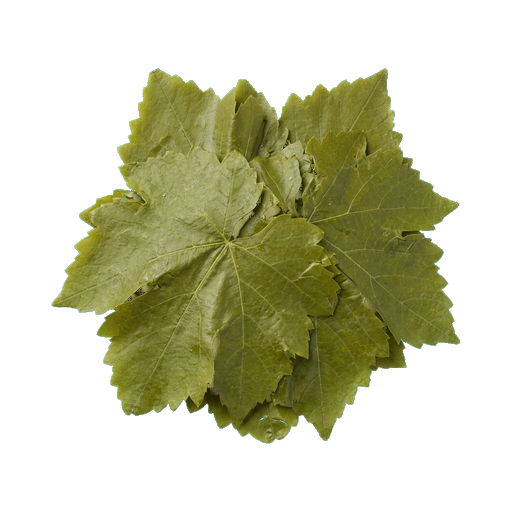
Canned grape leaves
Tender grape leaves preserved in brine serve as the foundation for dolma and other traditional dishes of Mediterranean and Caucasian cuisine. They have a slightly tangy, herbaceous flavor and a soft texture that makes it easy to wrap fillings. Before use, rinse the leaves under water to remove excess salt, and if they are very dense, you can briefly soak them in warm water.
Micronutrients
per 100 g
Minerals
Vitamins
- AVitamin A (RAE)263mcg31% DV
- EVitamin E1.79mg12% DV
- KVitamin K97.3mcg81% DV
- CVitamin C11.3mg11% DV
- B1Vitamin B1 (thiamin)0.06mg4% DV
- B2Vitamin B2 (riboflavin)0.36mg20% DV
- B3Vitamin B3 (niacin)4.51mg23% DV
- B5Vitamin B5 (pantothenic acid)4.27mg85% DV
- B6Vitamin B60.14mg7% DV
- B9Vitamin B9 (folate, DFE)78mcg20% DV
About
Canned grape leaves are a ready-made ingredient that saves time in the kitchen and opens the door to Mediterranean and Middle Eastern cuisine. The leaves are harvested in early summer when they are still young and tender, then preserved in brine. The result: firm, slightly tangy leaves, ready to use straight from the jar or can.
Taste and texture
Canned leaves have a slightly astringent, herbaceous flavor with a barely perceptible sourness from the brine. The texture remains firm and does not fall apart during cooking — this is the main advantage over fresh leaves. The saltiness is usually moderate, but before use, the leaves are often rinsed to control the amount of salt in the dish.
Where to use them
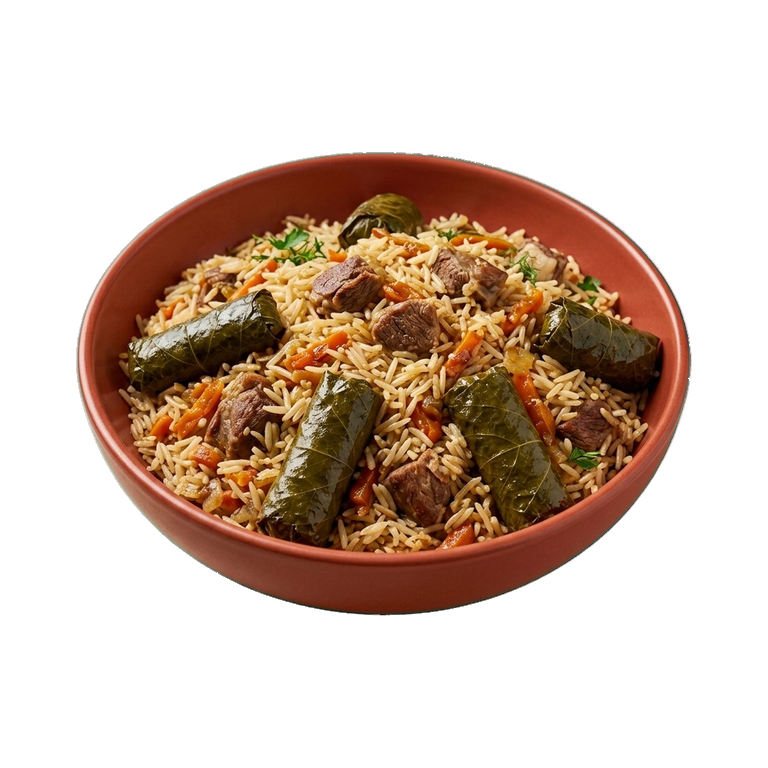
Grape leaves are a classic ingredient for dolma: the leaves are wrapped around a filling of rice, meat, and spices, then boiled or stewed. But this is not their only use. The leaves are suitable for wrapping cheese, vegetables, and fish before baking, can be added to soups for a light tanginess and aroma, and are used as a base when grilling to prevent food from sticking.
- Rice, ground meat, onion, mint and cinnamon — classic dolma filling
- Goat cheese, nuts and herbs — for a light appetizer
- Fish with lemon and herbs — for baking in leaves
- Vegetable mixtures with bulgur — for vegetarian options
How to choose and store
When purchasing, pay attention to the integrity of the leaves — they should be free from tears and dark spots. Check the packaging date: freshly preserved leaves are more resilient. Store an opened jar in the refrigerator in an airtight container, covering the leaves with brine — this way they will maintain quality for up to two weeks. An unopened jar can be stored in a cool place for a year or longer.
Before using, rinse the leaves under cold water and carefully unfold them to avoid damage. If the leaves are very tightly packed, you can soak them briefly in warm water — this will make unfolding easier. Excess moisture is removed by blotting with a paper towel to prevent the filling from becoming soggy.
Canned grape leaves are not just an ingredient, but a bridge between everyday cooking and traditional recipes. They allow you to prepare authentic dishes without unnecessary hassle.
Nutrition
per 100 g
- Calories
- 20 kcal
- Protein
- 1 g
- Fat
- 0.5 g
- Carbs
- 2 g
Micronutrients
per 100 g
Macronutrients
- Fiber
- 9.9 g
- Saturated fat
- 0.312 g
- Monounsaturated fat
- 0.076 g
- Polyunsaturated fat
- 0.989 g
- Cholesterol
- 0 mg
- Water
- 76.1 g
Minerals
- Sodium
- 2853 mg
- Potassium
- 29 mg
- Calcium
- 289 mg
- Magnesium
- 14 mg
- Phosphorus
- 34 mg
- Iron
- 2.98 mg
- Zinc
- 0.4 mg
- Copper
- 1.84 mg
- Manganese
- 0.29 mg
- Selenium
- 0.9 mcg
Vitamins
- Vitamin A (RAE)
- 263 mcg
- Vitamin D
- 0 mcg
- Vitamin E
- 1.79 mg
- Vitamin K
- 97.3 mcg
- Vitamin C
- 11.3 mg
- Vitamin B1 (thiamin)
- 0.06 mg
- Vitamin B2 (riboflavin)
- 0.36 mg
- Vitamin B3 (niacin)
- 4.51 mg
- Vitamin B5 (pantothenic acid)
- 4.27 mg
- Vitamin B6
- 0.14 mg
- Vitamin B9 (folate, DFE)
- 78 mcg
- Vitamin B12
- 0 mcg
Measures and weight
- 1 pcs
- 3 g
- 1 can
- 400 g
Measure calculator
- Weight
- 100 g
- Calories
- 20 kcal