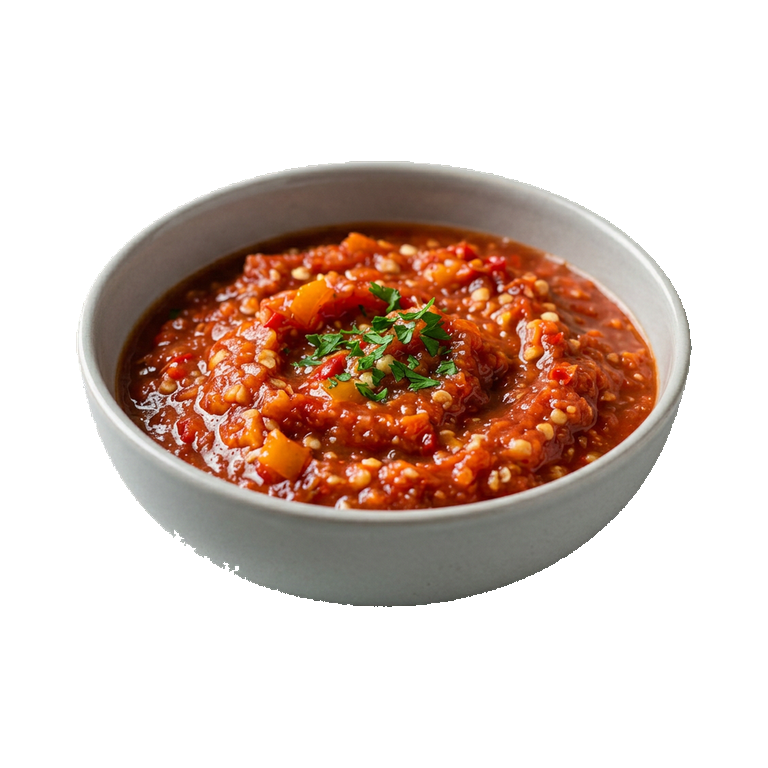
Usuba
Usuba
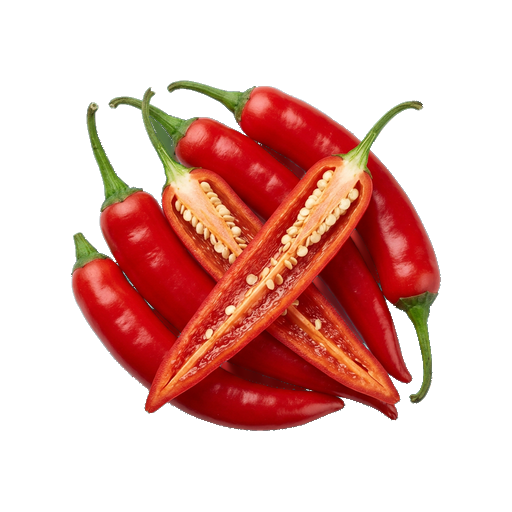
Chili pepper
Chili pepper is a fiery spice with an intense flavor and piquant aroma that adds heat and depth to dishes. It can be used fresh, dried, ground, or as pastes and sauces. When choosing, keep in mind that the heat level depends on the variety and capsaicin content — red peppers are typically hotter than green ones, and young fruits are spicier than ripe ones. In cooking, chili pepper pairs well with meat, seafood, legumes, and rice, but requires careful dosing to avoid overpowering other flavors in the dish.
Micronutrients
per 100 g
Minerals
Vitamins
About
Hot pepper is one of the most versatile tools in the kitchen. It not only adds heat, but transforms the perception of the entire dish, awakening taste receptors and making even simple ingredients more expressive. Working with it requires mindfulness: the heat level depends not only on the type of pepper, but also on how you prepare it and at what stage of cooking you add it.
Spiciness and flavor notes
Hot peppers offer not only heat but also their own flavor profile. Depending on the variety, you'll notice fruity notes, herbaceous qualities, smokiness, or even sweetness. Fresh peppers are more aromatic and vibrant, while dried peppers develop deeper, concentrated undertones. Capsaicin — the substance responsible for heat — is distributed unevenly: it's most concentrated in the white membrane and seeds, so removing them reduces the burn if you prefer a more delicate flavor.
When and how to use
The timing of adding hot pepper to a dish is critical. If you want its flavor to fully develop, add it at the beginning of cooking — when heated, the spiciness becomes milder, and the aroma penetrates the sauce or broth. For freshness and bright heat, sprinkle the chopped pepper at the end, right before serving. In marinades and infusions, hot pepper works as both a preservative and an aromatic flavoring agent.
Best Combinations
Hot pepper pairs well with acidity — lemon, vinegar, tomato. Together they create a harmonious balance. Garlic, ginger, and herbs (coriander, cumin) enhance its depth. With dairy products, the heat mellows: sour cream, yogurt, butter — reliable helpers if the burn seems excessive. Pepper works well paired with seafood, meat, vegetables, and grains.
Selection and Storage
Fresh hot peppers should be firm with smooth, glossy skin free of spots and soft areas. The color—from green to red—indicates ripeness, but not heat level. Store peppers in the refrigerator in a paper bag for up to two weeks. Dried peppers last much longer in an airtight container in a cool place. Ground pepper loses its aroma quickly, so it's best to grind it before use or buy it in small quantities.
Practical Tips
- Cut hot peppers wearing gloves or wash your hands immediately — capsaicin irritates skin and mucous membranes
- If you've overdone the heat, don't rush to drink water — it spreads capsaicin. It's better to eat something dairy or starchy
- Freeze whole peppers in bags — they retain flavor and are convenient for long-term storage
- Roast dried peppers in a dry pan before adding to a dish to unlock their aroma
Nutrition
per 100 g
- Calories
- 40 kcal
- Protein
- 2 g
- Fat
- 0.4 g
- Carbs
- 9 g
Micronutrients
per 100 g
Macronutrients
- Fiber
- 1.5 g
- Sugars
- 5.3 g
- Saturated fat
- 0.042 g
- Monounsaturated fat
- 0.024 g
- Polyunsaturated fat
- 0.239 g
- Omega-3 (EPA + DHA)
- 0 g
- Cholesterol
- 0 mg
- Water
- 88.02 g
Minerals
- Sodium
- 9 mg
- Potassium
- 322 mg
- Calcium
- 14 mg
- Magnesium
- 23 mg
- Phosphorus
- 43 mg
- Iron
- 1.03 mg
- Zinc
- 0.26 mg
- Copper
- 0.13 mg
- Manganese
- 0.19 mg
- Selenium
- 0.5 mcg
Vitamins
- Vitamin A (RAE)
- 48 mcg
- Vitamin D
- 0 mcg
- Vitamin E
- 0.69 mg
- Vitamin K
- 14 mcg
- Vitamin C
- 143.7 mg
- Vitamin B1 (thiamin)
- 0.07 mg
- Vitamin B2 (riboflavin)
- 0.09 mg
- Vitamin B3 (niacin)
- 1.24 mg
- Vitamin B5 (pantothenic acid)
- 0.2 mg
- Vitamin B6
- 0.51 mg
- Vitamin B9 (folate, DFE)
- 23 mcg
- Vitamin B12
- 0 mcg
Measures and weight
- 1 pcs
- 15 g
Measure calculator
- Weight
- 100 g
- Calories
- 40 kcal