Usuba
Usuba
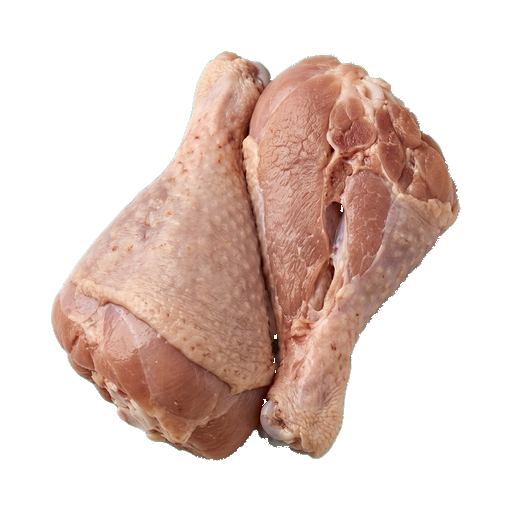
Turkey drumstick
Turkey drumstick is the lower part of a bird's leg with bone, meat, and skin, characterized by a dense, slightly tougher texture compared to the breast. Drumstick meat contains more fat and collagen, making it ideal for braising, roasting, and simmering for broths — it becomes tender and juicy with prolonged heat treatment. When selecting, pay attention to the color of the meat (should be pinkish-brown) and smell, and when substituting with chicken drumstick, keep in mind that turkey takes slightly longer to cook due to its larger size.
Micronutrients
per 100 g
Minerals
Vitamins
About
Turkey drumstick is a meat that often remains in the shadow of the breast, yet deserves the attention of anyone who cooks at home. It's the lower part of a bird's leg, where muscles that work constantly are concentrated, so the meat turns out dark, dense, and rich in flavor. Cooking a drumstick is easier than it seems: it forgives errors in temperature and time, and stays juicy even with slight overcooking.
Taste and Texture
Turkey drumstick has a more pronounced, almost meaty flavor compared to white breast meat. It contains more fat, which makes the meat softer and more aromatic. The texture is dense, but with proper cooking becomes tender, and the skin becomes crispy when fried. This part is ideal for prolonged cooking — stewing, baking, making broth, where the meat becomes even more tender.
How to Cook Shank
- Roasting whole — the simplest method. Rub with spices, place on a baking sheet with vegetables, and roast in the oven for 1.5–2 hours at 180 degrees.
- Braising in a pot or Dutch oven produces tender, juicy meat. Perfect for stew, pilaf, or soup.
- Pan-frying before roasting adds a crispy crust and deepens the flavor.
- Boiling for broth — the shank releases plenty of collagen, resulting in a rich, gelatinous broth.
Pairing suggestions
Shank works well with classic vegetables: carrots, onions, potatoes, and celery. It appreciates herbs — thyme, rosemary, sage — and isn't afraid of bold spices. Garlic, ginger, pepper, and turmeric highlight its meaty character. The acidity of lemon or white wine helps balance the richness.
Selection and Storage
Look for a drumstick with pink skin, without dark spots and unpleasant odor. The meat should be firm, not soft. One drumstick typically weighs 400–700 grams — one is enough for one to two people. It keeps in the refrigerator for 2–3 days, in the freezer — up to three months. Before cooking, take it out of the freezer the night before to thaw in the refrigerator.
Practical tip
Chicken legs are cheaper than breast and taste better too. If you're cooking for a large group or want to save money, this is your option. One leg on a plate looks impressive and beautiful, and it's easier to cook than breaking down a whole bird. Start with simple roasting with salt, pepper, and herbs — and you'll understand why this cut is underrated.
Nutrition
per 100 g
- Calories
- 135 kcal
- Protein
- 26 g
- Fat
- 2.7 g
- Carbs
- 0 g
Micronutrients
per 100 g
Macronutrients
- Fiber
- 0 g
- Sugars
- 0 g
- Saturated fat
- 1.896 g
- Monounsaturated fat
- 2.314 g
- Polyunsaturated fat
- 1.958 g
- Omega-3 (EPA + DHA)
- 0.01 g
- Cholesterol
- 82 mg
- Water
- 73.37 g
Minerals
- Sodium
- 86 mg
- Potassium
- 208 mg
- Calcium
- 9 mg
- Magnesium
- 21 mg
- Phosphorus
- 151 mg
- Iron
- 1.14 mg
- Zinc
- 2.92 mg
- Copper
- 0.08 mg
- Manganese
- 0.01 mg
- Selenium
- 20.3 mcg
Vitamins
- Vitamin A (RAE)
- 26 mcg
- Vitamin D
- 0.5 mcg
- Vitamin E
- 0.18 mg
- Vitamin K
- 0 mcg
- Vitamin C
- 0 mg
- Vitamin B1 (thiamin)
- 0.05 mg
- Vitamin B2 (riboflavin)
- 0.28 mg
- Vitamin B3 (niacin)
- 4.8 mg
- Vitamin B5 (pantothenic acid)
- 1.05 mg
- Vitamin B6
- 0.34 mg
- Vitamin B9 (folate, DFE)
- 6 mcg
- Vitamin B12
- 1.9 mcg
Measures and weight
- 1 pcs
- 450 g
Measure calculator
- Weight
- 100 g
- Calories
- 135 kcal