Usuba
Usuba
Beef Brains
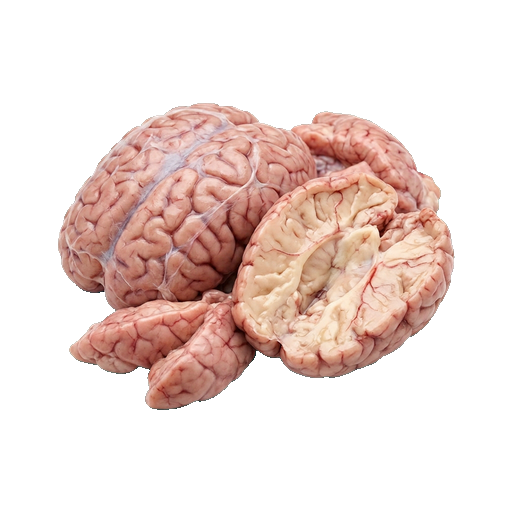
Beef brains are a delicate offal with a tender, creamy texture and a mild, slightly sweet flavor. They require careful cleaning to remove blood vessels and membranes before cooking, as well as pre-soaking in cold water or milk to remove blood. Versatile in cooking: suitable for frying, stewing, adding to pâtés and forcemeats, but require careful heat control to prevent them from falling apart and to keep them juicy.
Micronutrients
per 100 g
Minerals
Vitamins
About
Beef brains are one of the most tender offal cuts, which often remains in the shadow of more popular options. This is a delicacy with a subtle, almost neutral flavor and an airy texture that, when properly prepared, becomes the main trump card of the dish. If you've never cooked brains before, now is the time to start: they open new horizons in cooking and require very little effort.
Taste and Texture
Beef brains have a soft, creamy flavor without the sharp notes usually associated with offal. Texture is the main thing: firm on the outside thanks to the membrane, tender and almost creamy inside. When boiled, brains become even more delicate; when pan-fried, they acquire a light crispy crust while remaining soft inside.
Preparation and Culinary Use
Before cooking brains, they need to be properly prepared. Soak them in cold water for half an hour, then carefully remove the membrane and blood clots. This is a simple process, but it is important for the purity of taste. After that, boil in salted water with a bay leaf and pepper for 15–20 minutes — the brains will become firmer and will be ready for further processing.
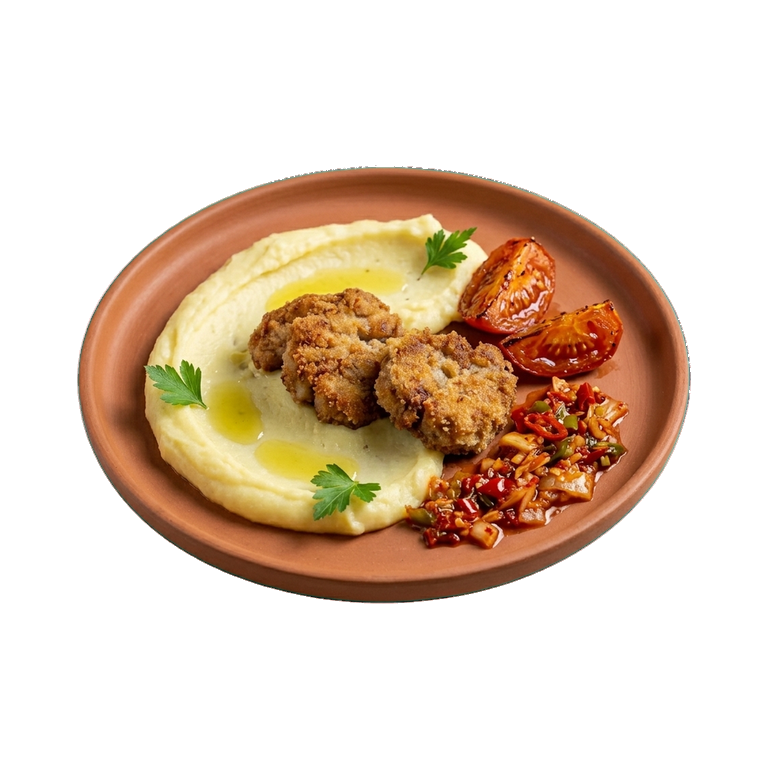
In the kitchen, brains play different roles. They are fried in butter with herbs, added to pâtés and terrines, used in salads, and baked in cream sauce. The classic method is to fry slices until golden brown and serve with lemon and parsley. Brains absorb flavors well, making them ideal for marinades and spiced sauces.
Pairings and Side Dishes
- Butter, lemon and parsley — a classic trio that highlights delicacy
- Capers and anchovies — add saltiness and contrast with softness
- Black pepper, nutmeg and thyme — spices that don't overpower, but complement
- Mashed potatoes, polenta or croutons — neutral side dishes that make brains shine
- Tomato sauce — for bolder combinations with bright notes
Selection and Storage
When selecting, pay attention to the color: brains should be pale pink or cream-colored, without dark spots or bluish discoloration. The surface should be moist, but not slippery. Buy brains on the day of cooking or store in the refrigerator for no more than a day in an airtight container. If you need to postpone the dish, freeze the brains — they tolerate freezing well and maintain quality for up to three months.
Beef brains are an opportunity to experiment with classic European cuisine without requiring complex skills. Once you try them, you'll understand why this offal is considered a delicacy, not just a way to utilize scraps.
Nutrition
per 100 g
- Calories
- 136 kcal
- Protein
- 10.2 g
- Fat
- 10.6 g
- Carbs
- 0 g
Micronutrients
per 100 g
Macronutrients
- Fiber
- 0 g
- Sugars
- 0 g
- Saturated fat
- 2.3 g
- Monounsaturated fat
- 1.89 g
- Polyunsaturated fat
- 1.586 g
- Omega-3 (EPA + DHA)
- 0.851 g
- Cholesterol
- 3010 mg
- Water
- 76.29 g
Minerals
- Sodium
- 126 mg
- Potassium
- 274 mg
- Calcium
- 43 mg
- Magnesium
- 13 mg
- Phosphorus
- 362 mg
- Iron
- 2.55 mg
- Zinc
- 1.02 mg
- Copper
- 0.29 mg
- Manganese
- 0.03 mg
- Selenium
- 21.3 mcg
Vitamins
- Vitamin A (RAE)
- 7 mcg
- Vitamin E
- 0.99 mg
- Vitamin K
- 0 mcg
- Vitamin C
- 10.7 mg
- Vitamin B1 (thiamin)
- 0.09 mg
- Vitamin B2 (riboflavin)
- 0.2 mg
- Vitamin B3 (niacin)
- 3.55 mg
- Vitamin B5 (pantothenic acid)
- 2.01 mg
- Vitamin B6
- 0.23 mg
- Vitamin B9 (folate, DFE)
- 3 mcg
- Vitamin B12
- 9.5 mcg
Measures and weight
- 1 pcs
- 1400 g
Measure calculator
- Weight
- 100 g
- Calories
- 136 kcal