Usuba
Usuba
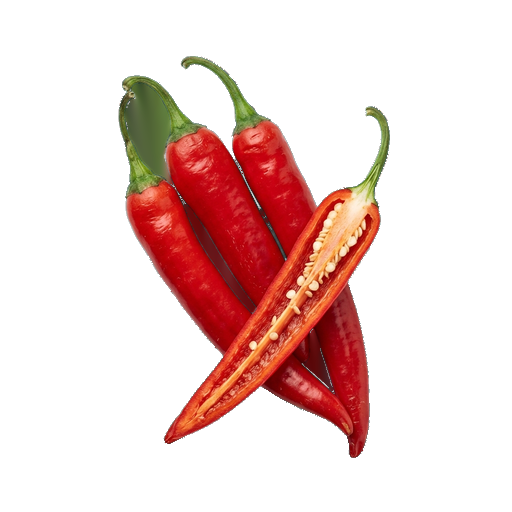
Red long chili pepper
A hot pepper with a thin, elongated pod of red color, featuring medium heat and fruity aroma with a light sweetness. Used in Asian cuisine for preparing pastes, sauces, and marinades, as well as added fresh to salads and appetizers. When selecting, prefer firm pods without wrinkles, and to reduce the heat, remove the seeds and white partition inside the pepper.
Micronutrients
per 100 g
Minerals
Vitamins
About
Red long chili pepper is a hot pod that can be found on store shelves in various forms: fresh with a glossy skin, dried, or ground. Its main distinction from other hot peppers is that the heat comes gradually, not knocking you off your feet, while the taste remains bright and multifaceted. That's why it's loved by those who want to add spiciness without aggression.
Aroma and taste
Fresh red pepper smells of greenery with fruity notes — there's something sweet in its aroma, despite the heat. On the palate, it first delivers sweetness, then gradually builds heat that doesn't burn the tongue but warms it. Dried pepper becomes more concentrated: the aroma deepens, smoky notes emerge, the taste becomes more peppery and less fruity.
How to use it
- Fresh peppers are sliced into thin rings and added to salads, marinades, and sauces — where they work as a fragrant accent
- In hot dishes, they are placed whole or in pieces to regulate the heat: leave it in the dish — spicier, remove it after cooking — milder
- Dried ground pepper goes into spice blends for meat, fish, vegetables, and even sweet dishes — where it adds depth
- Whole dried pods are infused in oil, vinegar, or alcohol to create an aromatic base for sauces
Successful Pairings
Red long pepper pairs well with garlic, ginger, and lemon — they enhance its fruity notes. With meat, especially beef and chicken, it reveals its full potential, adding piquancy to the dish. In Asian cuisine, it is often combined with soy sauce, fish sauce, and coconut milk. With cream sauces, pepper creates an interesting contrast, and with tomatoes and onions, it becomes the foundation of classic spicy pastas and sauces.
Selection and Storage
- Fresh pepper should be firm, with smooth shiny skin without wrinkles and soft spots
- The color should be deep red — this is a sign of ripeness and maximum sweetness
- Store fresh pepper in the refrigerator in a plastic container or paper bag — it will last two to three weeks
- Dried pepper should be placed in a glass jar with a tight lid in a dark place — with proper storage it retains its aroma for a year or longer
- Ground pepper loses volatile oils faster, so use it within a few months after opening
If the pepper seems too hot, remove the seeds before use — most of the heat is concentrated in them, while the flavor will remain bright.
Nutrition
per 100 g
- Calories
- 40 kcal
- Protein
- 1.9 g
- Fat
- 0.4 g
- Carbs
- 8.8 g
Micronutrients
per 100 g
Macronutrients
- Fiber
- 1.5 g
- Sugars
- 5.3 g
- Saturated fat
- 0.042 g
- Monounsaturated fat
- 0.024 g
- Polyunsaturated fat
- 0.239 g
- Omega-3 (EPA + DHA)
- 0 g
- Cholesterol
- 0 mg
- Water
- 88.02 g
Minerals
- Sodium
- 9 mg
- Potassium
- 322 mg
- Calcium
- 14 mg
- Magnesium
- 23 mg
- Phosphorus
- 43 mg
- Iron
- 1.03 mg
- Zinc
- 0.26 mg
- Copper
- 0.13 mg
- Manganese
- 0.19 mg
- Selenium
- 0.5 mcg
Vitamins
- Vitamin A (RAE)
- 48 mcg
- Vitamin D
- 0 mcg
- Vitamin E
- 0.69 mg
- Vitamin K
- 14 mcg
- Vitamin C
- 143.7 mg
- Vitamin B1 (thiamin)
- 0.07 mg
- Vitamin B2 (riboflavin)
- 0.09 mg
- Vitamin B3 (niacin)
- 1.24 mg
- Vitamin B5 (pantothenic acid)
- 0.2 mg
- Vitamin B6
- 0.51 mg
- Vitamin B9 (folate, DFE)
- 23 mcg
- Vitamin B12
- 0 mcg
Measures and weight
- 1 pcs
- 15 g
Measure calculator
- Weight
- 100 g
- Calories
- 40 kcal