Usuba
Usuba
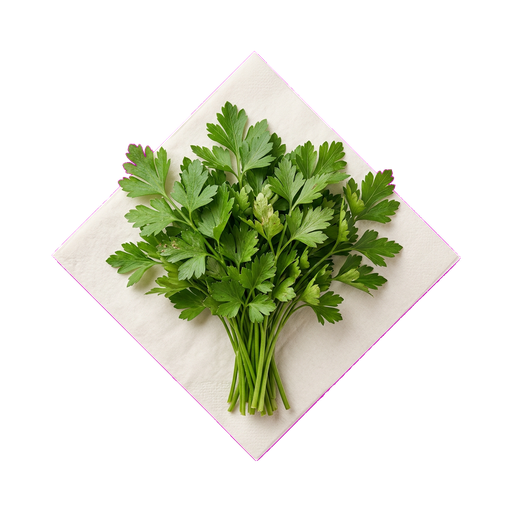
Parsley leaves
Fresh parsley with its slightly bitter, herbaceous flavor and bright aroma is a versatile herb for finishing touches and flavoring dishes. Leaves are added to soups, salads, sauces, and side dishes, and are also used as a base for herb butter or pesto. When selecting, pay attention to leaf firmness and fresh smell, avoiding wilted and darkened bunches; parsley is best stored in a glass of water in the refrigerator or wrapped in damp cloth.
Micronutrients
per 100 g
Minerals
Vitamins
About
Parsley is one of those ingredients that works in the kitchen on two levels at once. On the one hand, it's a practical herb that sits in the refrigerator and saves a dish at the last moment. On the other hand, it's a real flavor tool if you know how to use it. Parsley leaves are fresh, invigorating, with a slight bitterness that balances rich and heavy dishes.
Taste and Aroma
Fresh parsley smells of greenery, but not bland — the aroma has a tartness, almost a herbal note. The taste is clean, slightly sharp, with a barely noticeable bitterness that appears on the finish. This bitterness is not irritating, but rather "clarifies" the taste buds. If the leaves are young and tender, the bitterness is almost imperceptible; more mature leaves express character more distinctly.
Important note: dried parsley is a completely different ingredient. During drying, freshness is lost, leaving only bitterness and dust. Fresh leaves are an entirely different story. They bring liveliness, brightness, and a sense of "just picked from the garden" to the dish.
Role in dishes
- The finishing touch for soups and broths — parsley adds freshness when the dish is already ready
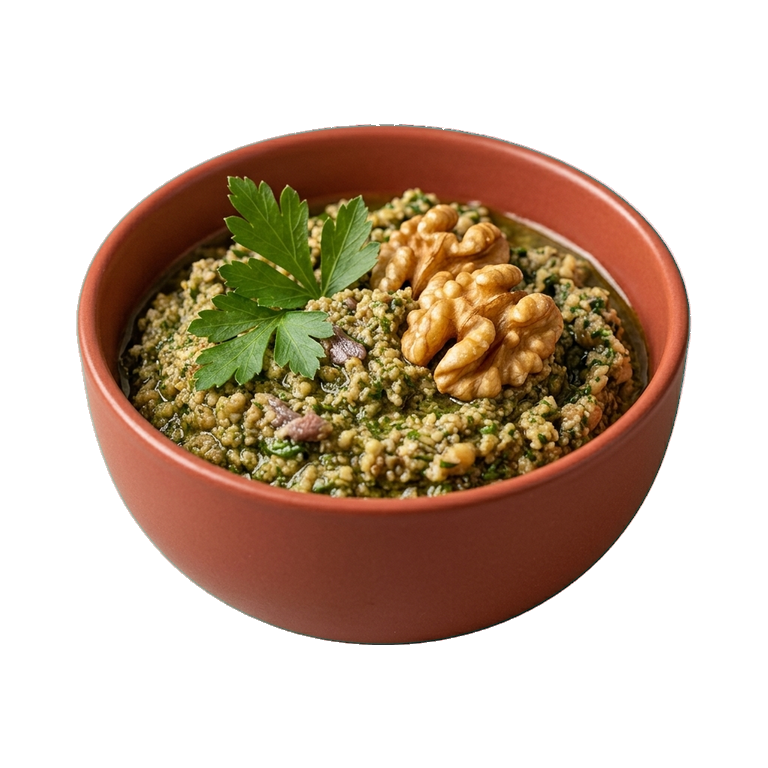
- Base for sauces and dressings — parsley with garlic and oil becomes the base for chimichurri, pesto or simple fish dressing
- Salad component — works well with vegetables, meat, fish, cheese
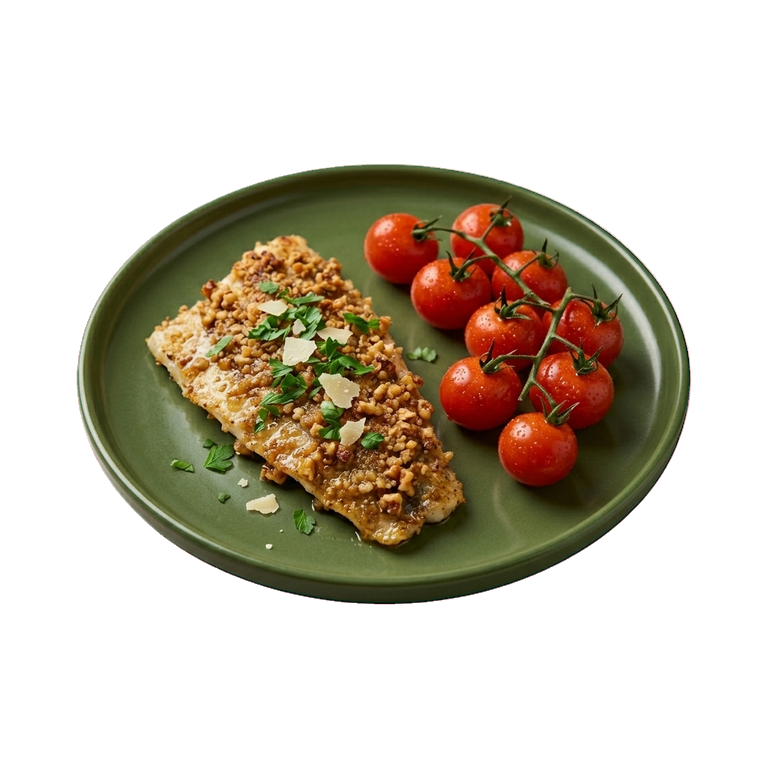
- Garnish and flavor for meat and fish dishes — sprinkled on top or served as a side for steak, cutlet, baked fish
- Ingredient in marinades and oils — parsley slowly releases its aroma when infused in oil or vinegar
Pairings
Parsley gets along with everything that needs to be "refreshed". Garlic and lemon are its classic partners, together they create a powerful flavor duo. With olive oil, parsley becomes more rounded and soft. It works well with sea fish, seafood, and meat broth. It's not afraid of heat — pepper and parsley enhance each other. Even in simple mashed potatoes, a pinch of fresh parsley changes how you perceive the dish.
Selection and Storage
When selecting, look at the leaves: they should be bright green, firm, without dark spots or slime. The smell should be fresh, herbal, without mustiness. Yellowed or wilted leaves are a sign that the parsley is already losing its freshness. The bunch should be dense, the stems firm, not brittle.
- Parsley in the refrigerator is stored in a container or wrapped in a damp towel — this way it doesn't wilt or dry out
- You can place a bunch in a glass of water, cover it with a bag on top — parsley will last a week
- Freezing works, but some freshness is lost; it's better to use fresh parsley
- Finely chopped parsley sprinkled with salt keeps for several days — salt draws out moisture and preserves it
Add parsley at the end of cooking or right before serving. If you boil it for too long, it will lose its aroma and become bitter. Freshness is its main advantage.
Nutrition
per 100 g
- Calories
- 36 kcal
- Protein
- 3 g
- Fat
- 0.5 g
- Carbs
- 6.3 g
Micronutrients
per 100 g
Macronutrients
- Fiber
- 3.3 g
- Sugars
- 0.85 g
- Saturated fat
- 0.132 g
- Monounsaturated fat
- 0.295 g
- Polyunsaturated fat
- 0.124 g
- Omega-3 (EPA + DHA)
- 0 g
- Cholesterol
- 0 mg
- Water
- 87.71 g
Minerals
- Sodium
- 56 mg
- Potassium
- 554 mg
- Calcium
- 138 mg
- Magnesium
- 50 mg
- Phosphorus
- 58 mg
- Iron
- 6.2 mg
- Zinc
- 1.07 mg
- Copper
- 0.15 mg
- Manganese
- 0.16 mg
- Selenium
- 0.1 mcg
Vitamins
- Vitamin A (RAE)
- 421 mcg
- Vitamin D
- 0 mcg
- Vitamin E
- 0.75 mg
- Vitamin K
- 1640 mcg
- Vitamin C
- 133 mg
- Vitamin B1 (thiamin)
- 0.09 mg
- Vitamin B2 (riboflavin)
- 0.1 mg
- Vitamin B3 (niacin)
- 1.31 mg
- Vitamin B5 (pantothenic acid)
- 0.4 mg
- Vitamin B6
- 0.09 mg
- Vitamin B9 (folate, DFE)
- 152 mcg
- Vitamin B12
- 0 mcg
Measures and weight
- 1 tbsp
- 4.5 g
- 1 tsp
- 1.5 g
- 1 cup
- 75 g
- 1 bunch
- 50 g
- 1 sprig
- 2 g
Measure calculator
- Weight
- 100 g
- Calories
- 36 kcal