Usuba
Usuba
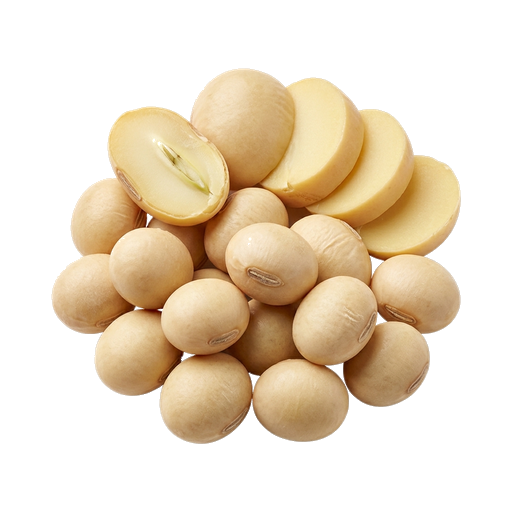
Soybeans
Soybeans are legumes with a neutral flavor and dense texture that serve as the foundation for numerous products ranging from tofu to soy sauce. In cooking, they are valued for their high protein content and ability to absorb surrounding flavors, making them work well in soups, stews, and Asian dishes. When selecting, pay attention to the integrity of the beans and absence of mold, and when cooking, soak them beforehand to reduce cooking time and improve digestibility.
Micronutrients
per 100 g
Minerals
Vitamins
About
Soybeans are a versatile ingredient that works equally well in everyday cooking and professional cuisine. They are rich in protein, making them an ideal base for vegetarian and vegan dishes, but also beneficial for those simply seeking a meat alternative. Their main advantage is that they have virtually no flavor of their own — they are a blank canvas that absorbs the aromas and spices of surrounding ingredients.
Taste and Texture
Freshly cooked soybeans have a tender, creamy texture with a subtle nutty undertone. When you cook them from scratch, they become soft but retain their shape and don't fall apart. Canned beans are softer and require less preparation time, although they often contain excess sodium — it's worth rinsing them before use. Frozen soybeans (edamame) hold their structure best and are ideal if you need a firm texture in your finished dish.
How to use them
Soybeans work everywhere: in soups, where they absorb the broth and become softer, in salads as a source of protein and satiety, in purees instead of meat for pâtés and spreads. They can be fried with vegetables and spices, added to stews, used as a base for cutlets or ground meat. The main thing is not to overcook them, otherwise the texture will be lost.
- Dry beans should be soaked overnight, then cooked for 1.5–2 hours until soft
- Canned beans are ready to use immediately after rinsing
- Frozen edamame are cooked for 5–7 minutes or simply reheated
- For puree, it is better to use canned or well-cooked beans
Pairings and Seasonings
Soybeans pair well with Asian spices: ginger, garlic, soy sauce, and sesame oil. They don't conflict with hot spices, absorb lemon and vinegar acidity well. In European cuisine, you can cook them with herbs — thyme, rosemary — and vegetables like tomatoes and onions. If you're making soup or stew, add the beans at the end of cooking so they don't fall apart.
Selection and Storage
When buying dried beans, pay attention to their appearance: they should be whole, without cracks or signs of moisture. Choose canned beans without added sugar if possible. Dried beans are stored in an airtight container in a cool place for up to a year. After opening, transfer canned beans to a glass container and keep them in the refrigerator for no more than three days. Frozen edamame is stored in the freezer for several months.
Soybeans are an investment in healthy eating and culinary flexibility. They are cheaper than meat, last longer in storage, and allow you to experiment with different cuisines without limitations. Start with canned soybeans if you want quick results: they require minimal preparation and are ready to use immediately.
Nutrition
per 100 g
- Calories
- 446 kcal
- Protein
- 36.5 g
- Fat
- 19.9 g
- Carbs
- 30.2 g
Micronutrients
per 100 g
Macronutrients
- Fiber
- 9.3 g
- Sugars
- 7.33 g
- Saturated fat
- 2.884 g
- Monounsaturated fat
- 4.404 g
- Polyunsaturated fat
- 11.255 g
- Cholesterol
- 0 mg
- Water
- 8.54 g
Minerals
- Sodium
- 2 mg
- Potassium
- 1797 mg
- Calcium
- 277 mg
- Magnesium
- 280 mg
- Phosphorus
- 704 mg
- Iron
- 15.7 mg
- Zinc
- 4.89 mg
- Copper
- 1.66 mg
- Manganese
- 2.52 mg
- Selenium
- 17.8 mcg
Vitamins
- Vitamin A (RAE)
- 1 mcg
- Vitamin D
- 0 mcg
- Vitamin E
- 0.85 mg
- Vitamin K
- 47 mcg
- Vitamin C
- 6 mg
- Vitamin B1 (thiamin)
- 0.87 mg
- Vitamin B2 (riboflavin)
- 0.87 mg
- Vitamin B3 (niacin)
- 1.62 mg
- Vitamin B5 (pantothenic acid)
- 0.79 mg
- Vitamin B6
- 0.38 mg
- Vitamin B9 (folate, DFE)
- 375 mcg
- Vitamin B12
- 0 mcg
Measures and weight
- 1 tbsp
- 11.3 g
- 1 tsp
- 3.8 g
- 1 cup
- 187.5 g
Measure calculator
- Weight
- 100 g
- Calories
- 446 kcal