Usuba
Usuba
Phyllo dough
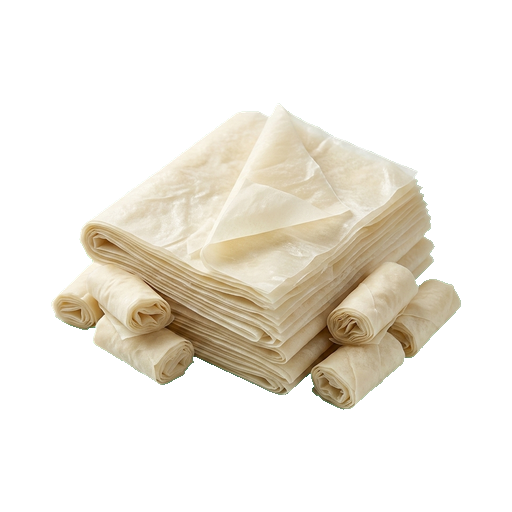
Phyllo dough is a thin, flaky pastry made from flour, water, and oil, rolled out into transparently thin sheets. It is used in Mediterranean and Middle Eastern cuisine to create crispy layered pastries, sweet pastilles, and appetizers. When working with phyllo, it is important to keep the sheets under a damp towel to prevent them from drying out, and to brush each layer with oil or melted butter before baking to achieve a golden, crispy crust.
Micronutrients
per 100 g
Minerals
About
Phyllo dough is thin, almost transparent sheets of pastry that turn any dish into a crispy masterpiece. When you unwrap the package, a stack of almost paper-thin sheets appears before you, ready to work with. This dough requires no kneading or rolling — it's already brought to the perfect state. That's why it has become a lifesaver for those who want to make puff pastries without hours of manipulating butter and dough.
Structure and Crispness
The main property of phyllo is its ability to create a crispy crust. Each sheet is so thin that during baking it becomes almost brittle, and when you bite into the finished pie, it breaks with a pleasant crunch. The secret is that butter or oil must be placed between the layers — it is responsible for the flakiness and golden color. Without butter, the sheets will stick together and lose all their appeal.
Where and how to use
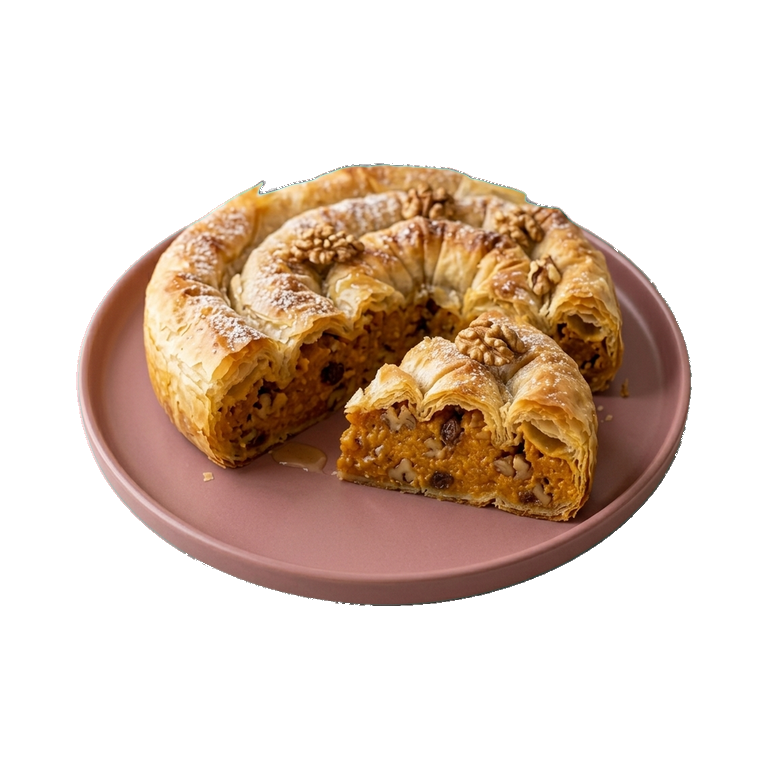
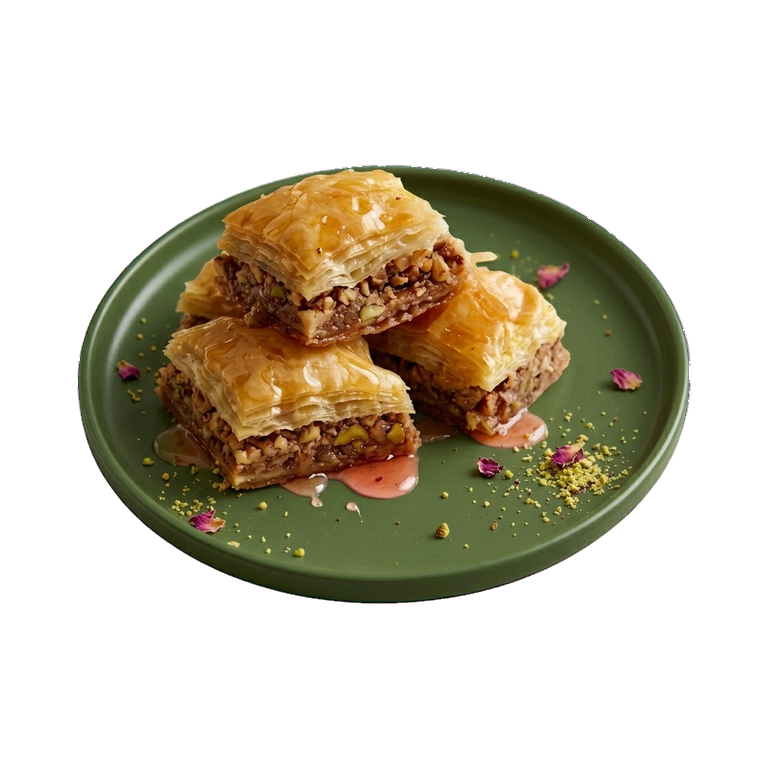
- Sweet pies with fruits, nuts and honey — a classic direction
- Savory options with cheese, spinach, meat or vegetables — a complete main course
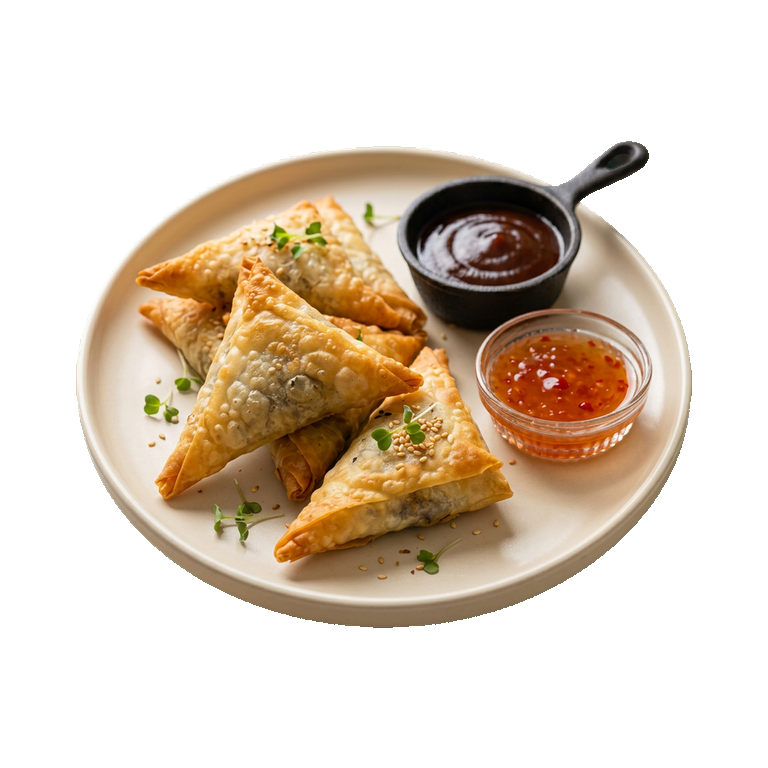
- Envelopes and rolls — a convenient format for appetizers and aperitifs
- Puff pastry cups for creams and mousses — a dessert base
Working with phyllo is simple, but requires attention. The sheets are very fragile and dry quickly, so take them out one at a time and immediately cover the rest with a damp towel. Brush each sheet with oil using a brush — there's no need to drench it, a thin layer is enough. Fold, crumple, cut — the dough allows for experimentation. Bake at a temperature of 180–200 degrees until golden, usually this takes 20–40 minutes depending on the size and filling.
Selection and Storage
Phyllo dough is sold in freezers, and that's perfectly fine — frozen storage preserves its quality. Before using, let it thaw at room temperature right in the package; this will take an hour or two. Don't rush to unwrap it — condensation damages the dough. Store an opened package in the refrigerator for no more than a few days, wrapped tightly in plastic film. If you haven't used all the sheets, you can return them to the freezer.
Phyllo is not just an ingredient, it's a tool for quickly creating impressive dishes. Whether it's a delicate apple pie or a crispy cheese pastry, this dough works reliably and gives your kitchen professional results without unnecessary complications.
Nutrition
per 100 g
- Calories
- 271 kcal
- Protein
- 9.4 g
- Fat
- 1.5 g
- Carbs
- 54.3 g
Micronutrients
per 100 g
Macronutrients
- Fiber
- 1.9 g
- Sugars
- 0.18 g
- Saturated fat
- 1.47 g
- Monounsaturated fat
- 3.149 g
- Polyunsaturated fat
- 0.923 g
- Omega-3 (EPA + DHA)
- 0 g
- Cholesterol
- 0 mg
- Water
- 32.6 g
Minerals
- Sodium
- 483 mg
- Potassium
- 74 mg
- Calcium
- 11 mg
- Magnesium
- 15 mg
- Phosphorus
- 75 mg
- Iron
- 3.21 mg
- Zinc
- 0.49 mg
- Copper
- 0.1 mg
- Manganese
- 0.48 mg
- Selenium
- 23.3 mcg
Vitamins
- Vitamin A (RAE)
- 0 mcg
- Vitamin D
- 0 mcg
- Vitamin E
- 0.08 mg
- Vitamin K
- 2.5 mcg
- Vitamin C
- 0 mg
- Vitamin B1 (thiamin)
- 0.54 mg
- Vitamin B2 (riboflavin)
- 0.34 mg
- Vitamin B3 (niacin)
- 4.07 mg
- Vitamin B5 (pantothenic acid)
- 0.3 mg
- Vitamin B6
- 0.03 mg
- Vitamin B9 (folate, DFE)
- 137 mcg
- Vitamin B12
- 0 mcg
Measures and weight
- 1 slice
- 18 g
Measure calculator
- Weight
- 100 g
- Calories
- 271 kcal