Usuba
Usuba
Veal mince
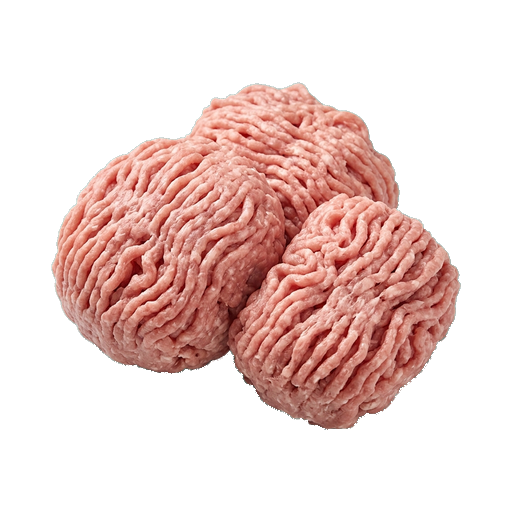
Tender meat of young veal, ground into minced meat, is distinguished by its delicate flavor and light color. Thanks to its low fat content, veal mince is ideal for tender cutlets, meatballs, and pâtés, but requires the addition of fat or binding ingredients to prevent the dish from becoming dry. When choosing, pay attention to freshness and the uniform pinkish hue of the mince, and when storing, keep it in the refrigerator for no more than two days.
Micronutrients
per 100 g
Minerals
Vitamins
About
Veal mince is one of the most delicate varieties of ground meat, valued for its tender structure and mild flavor. It is meat from a young animal, so it contains less fat and connective tissue than beef mince. These characteristics make it an ideal choice for dishes where a fine consistency and delicate taste are needed.
Taste and texture
Veal mince has a tender, almost neutral meat flavor without sharp notes. The texture turns out airy and uniform, especially if the mince is fresh. During cooking, it does not release an abundance of juice like fattier options, so dishes turn out more compact and dense. This quality is especially valuable when preparing cutlets, meatballs, and pâtés.
Where to use
Veal mince is a universal helper in the kitchen. It makes tender meatballs, airy cutlets, and soft fricadelles. It works well in fillings for pelmeni and dumplings, where its delicacy will not be overpowered by other ingredients. Mince is suitable for pâtés, terrines, and mousse-like dishes that require a smooth, homogeneous structure.
- Cutlets and meatballs — classic use
- Fillings for dumplings and varenyky
- Pâtés and terrines
- Filling for lasagna and pasta bake
- Base for meatballs in cream sauce
Combinations with other ingredients
The delicate flavor of veal mince is beautifully complemented by soft spices and aromatic vegetables. It doesn't require masking, so spices should be added carefully. Classic partners are white bread soaked in milk, egg, and butter. White pepper, nutmeg, and fresh parsley work well as spices. Creamy sauces will enhance the tenderness of the meat, while light vegetable side dishes won't overload the dish.
Selection and Storage
When choosing, pay attention to the color of the ground meat — it should be light pink, without gray spots. Fresh veal mince has a pleasant meaty smell without acidity. If the mince is purchased in a package, check the production date and expiration date. Store in the refrigerator on the coldest shelf for no more than two days, or freeze immediately for longer storage. When frozen, ground meat maintains quality for up to three months.
Tip: if veal mince seems too dry while cooking, add a little cream or milk when mixing. This will give the dish tenderness and juiciness without disrupting its delicate flavor.
Nutrition
per 100 g
- Calories
- 158 kcal
- Protein
- 19.5 g
- Fat
- 8.5 g
- Carbs
- 0 g
Micronutrients
per 100 g
Macronutrients
- Fiber
- 0 g
- Sugars
- 0 g
- Saturated fat
- 5.108 g
- Monounsaturated fat
- 6.159 g
- Polyunsaturated fat
- 0.732 g
- Omega-3 (EPA + DHA)
- 0.002 g
- Cholesterol
- 49 mg
- Water
- 66.16 g
Minerals
- Sodium
- 103 mg
- Potassium
- 198 mg
- Calcium
- 12 mg
- Magnesium
- 31 mg
- Phosphorus
- 197 mg
- Iron
- 1.37 mg
- Zinc
- 2.51 mg
- Copper
- 0.09 mg
- Manganese
- 0.01 mg
- Selenium
- 13.1 mcg
Vitamins
- Vitamin A (RAE)
- 0 mcg
- Vitamin D
- 1.3 mcg
- Vitamin E
- 0.49 mg
- Vitamin K
- 1.4 mcg
- Vitamin C
- 0 mg
- Vitamin B1 (thiamin)
- 0.11 mg
- Vitamin B2 (riboflavin)
- 0.28 mg
- Vitamin B3 (niacin)
- 5.52 mg
- Vitamin B5 (pantothenic acid)
- 0.67 mg
- Vitamin B6
- 0.45 mg
- Vitamin B9 (folate, DFE)
- 3 mcg
- Vitamin B12
- 2.3 mcg
Measure calculator
- Weight
- 100 g
- Calories
- 158 kcal