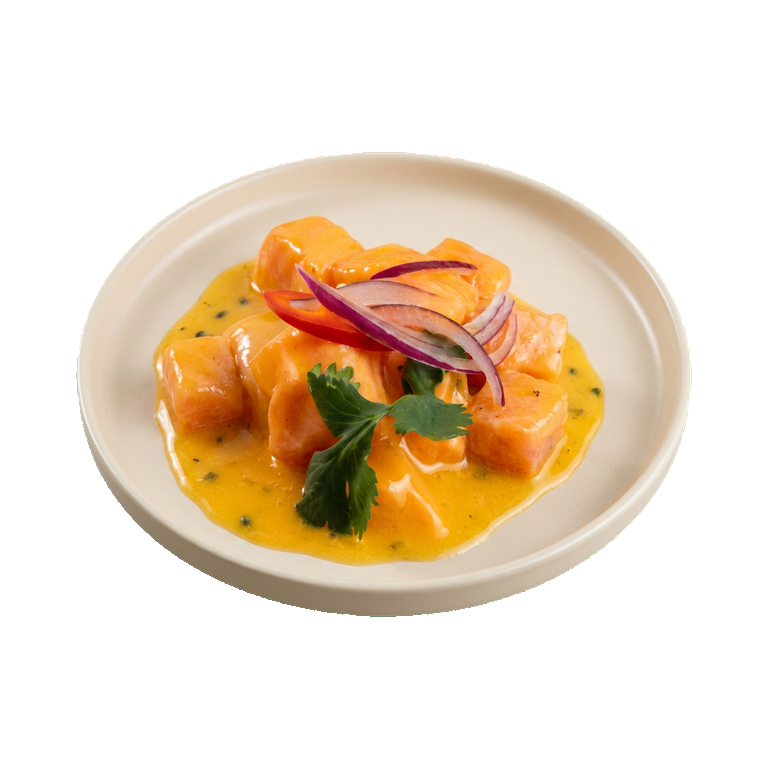
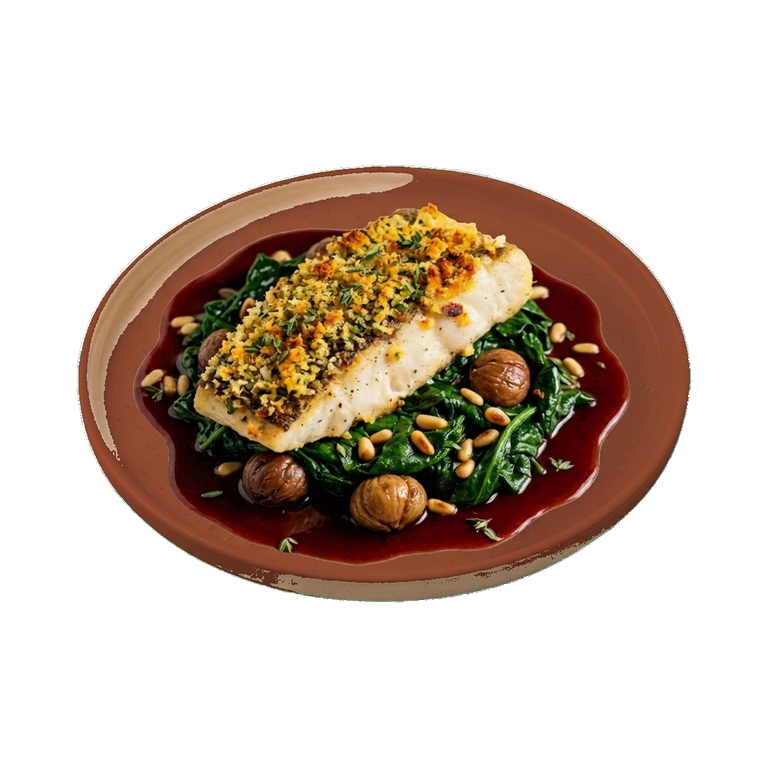
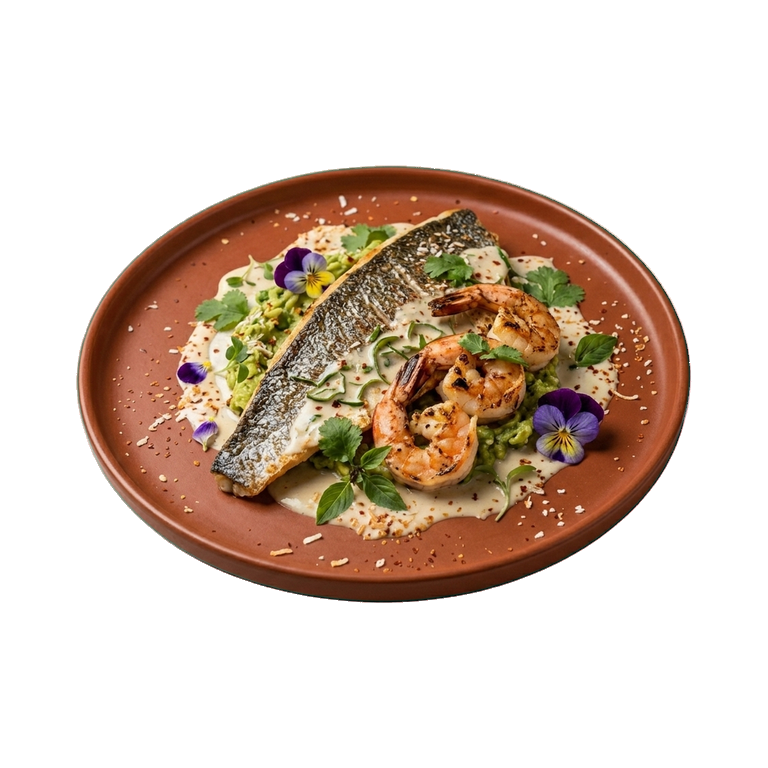
Usuba
Usuba
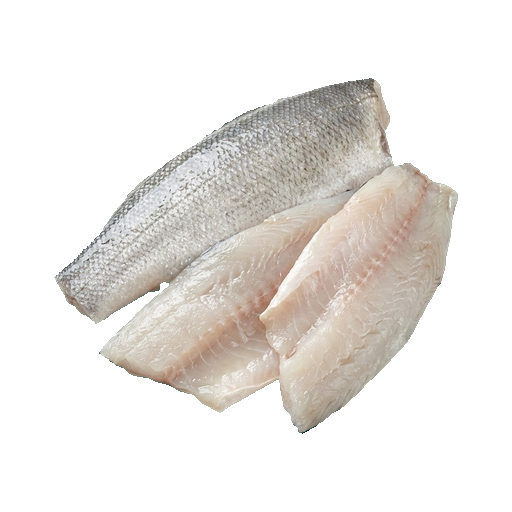
Sea bass fillet
Sea bass fillet — tender white meat with a delicate flavor and firm yet easily separable texture that has virtually no odor. This seafood delicacy is versatile in cooking: it can be baked, stewed, steamed, or grilled, and it absorbs sauces and spices well. When selecting, pay attention to freshness — the meat should be firm, light silvery in color, without darkening, and have a clean sea aroma.
Micronutrients
per 100 g
Minerals
Vitamins
- AVitamin A (RAE)46mcg5% DV
- DVitamin D5.6mcg37% DV
- EVitamin E0.84mg6% DV
- KVitamin K0.1mcg0% DV
- B1Vitamin B1 (thiamin)0.11mg7% DV
- B2Vitamin B2 (riboflavin)0.12mg7% DV
- B3Vitamin B3 (niacin)1.6mg8% DV
- B5Vitamin B5 (pantothenic acid)0.75mg15% DV
- B6Vitamin B60.4mg20% DV
- B9Vitamin B9 (folate, DFE)5mcg1% DV
- B12Vitamin B120.3mcg10% DV
About
Sea bass fillet is a white fish with a delicate flavor and tender texture that works equally well in home cooking and in restaurants. The meat is practically boneless, with a barely noticeable fish aroma, easy to cook, and quickly absorbs the flavors of sauces and spices. If you're looking for a versatile ingredient that doesn't require complex preparation and pairs well with any side dish — this is your choice.
Taste and Aroma
Sea bass meat is tender, slightly sweet, with a barely perceptible hint of the sea. It doesn't have a strong fishy taste — this is important for those who don't like pronounced fish flavors. The fiber density is moderate: the fillet doesn't fall apart during cooking, but it doesn't become rubbery either if you don't overcook it. The fat content is moderate, which makes the fish dietary but still sufficiently juicy.
How to cook
Sea bass cooks quickly: in a pan with oil, it takes about 4–5 minutes on each side over medium heat. The skin becomes crispy while the meat stays moist inside. You can bake it in the oven at 200 degrees for 12–15 minutes, wrapped in foil with lemon and herbs. On the grill, the fillet holds its shape and gets beautiful grill marks. The key is not to overcook: overcooked fillet loses its juiciness.
Pairings and Dishes
- Lemon, lime and white wine — a classic duo that highlights the lightness of fish
- Creamy herb sauces (dill, parsley, tarragon) — fish absorbs them perfectly
- Asian flavors: soy sauce, ginger, coconut milk — fillet responds well to exotic tastes
- Vegetables as side dishes: asparagus, zucchini, cherry tomatoes — do not overpower the delicate taste
- Risotto or pasta — sea bass adds elegance to simple dishes
Selection and Storage
When purchasing, pay attention to the color: the meat should be white or with a barely pinkish tint, without gray spots. Fillets should not be slippery or have a sharp smell. If buying a whole fish, choose one with clear eyes and pink gills. Fresh fillet is stored in the refrigerator for a maximum of two days, in the freezer — up to three months. Thaw in the refrigerator, not at room temperature.
Sea bass is one of the few fish that tastes great even with minimal preparation. If you're in a hurry, simply salt the fillet, pepper it, drizzle with oil, and pan-fry it. That's all it takes to make it delicious.
Nutrition
per 100 g
- Calories
- 82 kcal
- Protein
- 17.7 g
- Fat
- 1.2 g
- Carbs
- 0 g
Micronutrients
per 100 g
Macronutrients
- Fiber
- 0 g
- Sugars
- 0 g
- Saturated fat
- 0.511 g
- Monounsaturated fat
- 0.424 g
- Polyunsaturated fat
- 0.743 g
- Omega-3 (EPA + DHA)
- 0.595 g
- Cholesterol
- 41 mg
- Water
- 78.27 g
Minerals
- Sodium
- 68 mg
- Potassium
- 256 mg
- Calcium
- 10 mg
- Magnesium
- 41 mg
- Phosphorus
- 194 mg
- Iron
- 0.29 mg
- Zinc
- 0.4 mg
- Copper
- 0.02 mg
- Manganese
- 0.02 mg
- Selenium
- 36.5 mcg
Vitamins
- Vitamin A (RAE)
- 46 mcg
- Vitamin D
- 5.6 mcg
- Vitamin E
- 0.84 mg
- Vitamin K
- 0.1 mcg
- Vitamin C
- 0 mg
- Vitamin B1 (thiamin)
- 0.11 mg
- Vitamin B2 (riboflavin)
- 0.12 mg
- Vitamin B3 (niacin)
- 1.6 mg
- Vitamin B5 (pantothenic acid)
- 0.75 mg
- Vitamin B6
- 0.4 mg
- Vitamin B9 (folate, DFE)
- 5 mcg
- Vitamin B12
- 0.3 mcg
Measures and weight
- 1 pcs
- 180 g
Measure calculator
- Weight
- 100 g
- Calories
- 82 kcal