Usuba
Usuba
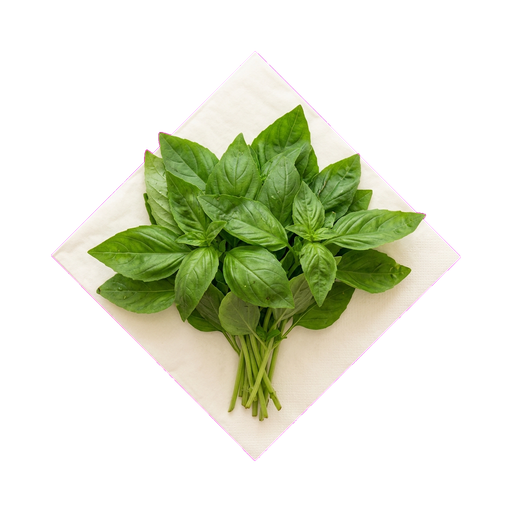
Green basil leaves
Tender greens with a characteristic sweet-peppery aroma and slightly sharp, spicy flavor. Basil is added fresh to salads, pasta, sauces, and soups at the end of cooking to preserve the brightness of taste and aroma. When selecting, prefer young leaves with rich color, and when substituting, use oregano or parsley, though they will give the dish a completely different character.
Micronutrients
per 100 g
Minerals
Vitamins
About
Green basil is perhaps the most versatile and recognizable of all varieties of this herb. Its fresh leaves with a characteristic sharp aroma and a light peppery note are capable of transforming almost any dish, from a simple tomato sauce to a complex marinade. Unlike its dark-leafed counterparts, green basil is more delicate, with pronounced sweetness and floral notes.
Aroma and taste
When you rub fresh basil leaves between your fingers, you immediately feel a bright, refreshing aroma with spicy notes. The taste is simultaneously sweet and sharp, with a slight bitterness and a minty aftertaste. The intensity of the aroma depends on the harvest time and storage conditions — freshly cut basil smells much brighter than basil that has been sitting in the refrigerator for a week.
Role in dishes
Green basil works in two modes: as a fresh addition at the final moment of cooking and as a component for sauces and marinades. In the first case, it preserves maximum aroma and flavor, in the second — its volatile oils dissolve in the liquid, creating a deep, multilayered taste. The leaves handle fatty products well, helping to lighten the perception of heavy dishes.
Classic Combinations
- Tomatoes and tomatoes — basil emphasizes their sweetness and acidity
- Olive oil and garlic — the basis for sauces and dressings
- Mozzarella and cream cheeses — a delicate addition to salads
- Seafood, especially shrimp and fish — a refreshing contrast
- Chicken and light broths — basil makes them more aromatic
- Lemon and lime — acidity enhances the spiciness of the herb
Selection and Storage
When selecting, look for bright green leaves without dark spots or signs of wilting. The stems should be firm, not soft. Green basil is very delicate and requires careful handling — do not press it in the bag and do not crumple the leaves unnecessarily.
- At room temperature: place the bunch in a glass of water like flowers, and use within 2–3 days
- In the refrigerator: wrap in a damp towel and place in the vegetable compartment for 5–7 days
- Freezing: finely chop the leaves, spread on ice cubes with olive oil and freeze — convenient for sauces
- Drying: hang the bunches in a dark, well-ventilated place, but keep in mind that dried basil loses much of its aroma
Practical Tips
Add fresh green basil at the end of cooking — prolonged heat kills its aroma. If you're preparing a hot dish, add the leaves 1–2 minutes before serving or directly to the plate. For sauces and dressings, use a blender or mortar, but not metal knives, which oxidize the leaves and give them a bitter taste. If the leaves are too large, tear them by hand instead of cutting — this way you'll preserve more essential oils.
Green basil is an herb that requires minimal effort and delivers maximum results. Even a pinch of fresh leaves can breathe life into a simple dish, so always keep it on hand if you cook frequently.
Nutrition
per 100 g
- Calories
- 23 kcal
- Protein
- 3.2 g
- Fat
- 0.6 g
- Carbs
- 2.7 g
Micronutrients
per 100 g
Macronutrients
- Fiber
- 1.6 g
- Sugars
- 0.3 g
- Saturated fat
- 0.041 g
- Monounsaturated fat
- 0.088 g
- Polyunsaturated fat
- 0.389 g
- Omega-3 (EPA + DHA)
- 0 g
- Cholesterol
- 0 mg
- Water
- 92.06 g
Minerals
- Sodium
- 4 mg
- Potassium
- 295 mg
- Calcium
- 177 mg
- Magnesium
- 64 mg
- Phosphorus
- 56 mg
- Iron
- 3.17 mg
- Zinc
- 0.81 mg
- Copper
- 0.39 mg
- Manganese
- 1.15 mg
- Selenium
- 0.3 mcg
Vitamins
- Vitamin A (RAE)
- 264 mcg
- Vitamin D
- 0 mcg
- Vitamin E
- 0.8 mg
- Vitamin K
- 414.8 mcg
- Vitamin C
- 18 mg
- Vitamin B1 (thiamin)
- 0.03 mg
- Vitamin B2 (riboflavin)
- 0.08 mg
- Vitamin B3 (niacin)
- 0.9 mg
- Vitamin B5 (pantothenic acid)
- 0.21 mg
- Vitamin B6
- 0.16 mg
- Vitamin B9 (folate, DFE)
- 68 mcg
- Vitamin B12
- 0 mcg
Measures and weight
- 1 tbsp
- 4.5 g
- 1 tsp
- 1.5 g
- 1 cup
- 75 g
- 1 sprig
- 5 g
- 1 stalk
- 5 g
Measure calculator
- Weight
- 100 g
- Calories
- 23 kcal