Usuba
Usuba
Caviar
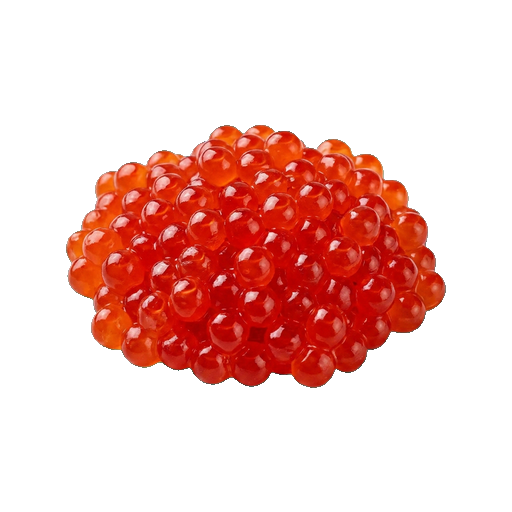
Caviar is fish roe used as a standalone delicacy or as an ingredient for garnishing and enriching dishes. The taste depends on the type of fish: black caviar (sturgeon) has a rich, slightly bitter flavor, while red caviar (salmon) is more delicate and slightly sweet. When selecting caviar, pay attention to the integrity of the eggs, uniform color, and absence of fish oil smell. When storing, remember that caviar requires cold temperatures and spoils quickly after opening the package.
Micronutrients
per 100 g
Minerals
Vitamins
- AVitamin A (RAE)271mcg32% DV
- DVitamin D2.9mcg19% DV
- EVitamin E1.89mg13% DV
- KVitamin K0.6mcg1% DV
- B1Vitamin B1 (thiamin)0.19mg13% DV
- B2Vitamin B2 (riboflavin)0.62mg34% DV
- B3Vitamin B3 (niacin)0.12mg1% DV
- B5Vitamin B5 (pantothenic acid)3.5mg70% DV
- B6Vitamin B60.32mg16% DV
- B9Vitamin B9 (folate, DFE)50mcg13% DV
- B12Vitamin B1220mcg667% DV
About
Caviar: From Delicacy to Everyday Ingredient
Caviar consists of fish roe that is ready for consumption. Each egg is packed with concentrated nutrients: proteins, fats, B vitamins, selenium, and iodine. In the kitchen, caviar works on multiple levels: it decorates the dish, adds a salty and slightly fishy flavor, and creates an interesting texture with a characteristic pop on the tongue.
The main property of caviar is its versatility. Caviar grains are equally good on a simple butter sandwich and as part of a complex dish. They require no culinary processing, work as an independent ingredient and easily integrate into any composition. This makes it a convenient tool for the chef: need a final touch, texture, saltiness or visual accent — caviar is always at hand.
Taste and Aroma
The flavor profile of caviar depends on the type of fish. Red caviar (from salmon) provides a mild, slightly sweet taste with delicate fish notes. Black caviar (from sturgeon) is more intense, with a pronounced maritime character and oiliness. Pollock or cod caviar is more neutral, salty, and affordable.
The aroma of caviar is delicate and pleasant, reminiscent of the smell of seawater and seaweed. When stored properly, it remains fresh and does not become fishy or unpleasant. Texture is the main highlight: the elastic shell of the egg bursts when pressed, releasing the inner contents, which creates an interesting contrast on the tongue.
Where caviar works in dishes
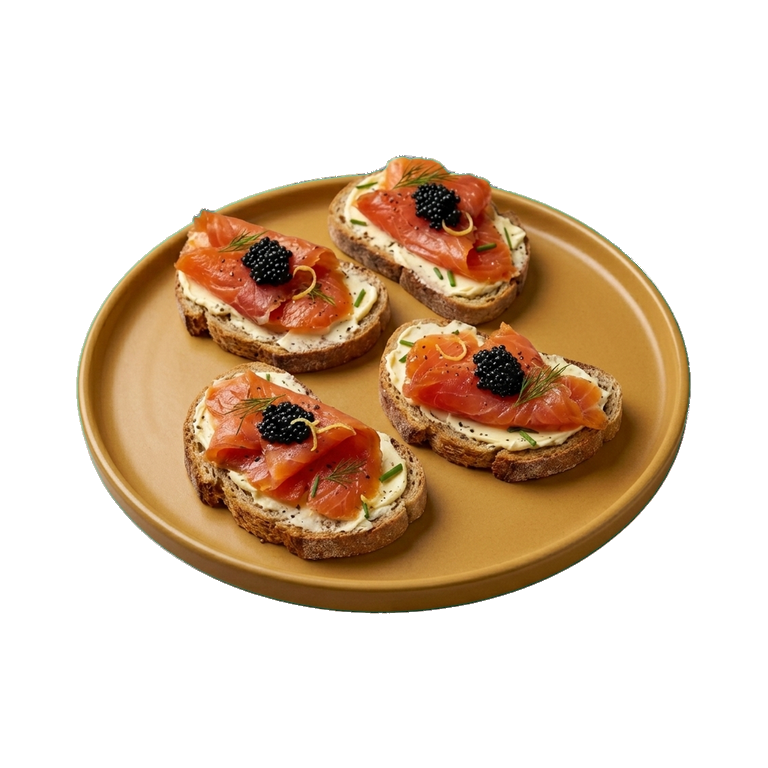
- On appetizers and canapés — red caviar on butter or sour cream on bread or pancakes
- In sushi and rolls — adds saltiness and texture, often used as a topping
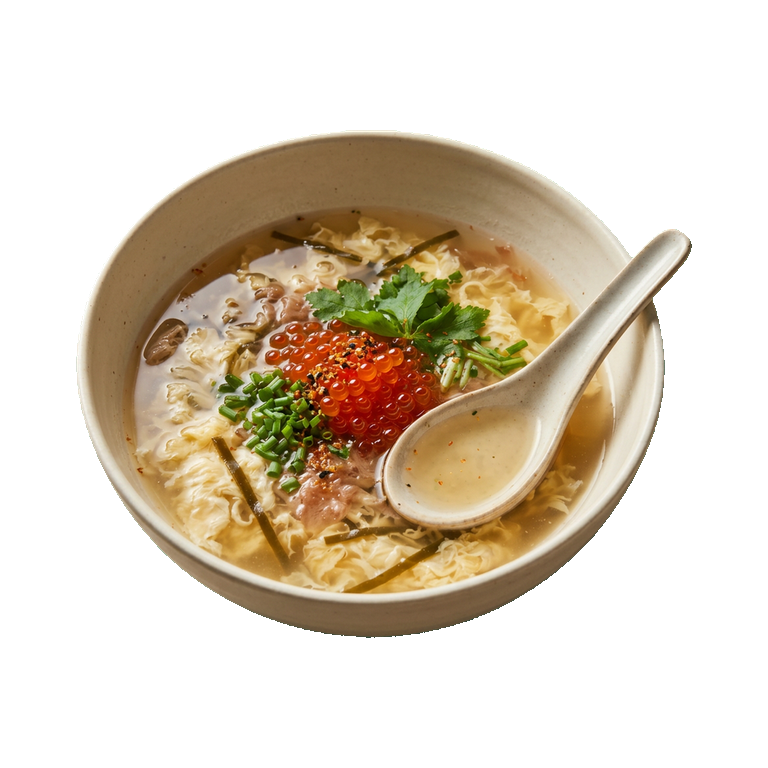
- On hot dishes — caviar is the final touch on potatoes, rice or pasta, retaining its properties thanks to residual heat
- In salads — caviar works as a salty accent and visual element, especially in light vegetable compositions
- On hot appetizers — caviar decorates pancakes, cheese tartlets, eggs, seafood
Selection and Storage
When choosing caviar, pay attention to the integrity of the eggs — they should be firm, not dented or stuck together in a lump. The liquid in the jar should be minimal, and the smell should be fresh, without ammonia or mustiness. Caviar in hermetic packaging lasts longer in the refrigerator than in loose form.
After opening the jar, it's best to transfer the caviar to a glass container and seal it tightly. Storage time in the refrigerator ranges from one week to one month depending on the type of caviar and storage conditions. Freezing caviar is not recommended: when thawed, the roe loses its elasticity and becomes watery. Serve caviar chilled, but not icy — this way its flavor opens up more fully.
Practical Combinations
Caviar works well with neutral and mild flavors: butter, sour cream, cream cheese, white bread, and pancakes. With acidity—lemon, vinegar—caviar sounds brighter. On hot dishes, caviar contrasts with warm potatoes or rice, creating an interesting temperature contrast effect.
Avoid overly bright and sharp flavors near caviar — they overpower its delicate profile. Caviar dislikes garlic, spicy seasonings, and heavy sauces. However, caviar creates harmonious combinations with seafood, white fish, avocado, and fresh herbs. Remember: caviar is a solo ingredient that sounds best in simple compositions.
Nutrition
per 100 g
- Calories
- 152 kcal
- Protein
- 24.6 g
- Fat
- 5 g
- Carbs
- 1.6 g
Micronutrients
per 100 g
Macronutrients
- Fiber
- 0 g
- Sugars
- 0 g
- Saturated fat
- 4.06 g
- Monounsaturated fat
- 4.631 g
- Polyunsaturated fat
- 7.405 g
- Omega-3 (EPA + DHA)
- 6.541 g
- Cholesterol
- 588 mg
- Water
- 47.5 g
Minerals
- Sodium
- 1500 mg
- Potassium
- 181 mg
- Calcium
- 275 mg
- Magnesium
- 300 mg
- Phosphorus
- 356 mg
- Iron
- 11.88 mg
- Zinc
- 0.95 mg
- Copper
- 0.11 mg
- Manganese
- 0.05 mg
- Selenium
- 65.5 mcg
Vitamins
- Vitamin A (RAE)
- 271 mcg
- Vitamin D
- 2.9 mcg
- Vitamin E
- 1.89 mg
- Vitamin K
- 0.6 mcg
- Vitamin C
- 0 mg
- Vitamin B1 (thiamin)
- 0.19 mg
- Vitamin B2 (riboflavin)
- 0.62 mg
- Vitamin B3 (niacin)
- 0.12 mg
- Vitamin B5 (pantothenic acid)
- 3.5 mg
- Vitamin B6
- 0.32 mg
- Vitamin B9 (folate, DFE)
- 50 mcg
- Vitamin B12
- 20 mcg
Measure calculator
- Weight
- 100 g
- Calories
- 152 kcal