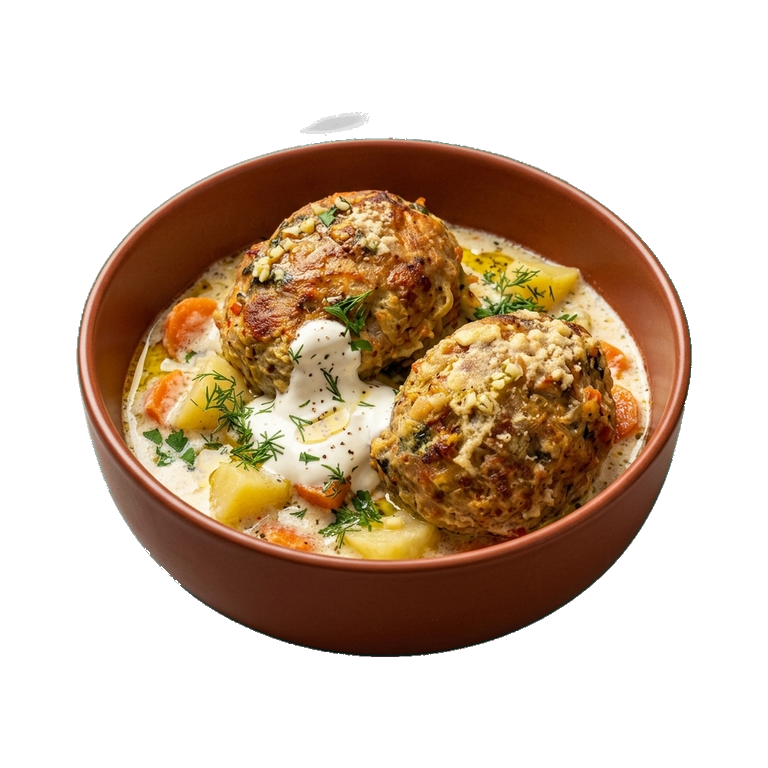
Usuba
Usuba
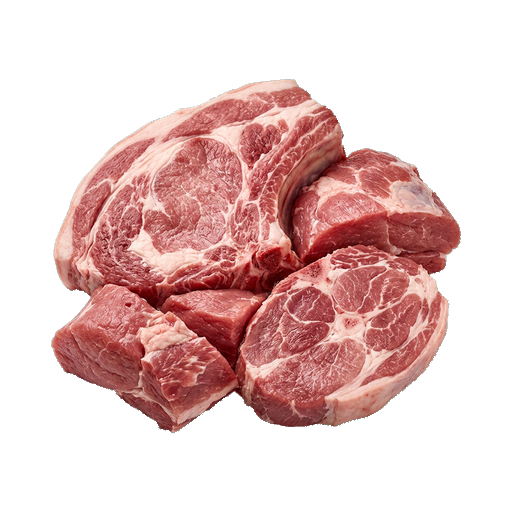
Pork shoulder
Pork shoulder is meat from the front part of the carcass with good marbling and fat layers, making it juicy and aromatic with prolonged heat treatment. The meat contains connective tissue that turns into gelatin when boiled or stewed, giving dishes a tender texture. Shoulder is ideal for soups, stews, smoking, and baking as a whole piece, but less suitable for quick searing over high heat.
Micronutrients
per 100 g
Minerals
Vitamins
- AVitamin A (RAE)2mcg0% DV
- DVitamin D1.7mcg11% DV
- EVitamin E0.19mg1% DV
- CVitamin C0.7mg1% DV
- B1Vitamin B1 (thiamin)0.77mg51% DV
- B2Vitamin B2 (riboflavin)0.28mg16% DV
- B3Vitamin B3 (niacin)3.83mg19% DV
- B5Vitamin B5 (pantothenic acid)0.72mg14% DV
- B6Vitamin B60.35mg18% DV
- B9Vitamin B9 (folate, DFE)5mcg1% DV
- B12Vitamin B120.7mcg23% DV
About
Pork shoulder is one of the most versatile and affordable cuts of meat. It is the front part of the carcass, rich in marbling and connective tissue, which when properly prepared transforms into a tender and aromatic dish. Shoulder does not require expensive ingredients or complex techniques — it is naturally generous in flavor.
Character and Flavor Profile
Pork shoulder has a deep, rich pork flavor with a subtle hint of sweetness. The fattiness of this cut is its main advantage: the fat is distributed throughout the fibers rather than concentrated in one place, so with prolonged heat treatment the meat doesn't dry out but becomes more tender. The fiber structure is relatively loose, which allows marinades and spices to easily penetrate deep into the cut.
When fried over high heat, the chuck roast develops a beautiful crust with a pronounced meaty aroma. During stewing and boiling, it releases a rich, gelatinous broth that gives dishes thickness and rounded flavor complexity.
Where and how to cook it
Pork shoulder is an ideal choice for dishes requiring prolonged heat treatment. It holds its shape well when stewed, doesn't fall apart, and doesn't turn into mush. This cut of meat calls for low heat and time: one and a half to two hours in the oven or on the stovetop will unlock its full potential.
- Braising in own juice or with vegetables and broth
- Baking whole with herbs and garlic
- Boiling for broths and soups
- Smoking and curing
- Ground meat for cutlets, rolls and pâtés
- Roasts and stews with root vegetables
Flavor Pairings
Shoulder takes bright spices well: black pepper, paprika, cumin, and coriander. Acidic components — vinegar, wine, lemon — emphasize the meaty flavor and help soften the fibers. Herbs like rosemary, thyme, and bay leaf create classic combinations, while garlic and onion become almost essential companions.
Companion vegetables — carrots, celery, potatoes — absorb the meat juices and acquire a rich flavor. If you want something unexpected, try a combination with fruity notes: apple, plum, or apricot. They don't overpower the meat but add depth to it.
Selection and Preparation
When buying, pay attention to the color: the meat should be bright pink, not pale or gray. The fat should be light, creamy, without a yellow coating. The smell should be fresh, meaty, without sour notes. If the shoulder is sold with a bone, that's a plus — the bone will add gelatin and flavor to the broth.
Before cooking, it's best to remove the meat from the refrigerator 30-40 minutes in advance so it reaches room temperature. This will ensure even heating. If the piece is large and uneven, gently pound it with a meat mallet to even out the thickness. Remove excess fat only if there's clearly too much — keep the main fat, as it's needed for flavor and juiciness.
Store fresh shoulder blade in the refrigerator for no more than 3–4 days in the coldest part, wrapped in parchment paper or plastic wrap. Frozen meat keeps for 3–4 months. Thaw it in the refrigerator, not at room temperature — this way it will retain more juice and nutrients.
Nutrition
per 100 g
- Calories
- 257 kcal
- Protein
- 16.4 g
- Fat
- 21 g
- Carbs
- 0 g
Micronutrients
per 100 g
Macronutrients
- Fiber
- 0 g
- Sugars
- 0 g
- Saturated fat
- 6.24 g
- Monounsaturated fat
- 8.01 g
- Polyunsaturated fat
- 1.92 g
- Omega-3 (EPA + DHA)
- 0 g
- Cholesterol
- 71 mg
- Water
- 64.02 g
Minerals
- Sodium
- 65 mg
- Potassium
- 302 mg
- Calcium
- 15 mg
- Magnesium
- 18 mg
- Phosphorus
- 182 mg
- Iron
- 1.05 mg
- Zinc
- 2.7 mg
- Copper
- 0.08 mg
- Manganese
- 0.01 mg
- Selenium
- 25.5 mcg
Vitamins
- Vitamin A (RAE)
- 2 mcg
- Vitamin D
- 1.7 mcg
- Vitamin E
- 0.19 mg
- Vitamin K
- 0 mcg
- Vitamin C
- 0.7 mg
- Vitamin B1 (thiamin)
- 0.77 mg
- Vitamin B2 (riboflavin)
- 0.28 mg
- Vitamin B3 (niacin)
- 3.83 mg
- Vitamin B5 (pantothenic acid)
- 0.72 mg
- Vitamin B6
- 0.35 mg
- Vitamin B9 (folate, DFE)
- 5 mcg
- Vitamin B12
- 0.7 mcg
Measure calculator
- Weight
- 100 g
- Calories
- 257 kcal