Usuba
Usuba
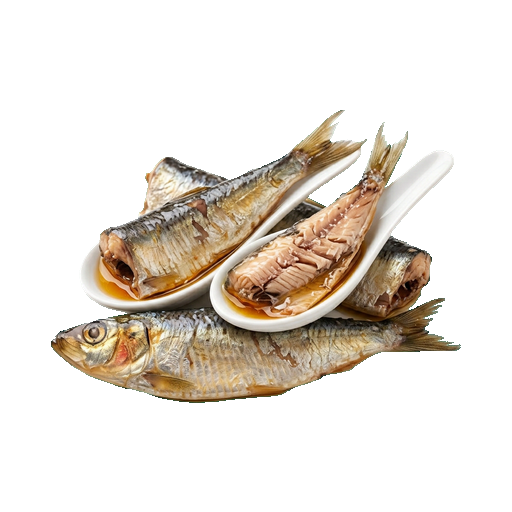
Sardines in Oil
Canned sardines in oil are a ready-to-eat product made from small saltwater fish, packaged in cans with vegetable or olive oil. The fish has tender, slightly oily meat with a characteristic salty flavor and subtle fish aroma; the bones in such canned products are usually soft and edible. They are used in salads, appetizers, sandwiches, pastas, and as a standalone snack, while the oil from the can works well for dressings and sauces.
Micronutrients
per 100 g
Minerals
Vitamins
- AVitamin A (RAE)32mcg4% DV
- DVitamin D4.8mcg32% DV
- EVitamin E2.04mg14% DV
- KVitamin K2.6mcg2% DV
- B1Vitamin B1 (thiamin)0.08mg5% DV
- B2Vitamin B2 (riboflavin)0.23mg13% DV
- B3Vitamin B3 (niacin)5.25mg26% DV
- B5Vitamin B5 (pantothenic acid)0.64mg13% DV
- B6Vitamin B60.17mg9% DV
- B9Vitamin B9 (folate, DFE)10mcg3% DV
- B12Vitamin B128.9mcg297% DV
About
Sardines in oil are one of the most practical canned products in the kitchen. They require minimal preparation, yet bring rich flavor and nutritional value to any dish. Open a can, and you already have a ready ingredient for a salad, sandwich, or hot dish. It is this versatility that makes sardines an indispensable helper when you have no time to cook, but want to eat well.
Taste and Aroma
Sardines have a pronounced sea flavor with a slight saltiness and oily texture. The oil they are preserved in is not just a preservative, but an important part of the flavor profile. It absorbs the aroma of the fish and makes it more tender, allowing the meat to break apart more easily. Depending on the type of oil (sunflower, olive, or special), the taste can be more neutral or have its own character.
Where to use
- Salads — add protein and interesting texture, especially good with vegetables and greens
- Sandwiches and canapés — a classic option that requires no additional cooking
- Pasta — oil from the can becomes the base for a light sauce
- Pizza — spread on top of the dough before or after baking
- Appetizers and antipasti — pair well with olives, cheese and bread
- Hot dishes — can be added to soup, risotto or vegetable stew at the end of cooking
Successful Combinations
Sardines work well with acidity — lemon, vinegar, or tomatoes. They don't conflict with hot spices and seasonings, so feel free to add pepper, garlic, or herbs. Greens — parsley, dill, basil — highlight the seafood flavor. Grains and pasta enhance satiety, while fresh vegetables balance the oiliness.
How to Choose and Store
When choosing, pay attention to the integrity of the jar or tin packaging — dents and rust are unacceptable. Check the production date and expiration date. The oil should be transparent, without cloudiness. If the can is hermetically sealed, sardines can be stored for years in a cool, dry place. After opening, transfer the remainder to a glass container and keep it in the refrigerator — consume within a few days.
Oil from a can is not waste. Pour it into a salad, use it as a bread dressing, or add it to a sauce. It's a concentrated flavor that doesn't need translation.
Canned sardines in oil are not just a time-saver, but also a way to diversify your menu without complicated preparation. They work well in everyday dishes and are suitable for a festive table if served beautifully. Keep a can in reserve — it will come in handy in any situation.
Nutrition
per 100 g
- Calories
- 208 kcal
- Protein
- 20.9 g
- Fat
- 13.6 g
- Carbs
- 0 g
Micronutrients
per 100 g
Macronutrients
- Fiber
- 0 g
- Sugars
- 0 g
- Saturated fat
- 1.528 g
- Monounsaturated fat
- 3.869 g
- Polyunsaturated fat
- 5.148 g
- Omega-3 (EPA + DHA)
- 0.982 g
- Cholesterol
- 142 mg
- Water
- 59.61 g
Minerals
- Sodium
- 307 mg
- Potassium
- 397 mg
- Calcium
- 382 mg
- Magnesium
- 39 mg
- Phosphorus
- 490 mg
- Iron
- 2.92 mg
- Zinc
- 1.31 mg
- Copper
- 0.19 mg
- Manganese
- 0.11 mg
- Selenium
- 52.7 mcg
Vitamins
- Vitamin A (RAE)
- 32 mcg
- Vitamin D
- 4.8 mcg
- Vitamin E
- 2.04 mg
- Vitamin K
- 2.6 mcg
- Vitamin C
- 0 mg
- Vitamin B1 (thiamin)
- 0.08 mg
- Vitamin B2 (riboflavin)
- 0.23 mg
- Vitamin B3 (niacin)
- 5.25 mg
- Vitamin B5 (pantothenic acid)
- 0.64 mg
- Vitamin B6
- 0.17 mg
- Vitamin B9 (folate, DFE)
- 10 mcg
- Vitamin B12
- 8.9 mcg
Measures and weight
- 1 pcs
- 45 g
Measure calculator
- Weight
- 100 g
- Calories
- 208 kcal