Usuba
Usuba
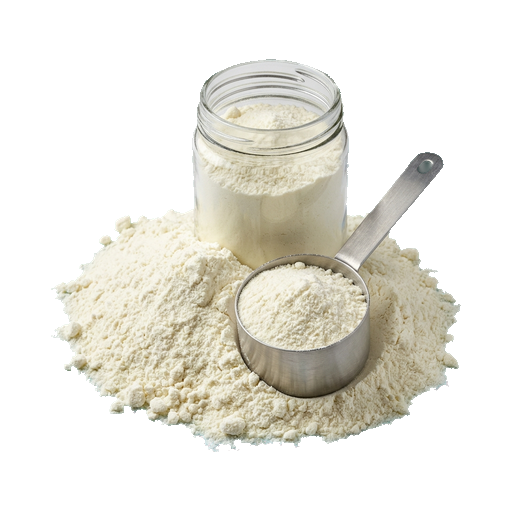
Skimmed milk powder
Nonfat dry milk is produced by removing moisture and fat from cow's milk, which allows it to be stored for long periods at room temperature. In cooking, it serves as a substitute for fresh milk in baking, sauces, and beverages, although the resulting flavor is less rich and creamy. When using it, it's important to correctly calculate the dilution ratio with water and keep in mind that such milk may add a slight dryness to a dish, so in some recipes it's worth increasing the amount of liquid or adding butter.
Micronutrients
per 100 g
Minerals
Vitamins
About
Skimmed dry milk is a concentrated dairy product obtained by removing moisture and fat from regular milk. The result is a light powder with a long shelf life and stable properties. In the kitchen, it is not just a substitute for fresh milk in an emergency, but a full-fledged ingredient with its own logic of use.
Taste and Aroma
Dry milk has a soft, slightly sweet milk flavor with barely noticeable buttery notes. When reconstituted with water, it provides a more concentrated milk profile than fresh milk — this should be taken into account when selecting proportions. The smell is neutral, milky, without sharp notes, if the product is fresh and has been stored correctly.
Where to use it
- Baking and confectionery — adds softness and richness to the taste of bread, cookies, sponge cakes
- Porridges and milk soups — dissolves evenly, leaves no lumps if properly diluted
- Sauces and gravies — thickens, adds creaminess without adding butter
- Beverages — reconstitutes in milk for tea, coffee or drinking
- Ice cream and yogurts — improves consistency and milk flavor of homemade versions
How to dilute
Standard proportion — 1 part dry milk to 8–9 parts water. If you need more concentrated milk, reduce the water to 7 parts. First, stir the powder in a small amount of cold or warm water, then add the remaining liquid. Let it stand for 15–20 minutes for complete dissolution. For baking, dry milk is often added directly to the dough along with other dry ingredients — this is simpler and more reliable.
Pairings
- With cocoa and sugar — a classic milk drink
- With honey and spices — a base for a nutritious milk cocktail
- With butter and flour — a component for milk sauces and gravies
- With eggs and vanilla — enriches batter for cupcakes and pies
Selection and Storage
When buying, pay attention to the color — it should be uniformly white or light cream, without yellow or brown spots. The smell should be clean and milky, without mustiness or rancidity. Check the packaging date: the fresher it is, the better it dissolves and the brighter the taste.
- Store in a tightly sealed container in a cool, dry place
- Ideal temperature is 15–20 degrees, away from direct sunlight
- Shelf life is usually 2–3 years, but after opening the package, it's better to use it within a month
- Moisture is the enemy of dry milk, so make sure the lid is airtight
Skimmed dry milk is especially useful when stability is needed: in baking it provides predictable results, does not depend on the quality of fresh milk on any given day, and allows you to cook in any conditions.
Nutrition
per 100 g
- Calories
- 362 kcal
- Protein
- 36.2 g
- Fat
- 1 g
- Carbs
- 52 g
Micronutrients
per 100 g
Macronutrients
- Fiber
- 0 g
- Sugars
- 51.98 g
- Saturated fat
- 0.499 g
- Monounsaturated fat
- 0.201 g
- Polyunsaturated fat
- 0.03 g
- Omega-3 (EPA + DHA)
- 0 g
- Cholesterol
- 20 mg
- Water
- 3.16 g
Minerals
- Sodium
- 535 mg
- Potassium
- 1794 mg
- Calcium
- 1257 mg
- Magnesium
- 110 mg
- Phosphorus
- 968 mg
- Iron
- 0.32 mg
- Zinc
- 4.08 mg
- Copper
- 0.04 mg
- Manganese
- 0.02 mg
- Selenium
- 27.3 mcg
Vitamins
- Vitamin A (RAE)
- 6 mcg
- Vitamin D
- 0 mcg
- Vitamin E
- 0 mg
- Vitamin K
- 0.1 mcg
- Vitamin C
- 6.8 mg
- Vitamin B1 (thiamin)
- 0.42 mg
- Vitamin B2 (riboflavin)
- 1.55 mg
- Vitamin B3 (niacin)
- 0.95 mg
- Vitamin B5 (pantothenic acid)
- 3.57 mg
- Vitamin B6
- 0.36 mg
- Vitamin B9 (folate, DFE)
- 50 mcg
- Vitamin B12
- 4 mcg
Measures and weight
- 1 tbsp
- 7.5 g
- 1 tsp
- 2.5 g
- 1 cup
- 125 g
Measure calculator
- Weight
- 100 g
- Calories
- 362 kcal