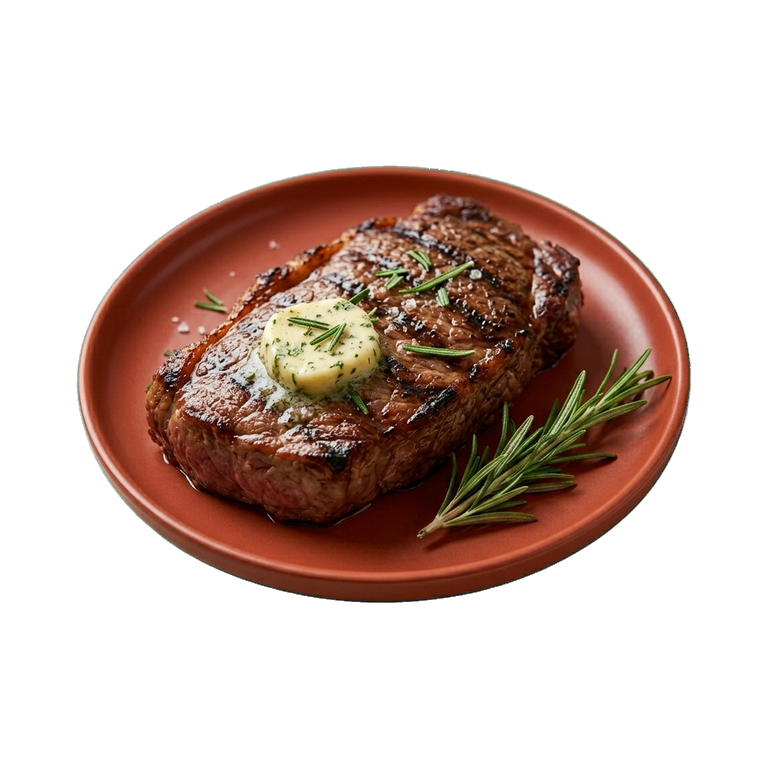
Usuba
Usuba
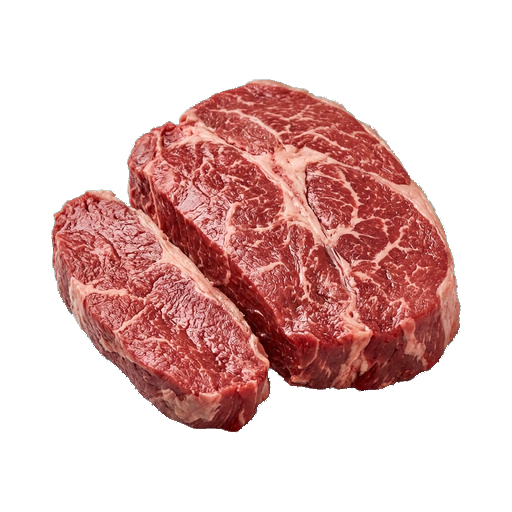
Top Blade Steak
This is a meat steak from the upper part of the shoulder blade of cattle, distinguished by good marbling and a bright meaty flavor. Thanks to the layers of fat, the steak remains juicy with proper handling, though it requires careful slicing against the grain due to its pronounced fiber structure. Suitable for grilling over high heat or on a grill, often used in steakhouses as an alternative to more expensive cuts.
Micronutrients
per 100 g
Minerals
Vitamins
- AVitamin A (RAE)3mcg0% DV
- DVitamin D0.1mcg1% DV
- EVitamin E0.17mg1% DV
- KVitamin K1.5mcg1% DV
- B1Vitamin B1 (thiamin)0.1mg7% DV
- B2Vitamin B2 (riboflavin)0.26mg14% DV
- B3Vitamin B3 (niacin)3.87mg19% DV
- B5Vitamin B5 (pantothenic acid)0.94mg19% DV
- B6Vitamin B60.4mg20% DV
- B9Vitamin B9 (folate, DFE)3mcg1% DV
- B12Vitamin B124.3mcg143% DV
About
Top blade is a shoulder steak that for a long time was considered an inexpensive working cut. But chefs have reassessed its potential, and now it has taken its place on the tables of those who appreciate rich flavor and are willing to spend time on proper preparation. The marbling of the meat here is moderate, but the fibers are arranged in such a way that with proper slicing, the steak becomes tender and juicy.
Structure and Taste
The main feature of top blade is a line of connective tissue that runs through the meat. If you cut against this layer, you get a tender piece. If you cut along it, it will be tougher. The flavor is pronounced, meaty, with a slight sweetness. There's enough fat for juiciness, but not so much that it overwhelms the dish.
How to cook
- Quick cooking over high heat: steak responds well to high temperature and cooks quickly. Two to three minutes on each side for medium-rare.
- Thin slicing against the grain: this is the key condition. Slice at an angle to cut through the fibers and make the meat more tender.
- Marinating: acid (vinegar, lemon, wine) or enzymes (ginger, pineapple) will help soften the structure in a few hours.
- Low-temperature cooking: sous-vide or oven at 55–60 °C will provide even heating and retain moisture.
What pairs well with
The rich flavor of top blade pairs well with sharp sauces: black pepper, mustard, and spicy tomato. Asian marinades with soy sauce, ginger, and garlic bring out new dimensions of the meat. Choose hearty side dishes — potatoes, root vegetables, legumes — they balance the intensity.
Selection and Storage
- Look for a dark red color without gray tones — this is a sign of freshness.
- The surface should be moist, but not wet. Excess liquid indicates improper storage.
- In the refrigerator at 0–4 °C it keeps for three to four days in an airtight container.
- Freezes well: lasts several months in the freezer. Thaw in the refrigerator, not at room temperature.
Top blade remains affordable in price, but requires an understanding of technique. If you're willing to spend time on proper slicing and marinating, you'll get a steak that matches expensive cuts in terms of flavor.
Nutrition
per 100 g
- Calories
- 198 kcal
- Protein
- 20.2 g
- Fat
- 12.8 g
- Carbs
- 0 g
Micronutrients
per 100 g
Macronutrients
- Fiber
- 0 g
- Sugars
- 0 g
- Saturated fat
- 3.153 g
- Monounsaturated fat
- 3.771 g
- Polyunsaturated fat
- 0.415 g
- Omega-3 (EPA + DHA)
- 0.001 g
- Cholesterol
- 69 mg
- Water
- 71.89 g
Minerals
- Sodium
- 82 mg
- Potassium
- 335 mg
- Calcium
- 12 mg
- Magnesium
- 19 mg
- Phosphorus
- 201 mg
- Iron
- 2.49 mg
- Zinc
- 7.55 mg
- Copper
- 0.1 mg
- Manganese
- 0.01 mg
- Selenium
- 22.6 mcg
Vitamins
- Vitamin A (RAE)
- 3 mcg
- Vitamin D
- 0.1 mcg
- Vitamin E
- 0.17 mg
- Vitamin K
- 1.5 mcg
- Vitamin C
- 0 mg
- Vitamin B1 (thiamin)
- 0.1 mg
- Vitamin B2 (riboflavin)
- 0.26 mg
- Vitamin B3 (niacin)
- 3.87 mg
- Vitamin B5 (pantothenic acid)
- 0.94 mg
- Vitamin B6
- 0.4 mg
- Vitamin B9 (folate, DFE)
- 3 mcg
- Vitamin B12
- 4.3 mcg
Measure calculator
- Weight
- 100 g
- Calories
- 198 kcal