Usuba
Usuba
Grapes
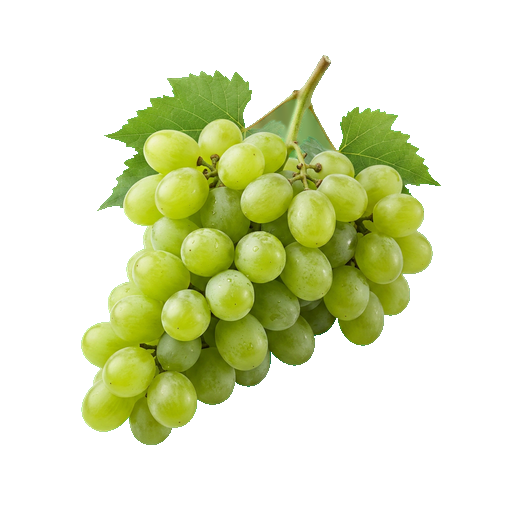
Grapes are berries with high natural sugar and acid content, making them a versatile ingredient for sweet and sour milk dishes. Fresh berries are added to salads, desserts, and beverages, while dried grapes (raisins) are used in baked goods, compotes, and rice dishes. When selecting, pay attention to the firmness of the berries without visible damage — soft grapes spoil quickly and lose their flavor.
Micronutrients
per 100 g
Minerals
About
Grapes in the Kitchen: A Versatile Helper
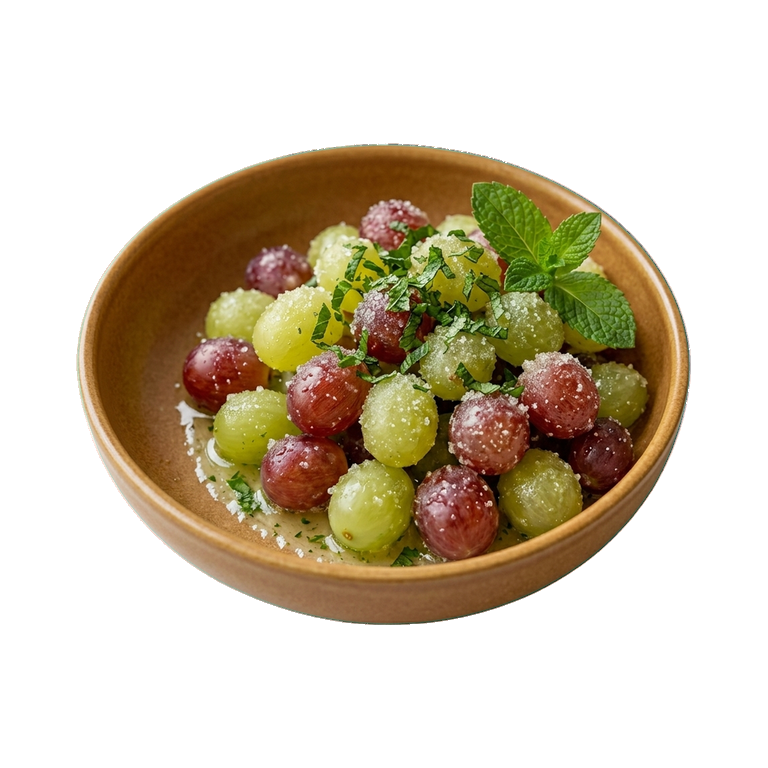
Grapes are one of those ingredients that work everywhere: fresh grapes decorate the table, dried ones become raisins for baking, and their juice and pulp transform sauces and beverages. The berry is universal precisely because it combines sweetness, light acidity, and delicate texture. This makes it an ideal base for both simple desserts and complex culinary experiments.
Taste and aroma depending on the variety
Green grapes are usually more acidic and refreshing, with herbaceous notes. Red and black varieties are sweeter, with more pronounced berry aroma and often with a light tannic aftertaste. Muscat varieties offer floral notes, while large table grapes delight with their juiciness and sugar content. The choice of variety depends on what you are preparing: more acidic grapes are suitable for compotes and fruit drinks, while sweet grapes are better for fresh salads and desserts.
Where and how to use
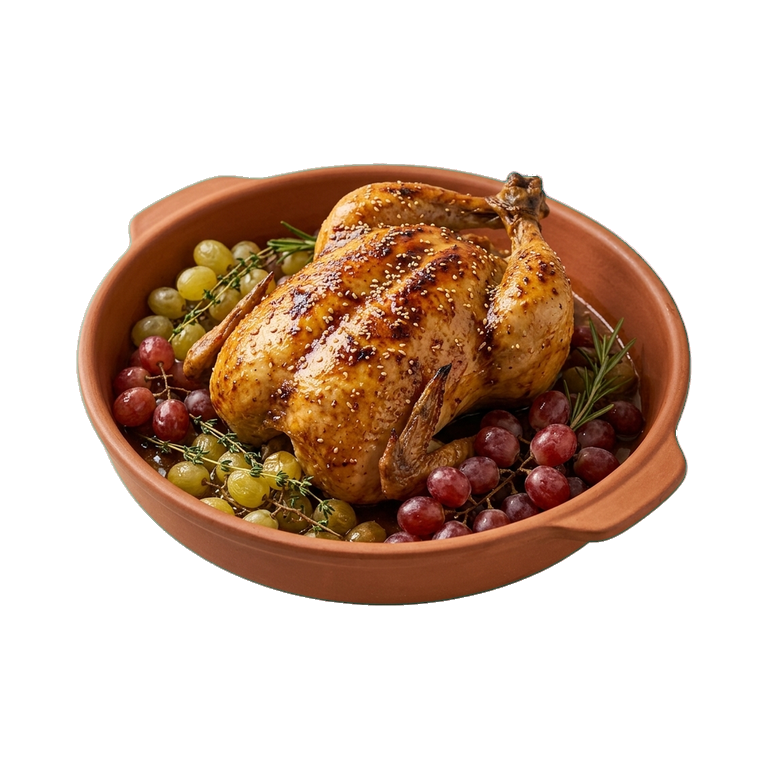
In hot dishes, grapes reveal themselves unexpectedly: add them at the end of cooking to poultry or fish, and the berries give the dish fruity sweetness and contrasting acidity. Whole berries decorate fruit salads and desserts, halves look great in compotes and punches. Grapes work well in marinades and sauces — their juice becomes the base for meat glaze.
Dried grapes (raisins) are a special case. They concentrate sweetness, become denser, and are ideal for baking, porridges, pilaf, and compotes. Before adding raisins to dough, they are often soaked in warm water or juice so they absorb moisture and become softer.
Successful Combinations
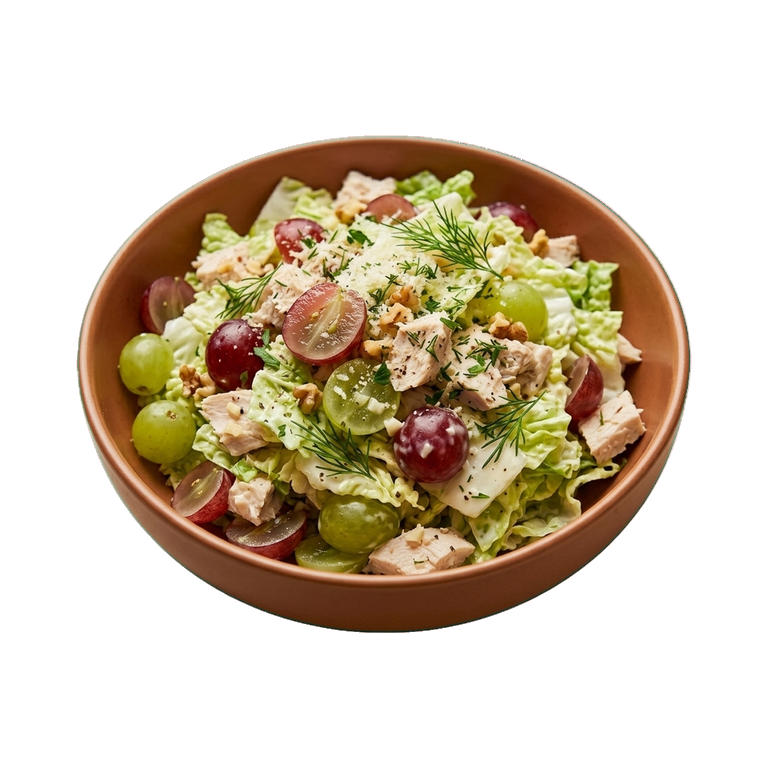
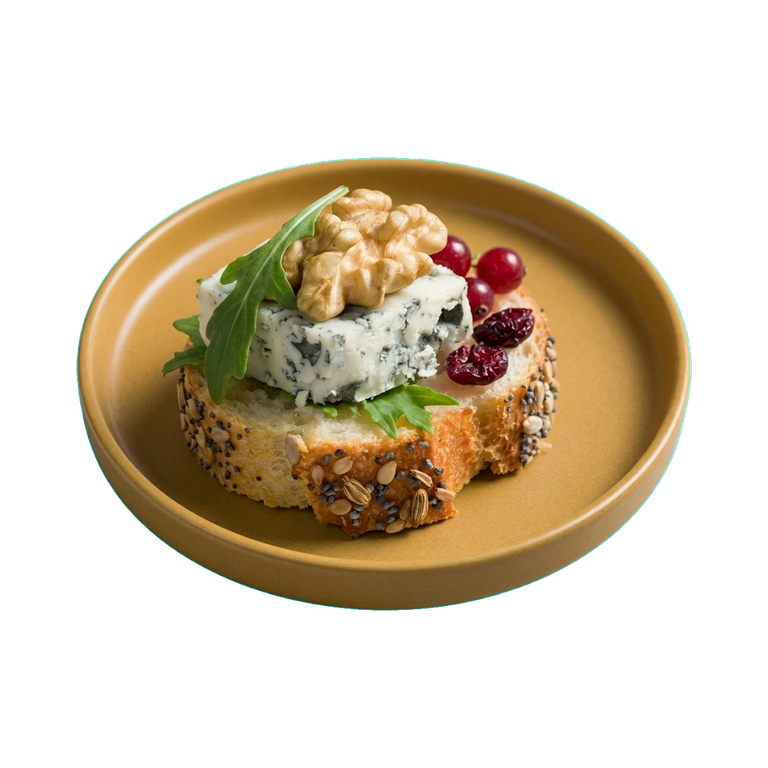
- Grapes and cheese: a classic that works in appetizers and salads
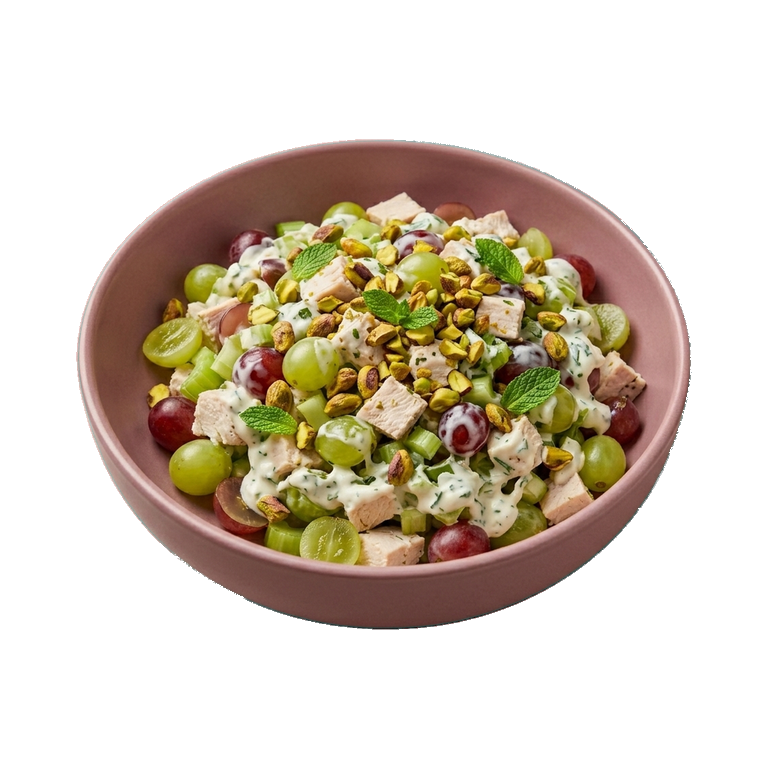
- Grapes and nuts: walnuts, almonds, or pistachios add texture and depth
- Grapes and spices: cinnamon, cloves, anise enhance its sweetness in compotes
- Grapes and poultry: duck, chicken, and turkey get a fruity contrast
- Grapes and cottage cheese: a simple yet effective combination for breakfast
Selection and Storage
When purchasing, pay attention to the firmness of the berries: they should be dense, without dents or signs of mold. A bunch holds together better than individual berries, so it is safer during transport. The color should be uniform and rich — this is a sign of ripeness and sweetness.
Fresh grapes are stored in the refrigerator for up to two weeks in a plastic container or bag with holes for air circulation. Do not wash the berries before storage — moisture will accelerate spoilage. Wash immediately before eating. If grapes begin to dry out, soak them in ice water for an hour — the berries will regain their firmness and freshness.
Nutrition
per 100 g
- Calories
- 67 kcal
- Protein
- 0.7 g
- Fat
- 0.4 g
- Carbs
- 16.8 g
Micronutrients
per 100 g
Macronutrients
- Fiber
- 0.9 g
- Sugars
- 15.48 g
- Saturated fat
- 0.054 g
- Monounsaturated fat
- 0.007 g
- Polyunsaturated fat
- 0.048 g
- Omega-3 (EPA + DHA)
- 0 g
- Cholesterol
- 0 mg
- Water
- 80.54 g
Minerals
- Sodium
- 2 mg
- Potassium
- 191 mg
- Calcium
- 10 mg
- Magnesium
- 7 mg
- Phosphorus
- 20 mg
- Iron
- 0.36 mg
- Zinc
- 0.07 mg
- Copper
- 0.13 mg
- Manganese
- 0.07 mg
- Selenium
- 0.1 mcg
Vitamins
- Vitamin A (RAE)
- 3 mcg
- Vitamin D
- 0 mcg
- Vitamin E
- 0.19 mg
- Vitamin K
- 14.6 mcg
- Vitamin C
- 3.2 mg
- Vitamin B1 (thiamin)
- 0.07 mg
- Vitamin B2 (riboflavin)
- 0.07 mg
- Vitamin B3 (niacin)
- 0.19 mg
- Vitamin B5 (pantothenic acid)
- 0.05 mg
- Vitamin B6
- 0.09 mg
- Vitamin B9 (folate, DFE)
- 2 mcg
- Vitamin B12
- 0 mcg
Measures and weight
- 1 pcs
- 5 g
Measure calculator
- Weight
- 100 g
- Calories
- 67 kcal