Usuba
Usuba
Sea bass
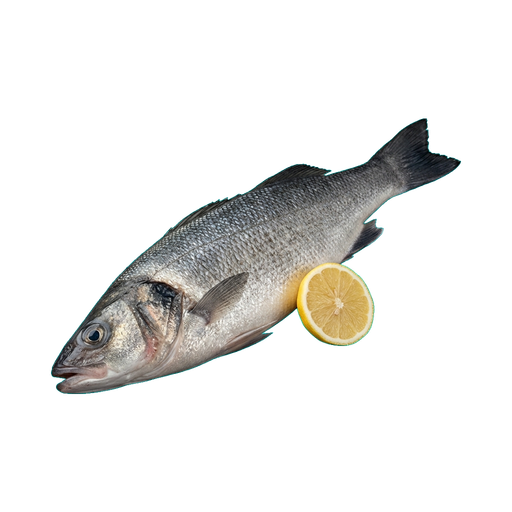
A sea fish with white, tender meat and delicate flavor that readily absorbs the aromas of spices and sauces. Sea bass has few bones, making it convenient for cooking whole or as fillets, and its meat remains juicy whether quickly seared or baked. When selecting, pay attention to the firmness of the fish and a clear ocean smell — quality sea bass requires no masking and pairs well with lemon, herbs, and olive oil.
Micronutrients
per 100 g
Minerals
Vitamins
- AVitamin A (RAE)46mcg5% DV
- DVitamin D5.6mcg37% DV
- EVitamin E0.84mg6% DV
- KVitamin K0.1mcg0% DV
- B1Vitamin B1 (thiamin)0.11mg7% DV
- B2Vitamin B2 (riboflavin)0.12mg7% DV
- B3Vitamin B3 (niacin)1.6mg8% DV
- B5Vitamin B5 (pantothenic acid)0.75mg15% DV
- B6Vitamin B60.4mg20% DV
- B9Vitamin B9 (folate, DFE)5mcg1% DV
- B12Vitamin B120.3mcg10% DV
About
White fish with tender meat
Seabass is a marine fish with a delicate, almost sweet flavor and firm yet tender meat consistency. Thanks to its low fat content, it remains juicy with proper heat treatment, and its neutral profile makes it a versatile canvas for a wide variety of culinary ideas. The fish holds its shape well, making it convenient to cook whole, fillet, or use steaks.
Taste and Aroma
Sea bass meat is light, with a barely noticeable marine aroma — not sharp, but rather fresh and pleasant. The taste is delicate, without the fishy smell that repels many people. This quality makes sea bass an ideal choice if you're cooking for those who prefer mild, unobtrusive flavors. When boiled or stewed, the fish absorbs the aromas of neighboring ingredients — white wine, herbs, lemon, and olive oil.
How to Cook Sea Bass
Fish responds well to simple cooking methods. The main rule is not to overcook: the meat quickly becomes dry. Here are the main approaches:
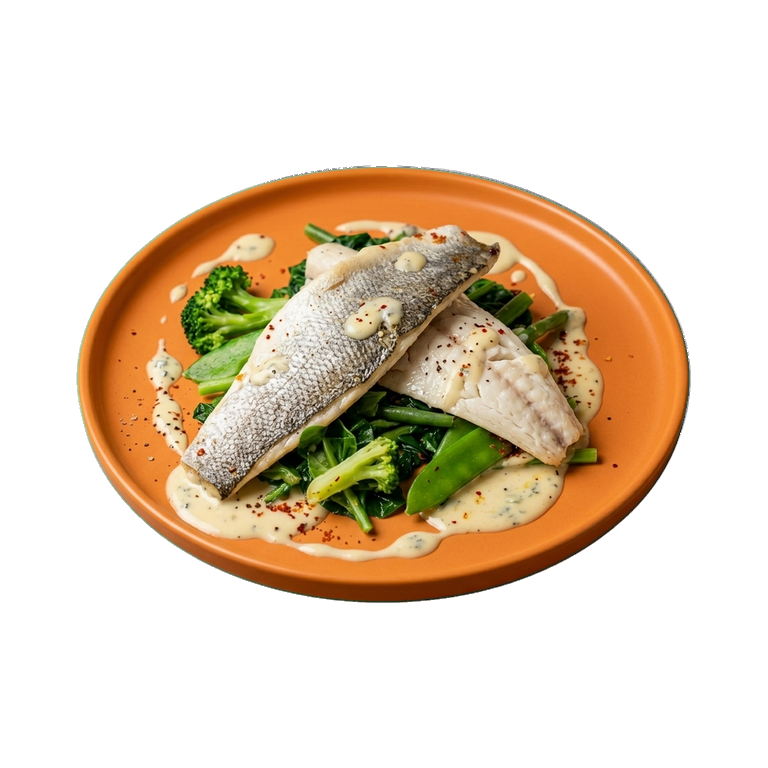
- Grilled or pan-seared with a crispy crust: fillet skin-side down on a hot surface, 4–5 minutes per side.
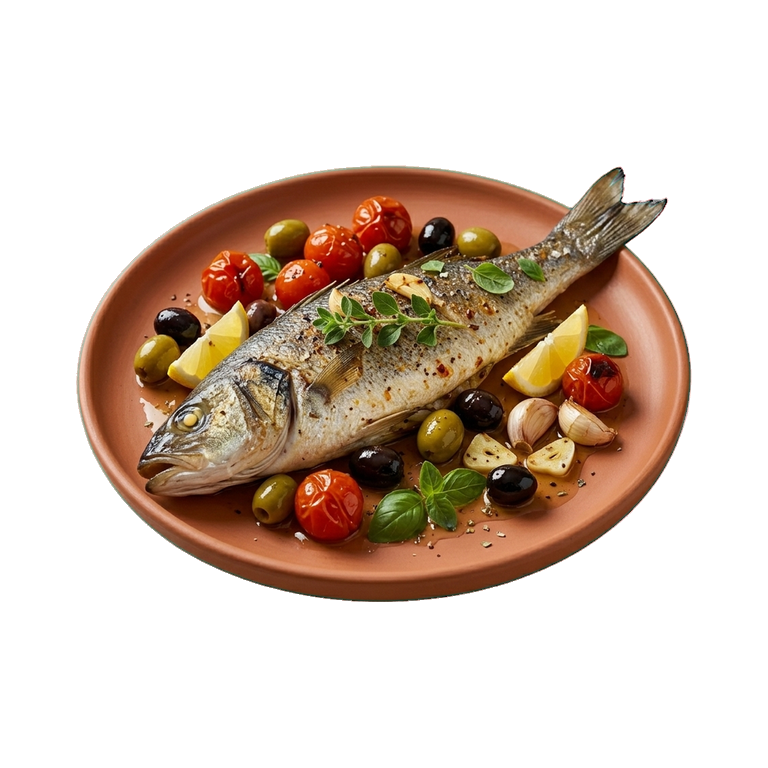
- Baked whole in foil with lemon and herbs: at 180°C for about 20–25 minutes depending on size.
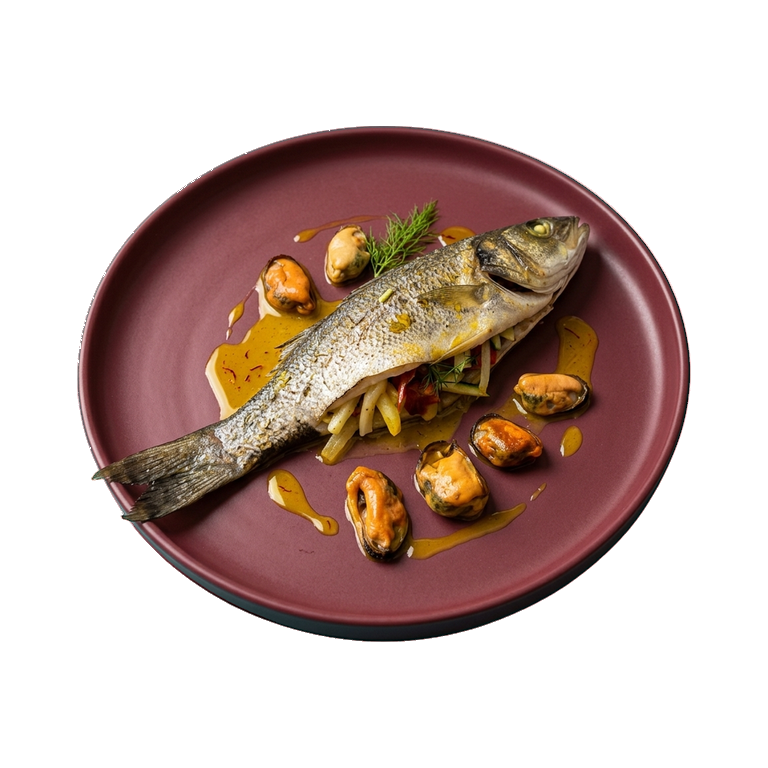
- Steamed or poached in broth: a delicate method that preserves tenderness, suitable for light dishes.
- In sauce: fish holds up well in tomato, cream, and butter sauces.
Perfect Pairings
Sea bass pairs well with bright but not overpowering ingredients. Lemon and lime highlight its freshness, white wine and herbs (dill, parsley, tarragon) complement its delicate flavor. Olive oil, butter with capers, tomatoes, cucumbers, and fresh vegetables create harmonious dishes. An Asian approach—ginger, soy sauce, mirin—also works excellently if you don't overcomplicate it.
Selection and Storage
When purchasing, pay attention to the smell — it should be fresh, briny, without ammonia notes. Eyes should be transparent and shiny, gills pink or red. The meat should be firm and quickly regain its shape when pressed. If you're buying fillets, check that they are not dull or have yellow spots.
Fresh sea bass is stored in the refrigerator for 1–2 days on the coldest shelf, preferably on ice. Freeze whole or in portions in airtight packaging — this way the fish will maintain quality for up to three months. Thaw slowly in the refrigerator to preserve the meat structure.
Nutrition
per 100 g
- Calories
- 103 kcal
- Protein
- 18.5 g
- Fat
- 3.3 g
- Carbs
- 0 g
Micronutrients
per 100 g
Macronutrients
- Fiber
- 0 g
- Sugars
- 0 g
- Saturated fat
- 0.511 g
- Monounsaturated fat
- 0.424 g
- Polyunsaturated fat
- 0.743 g
- Omega-3 (EPA + DHA)
- 0.595 g
- Cholesterol
- 41 mg
- Water
- 78.27 g
Minerals
- Sodium
- 68 mg
- Potassium
- 256 mg
- Calcium
- 10 mg
- Magnesium
- 41 mg
- Phosphorus
- 194 mg
- Iron
- 0.29 mg
- Zinc
- 0.4 mg
- Copper
- 0.02 mg
- Manganese
- 0.02 mg
- Selenium
- 36.5 mcg
Vitamins
- Vitamin A (RAE)
- 46 mcg
- Vitamin D
- 5.6 mcg
- Vitamin E
- 0.84 mg
- Vitamin K
- 0.1 mcg
- Vitamin C
- 0 mg
- Vitamin B1 (thiamin)
- 0.11 mg
- Vitamin B2 (riboflavin)
- 0.12 mg
- Vitamin B3 (niacin)
- 1.6 mg
- Vitamin B5 (pantothenic acid)
- 0.75 mg
- Vitamin B6
- 0.4 mg
- Vitamin B9 (folate, DFE)
- 5 mcg
- Vitamin B12
- 0.3 mcg
Measures and weight
- 1 pcs
- 300 g
Measure calculator
- Weight
- 100 g
- Calories
- 103 kcal