Usuba
Usuba
Caesar Sauce
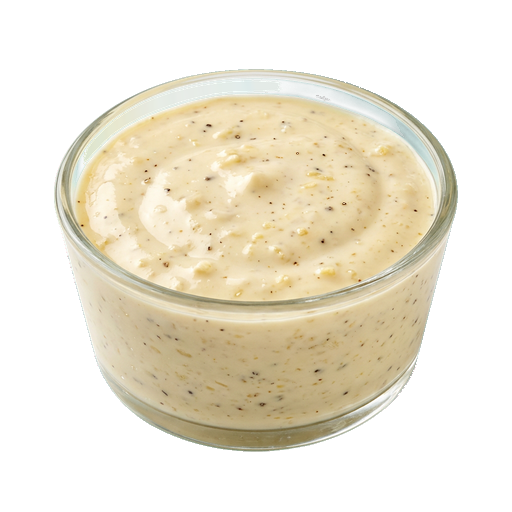
Caesar sauce is a creamy mayonnaise-based dressing with anchovies, garlic, lemon juice, and parmesan that gives dishes a rich umami flavor and a subtle kick. The classic version contains raw egg, so when choosing store-bought sauce, pay attention to the ingredients and storage conditions. It is primarily used for Caesar salad with chicken and croutons, but also pairs well with vegetables, seafood, and meat.
Micronutrients
per 100 ml
Minerals
Vitamins
- AVitamin A (RAE)9.5mcg1% DV
- DVitamin D0.1mcg1% DV
- EVitamin E4.98mg33% DV
- KVitamin K110mcg92% DV
- CVitamin C0.32mg0% DV
- B1Vitamin B1 (thiamin)0.01mg1% DV
- B2Vitamin B2 (riboflavin)0.01mg1% DV
- B3Vitamin B3 (niacin)0.04mg0% DV
- B5Vitamin B5 (pantothenic acid)0.09mg2% DV
- B6Vitamin B60.03mg2% DV
- B9Vitamin B9 (folate, DFE)2.1mcg1% DV
About
What is Caesar sauce and how does it work
Caesar sauce is a thick, creamy dressing with a bright, pungent character. Its base is built on an emulsion: mayonnaise or cream binds anchovies, garlic, and Parmesan into a unified whole. The flavor is multi-layered — simultaneously salty, sharp, and rich, with a subtle mustard bite and woody notes of Worcestershire sauce. The consistency allows the sauce to coat ingredients well without dripping hastily.
In cooking, this sauce works as a universal flavor enhancer. It doesn't just add richness to a dish — it creates a flavor base on which everything else rests. Anchovies provide depth and umami, parmesan adds saltiness and cheesy notes, while garlic and mustard keep the whole bouquet in tone.
Where and how to use it
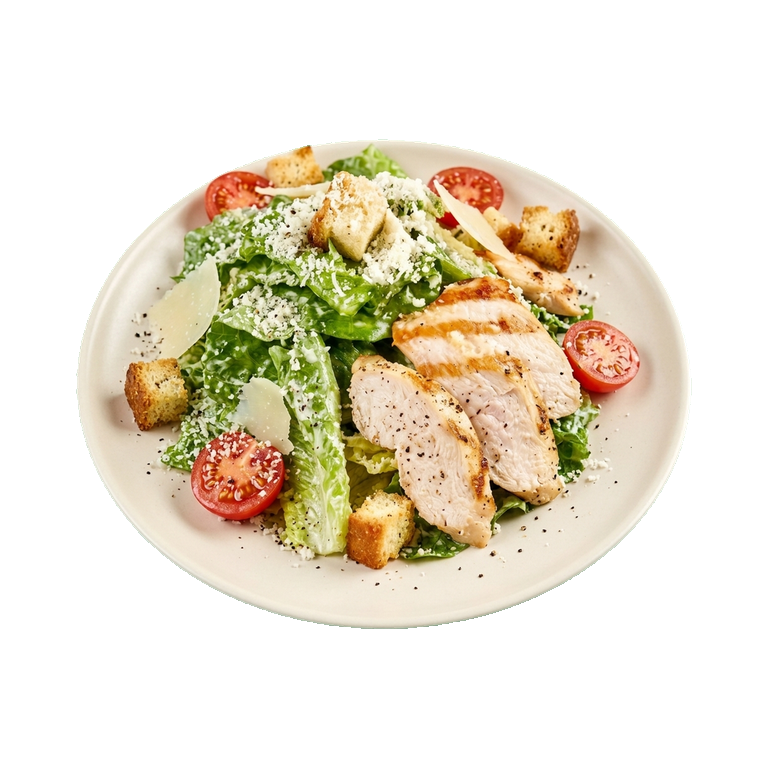
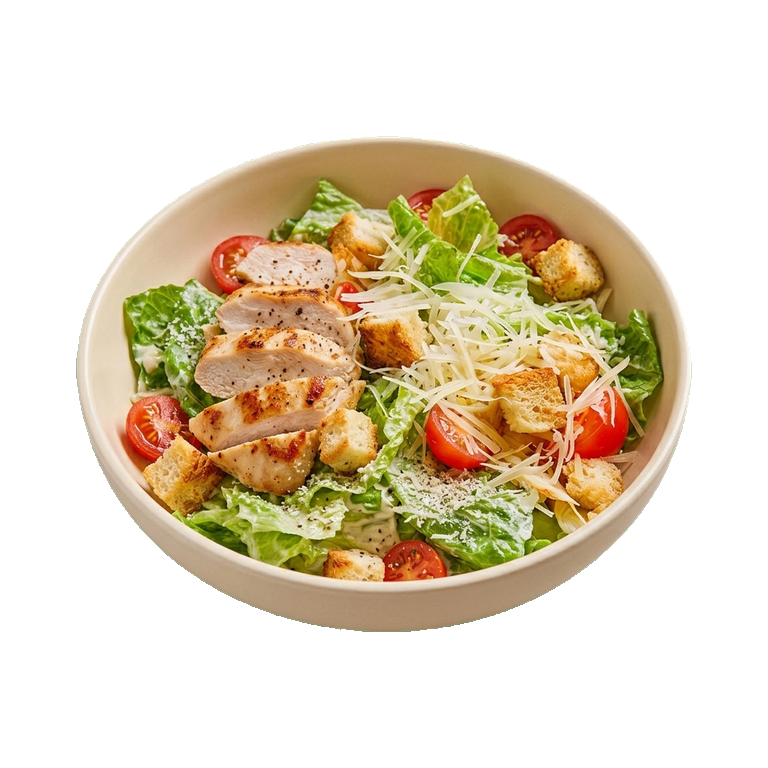
The classic way to use this sauce is in a salad with crispy romaine, croutons, and parmesan, but that's just the beginning. It works great as a marinade for chicken before frying, giving the meat a tangy flavor and helping it stay juicy. Try spreading it on bread before assembling a sandwich, or use it as a dip for vegetables and croutons.
- Salads with firm leaves and crispy components
- Marinade for poultry and white fish
- Spread for sandwiches and meat side dishes
- Dip for vegetables, croutons and seafood
- Dressing for pasta with chicken or shrimp
How to Choose and Store
If you're buying ready-made sauce, check the consistency — it should be uniform, without separation. The smell should be pronounced, but not ammonia-like; anchovies provide saltiness, not sharpness. Check the date: fresh sauce keeps in the refrigerator for 2–3 weeks after opening.
Homemade sauce can be prepared in five minutes if you have anchovy fillets and Parmesan on hand. Store it in an airtight jar on a refrigerator shelf — it doesn't tolerate temperature fluctuations. Before use, let it warm to room temperature so the flavor fully develops and the consistency becomes more fluid.
Caesar sauce is not just a dressing, it's a flavor anchor that keeps the dish in balance between saltiness, spiciness, and creamy smoothness.
Nutrition
per 100 ml
- Calories
- 320 kcal
- Protein
- 2.5 g
- Fat
- 32 g
- Carbs
- 2 g
Micronutrients
per 100 ml
Macronutrients
- Fiber
- 0.525 g
- Sugars
- 2.951 g
- Saturated fat
- 9.228 g
- Monounsaturated fat
- 14.179 g
- Polyunsaturated fat
- 34.5 g
- Omega-3 (EPA + DHA)
- 0.025 g
- Cholesterol
- 40.95 mg
- Water
- 36.015 g
Minerals
- Sodium
- 1269.45 mg
- Potassium
- 30.45 mg
- Calcium
- 50.4 mg
- Magnesium
- 2.1 mg
- Phosphorus
- 19.95 mg
- Iron
- 1.13 mg
- Zinc
- 0.12 mg
- Copper
- 0.01 mg
- Manganese
- 0.04 mg
- Selenium
- 1.7 mcg
Vitamins
- Vitamin A (RAE)
- 9.5 mcg
- Vitamin D
- 0.1 mcg
- Vitamin E
- 4.98 mg
- Vitamin K
- 110 mcg
- Vitamin C
- 0.32 mg
- Vitamin B1 (thiamin)
- 0.01 mg
- Vitamin B2 (riboflavin)
- 0.01 mg
- Vitamin B3 (niacin)
- 0.04 mg
- Vitamin B5 (pantothenic acid)
- 0.09 mg
- Vitamin B6
- 0.03 mg
- Vitamin B9 (folate, DFE)
- 2.1 mcg
- Vitamin B12
- 0 mcg
Measures and weight
- 1 tbsp
- 15.8 g
- 1 tsp
- 5.3 g
- 1 cup
- 262.5 g
Measure calculator
- Weight
- 100 g
- Calories
- 305 kcal