Usuba
Usuba
Cheese
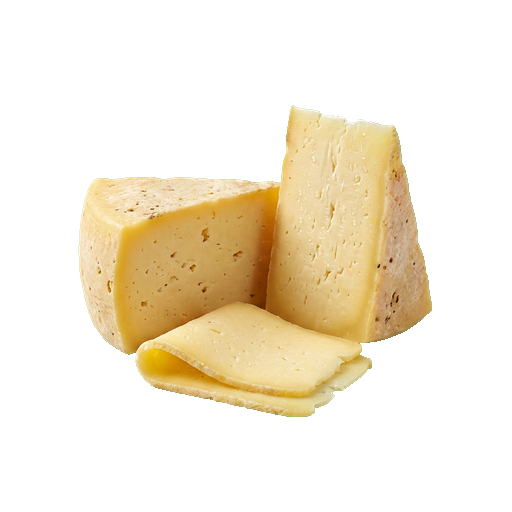
Cheese is a fermented dairy product obtained by curdling milk using rennet enzyme and lactic acid bacteria. Depending on the variety, it can be soft or hard, with a delicate creamy flavor or sharp, pungent taste, often with a characteristic salty note. In cooking, cheese is used both in finished dishes — in soups, pastas, casseroles — and for appetizers; when substituting one type for another, it is important to consider density and flavor intensity to maintain balance in the recipe.
About
Cheese is one of the most versatile ingredients in the kitchen. It can be the star of a dish, a delicate accent, or a binding base. The variety of types allows you to find the perfect option for almost any recipe: from a simple sandwich to a complex sauce.
Aroma and Taste
The flavor spectrum of cheese is enormous. Young soft varieties offer delicacy and creaminess, with almost no pronounced aroma. Aged hard cheeses develop deep nutty, salty, and sometimes sharp notes. Blue cheeses bring a noble bitterness and piquancy. Smoked varieties add smoky depth. Each variety is its own story of taste, which unfolds differently depending on the temperature and context of the dish.
Role in Dishes
Cheese works on several levels simultaneously. In hot dishes, it melts, creating a creamy texture and binding ingredients together. In cold appetizers, it reveals its character fully. On the table as a standalone appetizer, it requires proper serving and temperature. In sauces, it adds creaminess and depth. In casseroles and lasagnas, it provides a golden crust and tender filling.
Successful Combinations
- Soft cheeses (mascarpone, ricotta) — with honey, nuts, berries and fresh herbs
- Sharp and salty (parmesan, gorgonzola) — with pasta, risotto, cream soups
- Processed cheeses — in sauces, on sandwiches, in omelets
- Smoked — with tomatoes, bacon, potatoes
- Blue cheeses — with pear, walnuts, in salads with bitter greens
Selection and Storage
When purchasing, pay attention to the appearance: the surface should be clean, without mold (unless it's blue cheese) and cracks. The smell should be pleasant, without ammonia notes. Soft cheeses are better bought fresh and used within a few days. Hard varieties last longer — wrap them in parchment and store in the refrigerator, separate from other products with a strong smell.
- Remove cheese from the refrigerator 15–30 minutes before use to allow its flavor to fully develop
- Cut with a sharp knife dipped in hot water to prevent crumbling
- If mold appears on the cheese (not characteristic of the variety), cut off the affected area with some margin
- Cheese can be frozen, but its texture will change — use it after thawing only in hot dishes
Experiment with different varieties. Each one opens up new possibilities in the kitchen and helps create dishes with their own individuality.
Nutrition
per 100 g
- Calories
- 402 kcal
- Protein
- 25.4 g
- Fat
- 33.3 g
- Carbs
- 1.3 g
Measures and weight
- 1 slice
- 20 g
Measure calculator
- Weight
- 100 g
- Calories
- 402 kcal