Usuba
Usuba
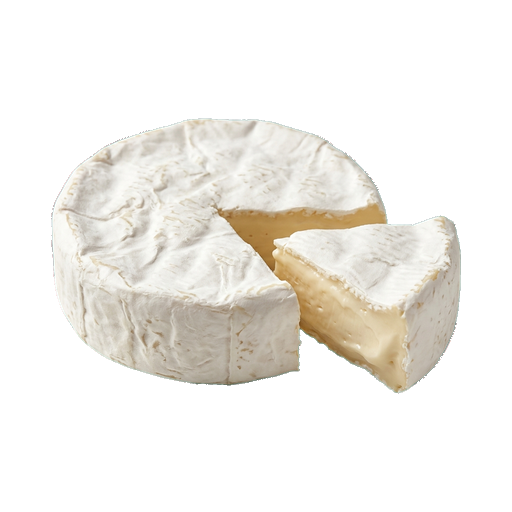
Camembert cheese
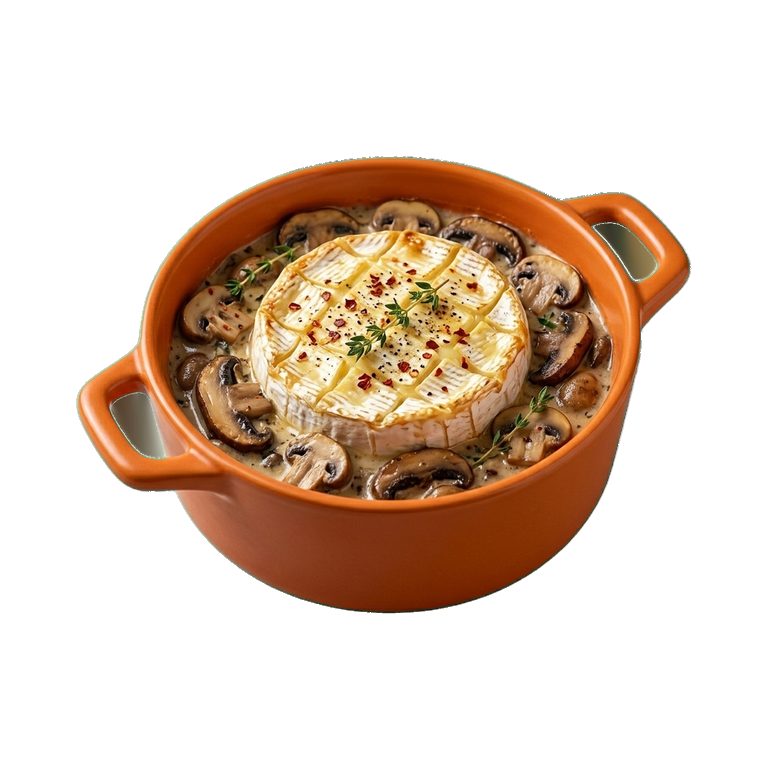
A soft cheese with a white mold rind and creamy texture inside, originating from Normandy, France. It features a delicate mushroom aroma and buttery flavor with a subtle tartness that becomes more pronounced as it matures. In cooking, it is used as a standalone dish with bread and fruits, added to salads and sauces, and can also be baked whole. When selecting, pay attention to the cheese's softness—it should yield slightly when pressed but not be overly liquid, and should have an even white coating without dark spots.
Micronutrients
per 100 g
Minerals
Vitamins
- AVitamin A (RAE)241mcg28% DV
- DVitamin D0.4mcg3% DV
- EVitamin E0.21mg1% DV
- KVitamin K2mcg2% DV
- B1Vitamin B1 (thiamin)0.03mg2% DV
- B2Vitamin B2 (riboflavin)0.49mg27% DV
- B3Vitamin B3 (niacin)0.63mg3% DV
- B5Vitamin B5 (pantothenic acid)1.36mg27% DV
- B6Vitamin B60.23mg12% DV
- B9Vitamin B9 (folate, DFE)62mcg16% DV
- B12Vitamin B121.3mcg43% DV
About
Camembert is a soft cheese with a white moldy rind that melts on your tongue and leaves a delicate creamy trace. Its consistency changes depending on the degree of ripeness: young Camembert holds its shape, while ripe Camembert becomes almost liquid inside. This is a cheese that reveals itself best at room temperature, when its aroma and flavor come to the forefront.
Aroma and taste
Fresh Camembert smells of mushrooms and butter with a slight tanginess. As it matures, the aroma becomes more intense and earthy, sometimes with hints of ammonia — a sign that the cheese is fully ripe. On the palate, it is delicate, with mushroom notes and a pleasant salty taste. The white rind is edible and often has a more pronounced flavor than the creamy interior.
Role in dishes and pairings
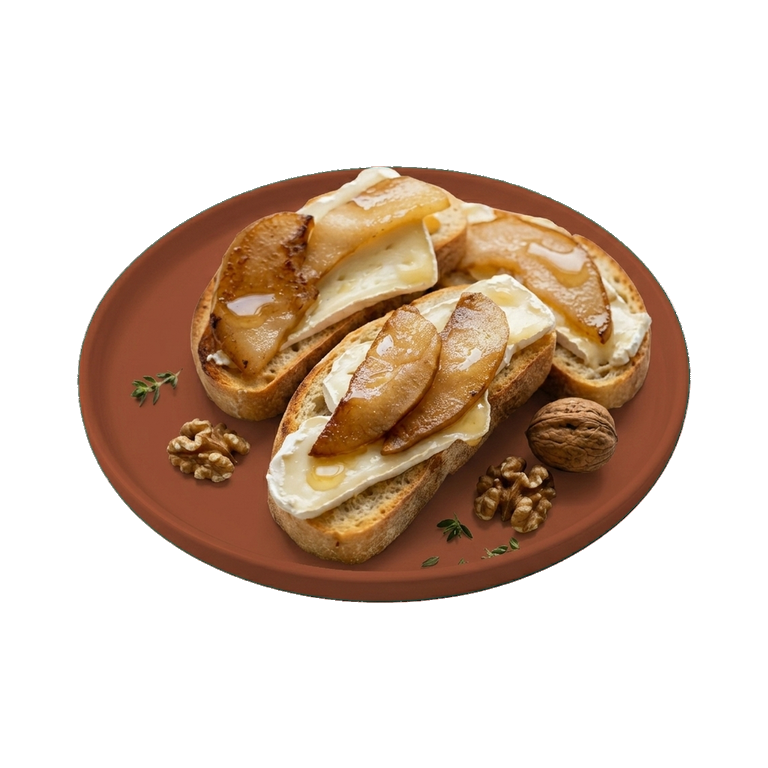
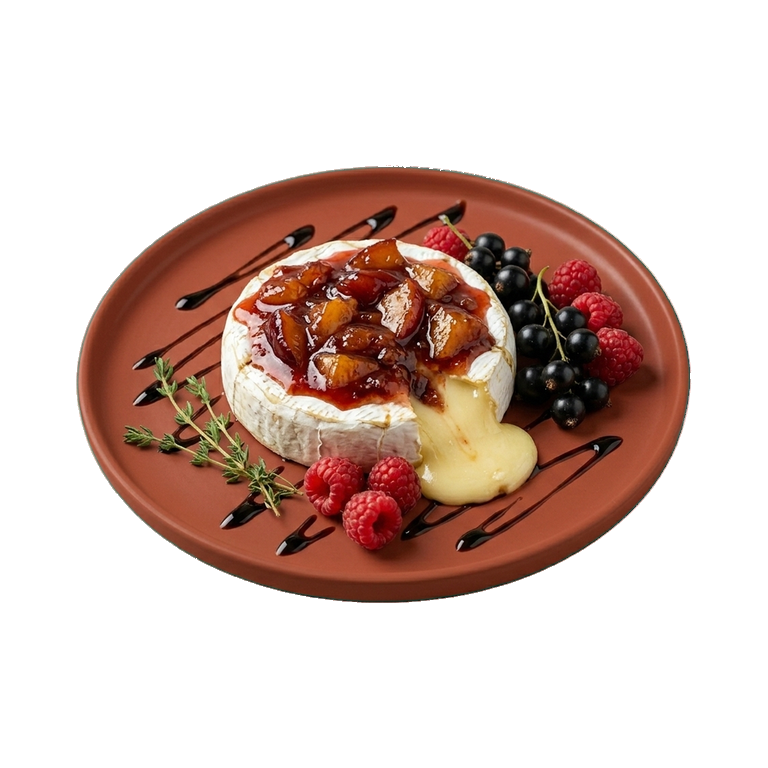
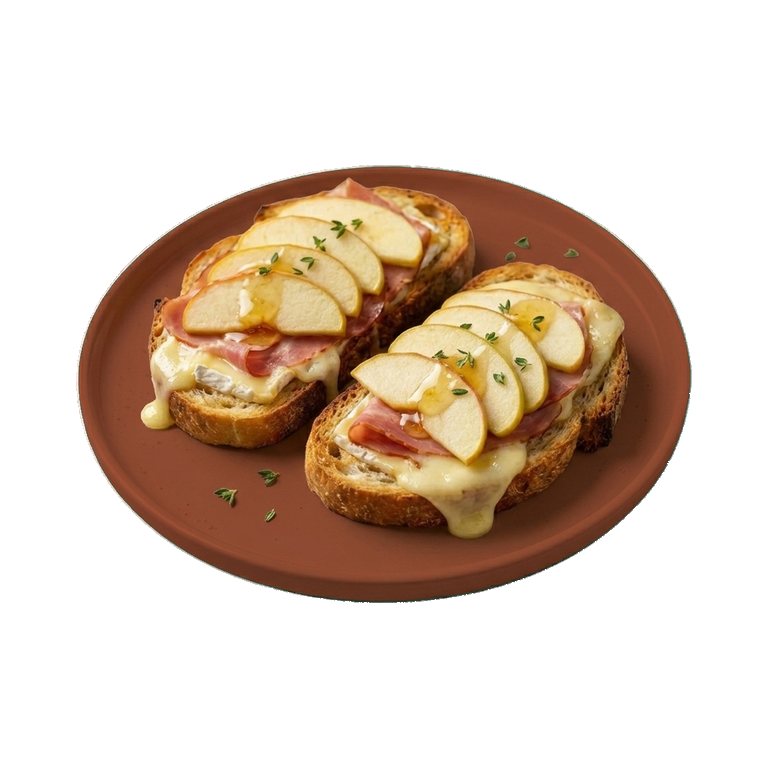
Camembert is rarely cooked — it is mainly eaten raw, often as a finishing touch to a meal. However, it works wonderfully in warm salads, where you can place it on hot greens and let it melt slightly. The cheese pairs well with honey, pears, apples, and walnuts. On a cheese board, it sits alongside harder varieties and looks beautiful next to fruits and bread.
- White wine (sauvignon blanc, chardonnay) or light red
- Honey and berry sauces
- Nuts, dried fruits, fresh fruits
- Seeded bread and crackers
Selection and Storage
When buying, press the cheese — it should be soft but not falling apart. White rind without dark spots and mold (except for the mold that is intended). It's best to buy cheese a day or two before serving and store it in the refrigerator in the original packaging or in parchment paper. Before eating, take it out 30–40 minutes before room temperature — then the taste will fully reveal itself. Ripe Camembert is stored in the refrigerator for no more than a week.
If the cheese is too hard and doesn't yield to the knife, it means it's still young — let it ripen at room temperature for an hour or two. If it's already soft but the taste seems bland, try it colder: sometimes the refrigerator helps you feel the nuances better.
Nutrition
per 100 g
- Calories
- 300 kcal
- Protein
- 20 g
- Fat
- 24 g
- Carbs
- 0.5 g
Micronutrients
per 100 g
Macronutrients
- Fiber
- 0 g
- Sugars
- 0.46 g
- Saturated fat
- 15.259 g
- Monounsaturated fat
- 7.023 g
- Polyunsaturated fat
- 0.724 g
- Omega-3 (EPA + DHA)
- 0 g
- Cholesterol
- 72 mg
- Water
- 51.8 g
Minerals
- Sodium
- 842 mg
- Potassium
- 187 mg
- Calcium
- 388 mg
- Magnesium
- 20 mg
- Phosphorus
- 347 mg
- Iron
- 0.33 mg
- Zinc
- 2.38 mg
- Copper
- 0.02 mg
- Manganese
- 0.04 mg
- Selenium
- 14.5 mcg
Vitamins
- Vitamin A (RAE)
- 241 mcg
- Vitamin D
- 0.4 mcg
- Vitamin E
- 0.21 mg
- Vitamin K
- 2 mcg
- Vitamin C
- 0 mg
- Vitamin B1 (thiamin)
- 0.03 mg
- Vitamin B2 (riboflavin)
- 0.49 mg
- Vitamin B3 (niacin)
- 0.63 mg
- Vitamin B5 (pantothenic acid)
- 1.36 mg
- Vitamin B6
- 0.23 mg
- Vitamin B9 (folate, DFE)
- 62 mcg
- Vitamin B12
- 1.3 mcg
Measures and weight
- 1 pcs
- 125 g
- 1 slice
- 20 g
Measure calculator
- Weight
- 100 g
- Calories
- 300 kcal