Usuba
Usuba
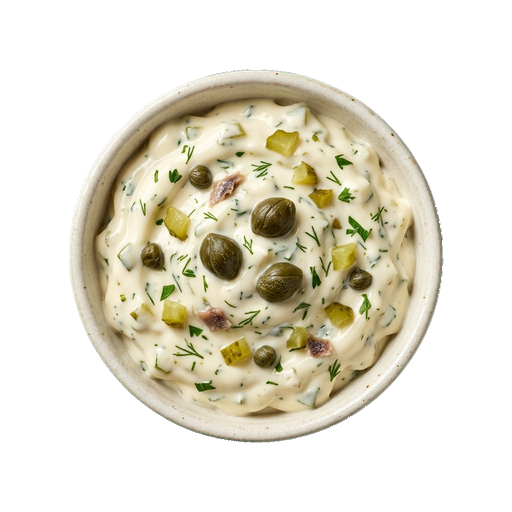
Tartar sauce
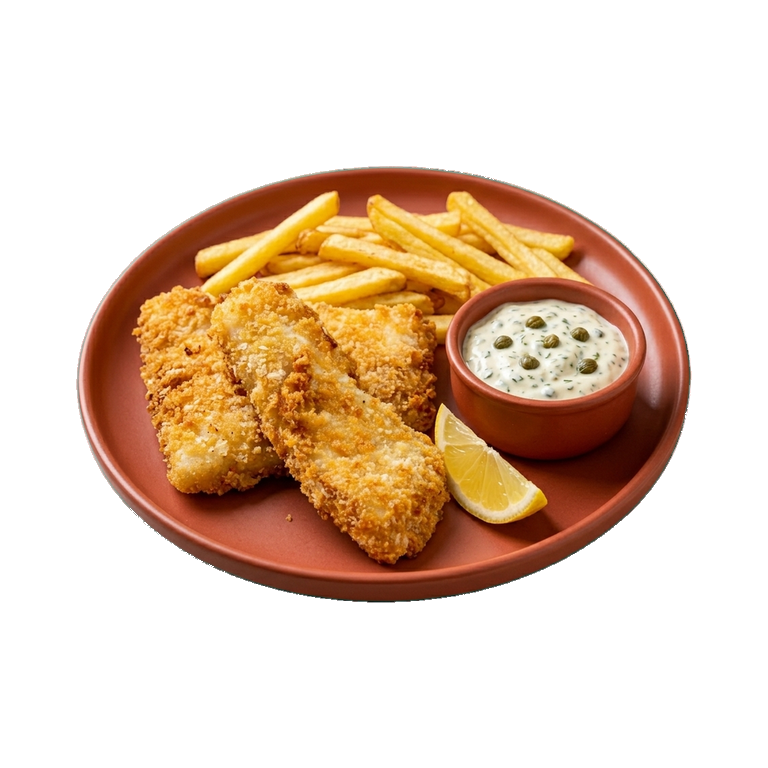
Tartar sauce is a cold sauce based on mayonnaise with finely chopped pickled cucumbers, capers, anchovies, and aromatic herbs. Its sharp, salty, and slightly acidic taste perfectly complements fish dishes, fried seafood, and french fries. When preparing, it is important to slice the ingredients thinly and squeeze out the pickled vegetables well to prevent the sauce from becoming watery.
Micronutrients
per 100 g
Minerals
Vitamins
About
Tartar is a sharp, piquant sauce that transforms a simple dish into something special. The base is made of mayonnaise, to which finely chopped pickled cucumbers, capers, and sometimes anchovies are added. The result is a creamy mixture with bright acidic notes and an interesting texture thanks to the pieces of ingredients.
Taste and Aroma
Tartar sauce is an explosive combination of salty, sour, and slightly spicy flavors. Pickled cucumbers provide the main acidity, capers bring saltiness and a subtle bitterness, and if anchovies are in the recipe, they add deep umami. All of this is bound together by soft, creamy mayonnaise. The aroma is bright and piercing, with distinct notes of vinegar and brine.
Where to use it
The classic application is serving with fish, especially fried or smoked. Tartare works great with seafood: shrimp, squid, fish patties. But don't limit yourself to seafood — the sauce is also excellent with meat: with steaks, beef cutlets, even with sausages. Try it with french fries, fish sticks, or as a spread for sandwiches with smoked fish.
Combinations and pairings
Tartare pairs well with lemon and lime — their acidity enhances the overall impression. Herbs like dill or parsley will add freshness. If you're preparing it yourself, try adding a bit of Dijon mustard for extra sharpness or fresh tarragon for herbal notes. Serve simple vegetables as a side — tomatoes, leafy greens, fresh cucumber — to contrast with the intensity of the sauce.
Selection and Storage
If you're buying ready-made sauce, pay attention to its consistency — it should be creamy without any separation. Check the production date: tartar is best in the first weeks after preparation. Store an open jar in the refrigerator for no more than a month. Homemade sauce is prepared quickly and keeps for 1–2 weeks provided that all ingredients are fresh and the jar is sterilized. If you're making the sauce in advance, add pickled cucumbers and capers right before serving — this way they'll stay crispy rather than become soft.
Nutrition
per 100 g
- Calories
- 300 kcal
- Protein
- 1.5 g
- Fat
- 30 g
- Carbs
- 5 g
Micronutrients
per 100 g
Macronutrients
- Fiber
- 0.5 g
- Sugars
- 4.25 g
- Saturated fat
- 3.333 g
- Monounsaturated fat
- 3.605 g
- Polyunsaturated fat
- 9.044 g
- Omega-3 (EPA + DHA)
- 0.011 g
- Cholesterol
- 7 mg
- Water
- 67 g
Minerals
- Sodium
- 667 mg
- Potassium
- 68 mg
- Calcium
- 26 mg
- Magnesium
- 6 mg
- Phosphorus
- 17 mg
- Iron
- 0.25 mg
- Zinc
- 0.12 mg
- Copper
- 0.02 mg
- Manganese
- 0.11 mg
- Selenium
- 0.9 mcg
Vitamins
- Vitamin A (RAE)
- 11 mcg
- Vitamin D
- 0 mcg
- Vitamin E
- 1.68 mg
- Vitamin K
- 50.4 mcg
- Vitamin C
- 2.3 mg
- Vitamin B1 (thiamin)
- 0.02 mg
- Vitamin B2 (riboflavin)
- 0.03 mg
- Vitamin B3 (niacin)
- 0.09 mg
- Vitamin B5 (pantothenic acid)
- 0.07 mg
- Vitamin B6
- 0.04 mg
- Vitamin B9 (folate, DFE)
- 5 mcg
- Vitamin B12
- 0 mcg
Measures and weight
- 1 tbsp
- 14.3 g
- 1 tsp
- 4.8 g
- 1 cup
- 237.5 g
Measure calculator
- Weight
- 100 g
- Calories
- 300 kcal