Usuba
Usuba
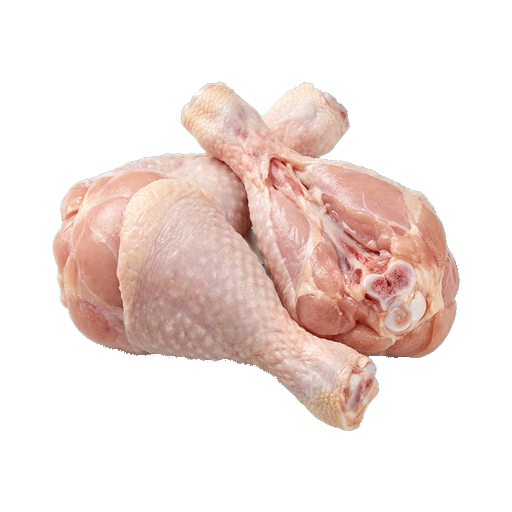
Chicken legs
Chicken legs are meat with high collagen and fat content, which makes them tender and aromatic when cooked slowly through boiling or braising. They are ideal for broths, soups, and stews as they impart deep flavor and create a rich, gelatinous broth. When choosing, pay attention to the color — it should be pink or light yellow, without dark spots, and the skin should be clean and undamaged.
Micronutrients
per 100 g
Minerals
Vitamins
- AVitamin A (RAE)28mcg3% DV
- DVitamin D0.1mcg1% DV
- EVitamin E0.22mg1% DV
- KVitamin K2.3mcg2% DV
- CVitamin C0.2mg0% DV
- B1Vitamin B1 (thiamin)0.07mg5% DV
- B2Vitamin B2 (riboflavin)0.14mg8% DV
- B3Vitamin B3 (niacin)4.73mg24% DV
- B5Vitamin B5 (pantothenic acid)0.99mg20% DV
- B6Vitamin B60.32mg16% DV
- B9Vitamin B9 (folate, DFE)4mcg1% DV
- B12Vitamin B120.6mcg20% DV
About
Chicken legs are one of the most rewarding cuts for cooking. They contain enough fat and connective tissue to become incredibly juicy and aromatic when heat-treated. They are not a premium cut, but that's exactly why they are affordable and allow you to cook truly delicious dishes without breaking the bank.
Taste and texture
Chicken leg meat is darker and denser than breast, with a more pronounced chicken flavor. The skin, when properly prepared, becomes crispy, while underneath lies tender, juicy meat. Thanks to the large amount of collagen in the bones and joints, during prolonged stewing or boiling, the legs release everything into the broth, making it rich and gelatinous.
How to cook
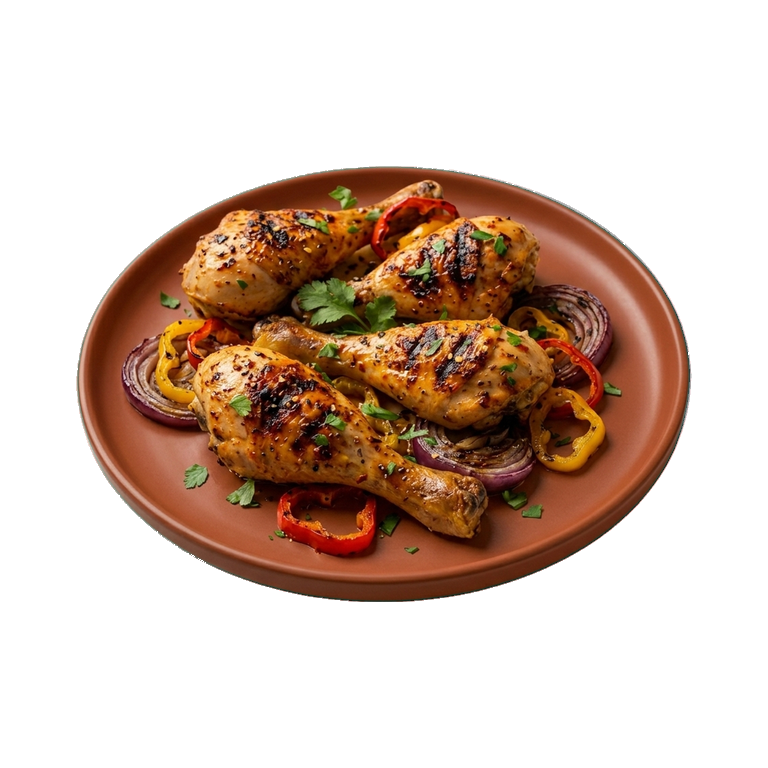
- Frying in a pan or oven — the skin browns well, the meat stays juicy
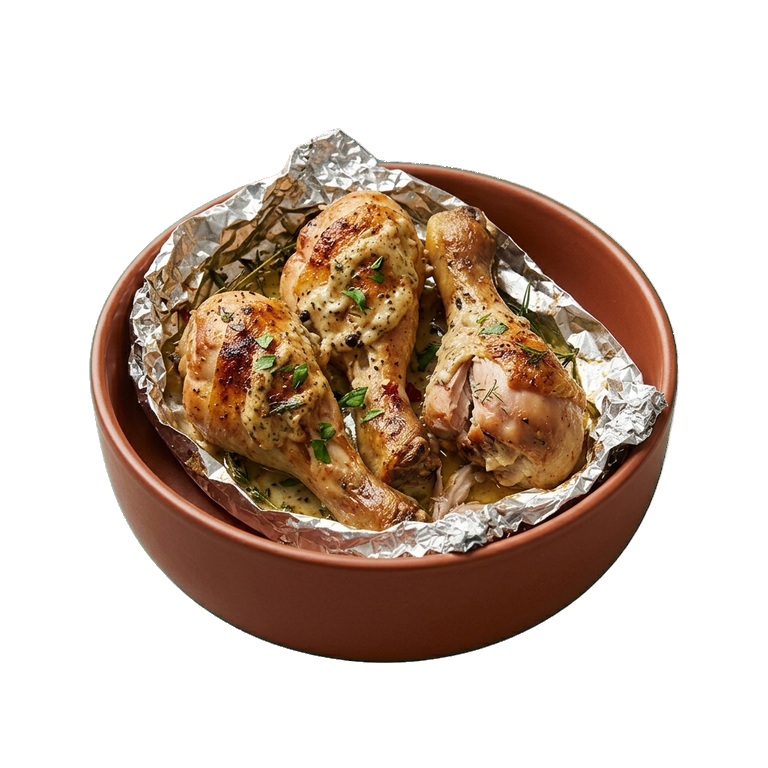
- Stewing in sauce or broth — ideal for soups, stews, and confit-style dishes
- Boiling — a quick way to get cooked meat and rich broth in 40–50 minutes
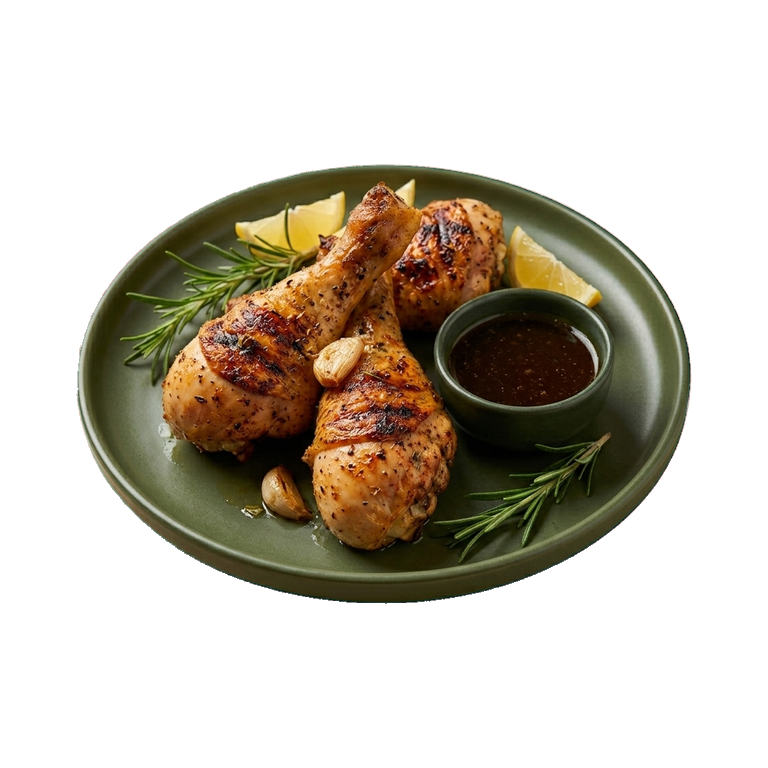
- Grill or barbecue — the meat cooks evenly, and smoke enhances its flavor
Combinations and seasonings
Chicken legs work well with any sharp spices — garlic, pepper, paprika, turmeric. Herbs like thyme, rosemary, and oregano enhance their aroma. The acidity of lemon or vinegar balances the richness of the meat. Creamy sauces, tomato gravies, soy marinades — all of this makes the legs even more appetizing.
Selection and Storage
When shopping, pay attention to the color — the skin should be light yellow or pinkish, without dark spots. The meat should not be sticky or have an unpleasant odor. If the legs are frozen, check that there is no thick layer of ice on them — this is a sign of improper storage.
Fresh chicken legs can be stored in the coldest part of the refrigerator for 2–3 days. In the freezer, they will keep for several months. Before cooking, let them thaw in the refrigerator, not at room temperature — this way the meat will remain juicy and safe.
Practical Tip
If you're cooking drumsticks in the oven, first dry them with a paper towel and salt them well 15–20 minutes before cooking. This will help the skin become crispy. Fry at a temperature of 200–220 degrees for about an hour — this way the meat inside will be tender, while the outside will be beautiful and appetizing.
Nutrition
per 100 g
- Calories
- 158 kcal
- Protein
- 18.2 g
- Fat
- 9.8 g
- Carbs
- 0 g
Micronutrients
per 100 g
Macronutrients
- Fiber
- 0 g
- Sugars
- 0 g
- Saturated fat
- 4.366 g
- Monounsaturated fat
- 6.619 g
- Polyunsaturated fat
- 3.352 g
- Omega-3 (EPA + DHA)
- 0.014 g
- Cholesterol
- 93 mg
- Water
- 67.3 g
Minerals
- Sodium
- 84 mg
- Potassium
- 203 mg
- Calcium
- 9 mg
- Magnesium
- 19 mg
- Phosphorus
- 155 mg
- Iron
- 0.69 mg
- Zinc
- 1.47 mg
- Copper
- 0.05 mg
- Manganese
- 0.02 mg
- Selenium
- 18 mcg
Vitamins
- Vitamin A (RAE)
- 28 mcg
- Vitamin D
- 0.1 mcg
- Vitamin E
- 0.22 mg
- Vitamin K
- 2.3 mcg
- Vitamin C
- 0.2 mg
- Vitamin B1 (thiamin)
- 0.07 mg
- Vitamin B2 (riboflavin)
- 0.14 mg
- Vitamin B3 (niacin)
- 4.73 mg
- Vitamin B5 (pantothenic acid)
- 0.99 mg
- Vitamin B6
- 0.32 mg
- Vitamin B9 (folate, DFE)
- 4 mcg
- Vitamin B12
- 0.6 mcg
Measures and weight
- 1 pcs
- 150 g
Measure calculator
- Weight
- 100 g
- Calories
- 158 kcal