Usuba
Usuba
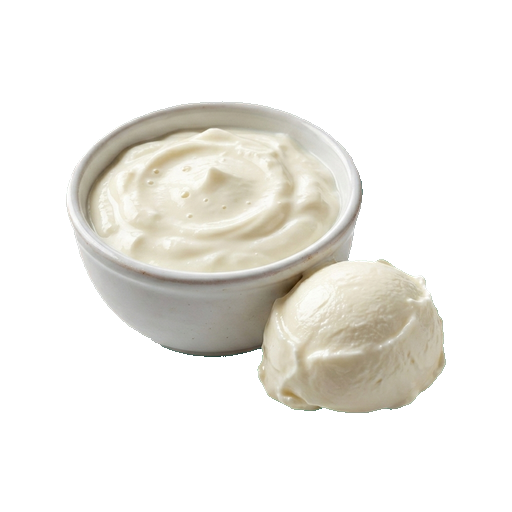
Greek yogurt
A thick fermented dairy product with high protein content, obtained by straining regular yogurt to remove whey. It has a creamy consistency, a mild tangy flavor with subtle tartness, and readily absorbs flavors from other ingredients. Used as a base for sauces and dressings, added to desserts, baked goods and grain porridges, and also suitable for marinating meat due to its acidity and ability to tenderize fibers.
Micronutrients
per 100 ml
Minerals
About
Greek yogurt is not just a fermented dairy product, but a completely different level of density and flavor concentration. Thanks to the straining process, it loses most of its whey, transforming into a thick, creamy mass with a pronounced tanginess. In the kitchen, it works as a universal helper: simultaneously a protein product, a sauce thickener, and a base for desserts.
Taste and Texture
The main difference is a sharp, almost piquant acidity that doesn't irritate but awakens the appetite. The texture is dense, almost like crème fraîche, yet the yogurt remains airy. The fat content varies: full-fat versions provide a buttery richness, while fat-free ones offer a clean tanginess without the coating effect.
Where it works in dishes
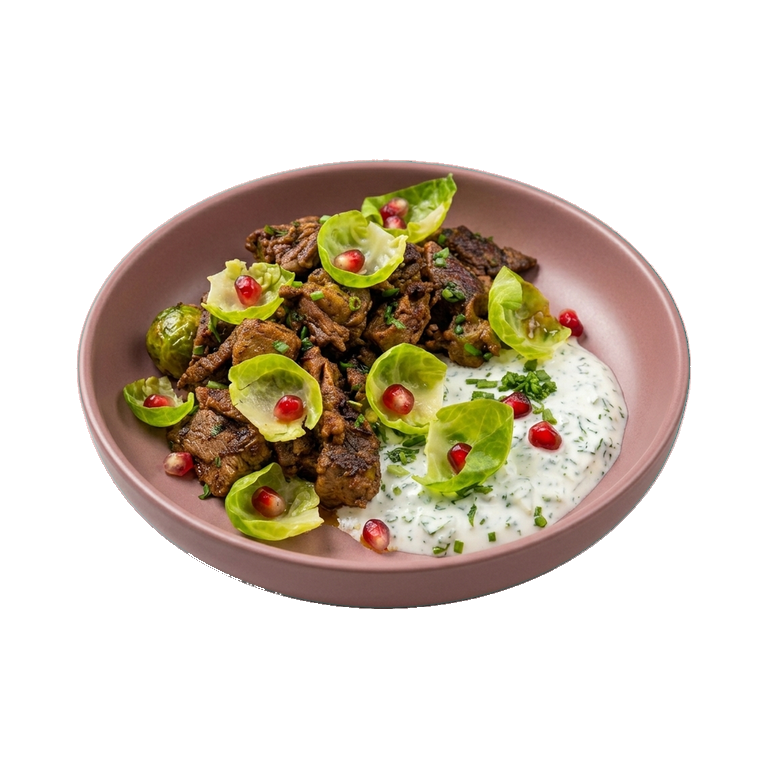
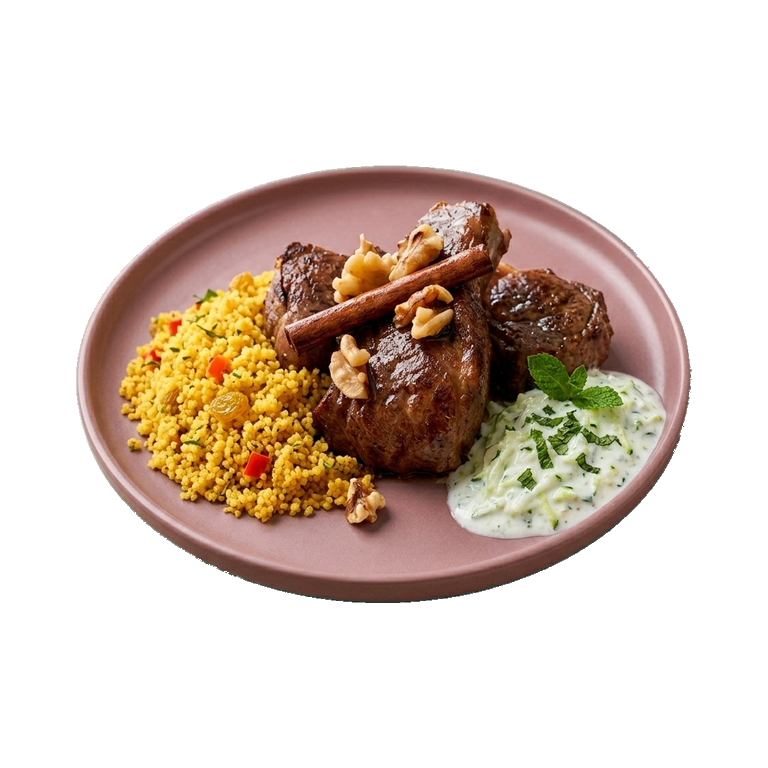
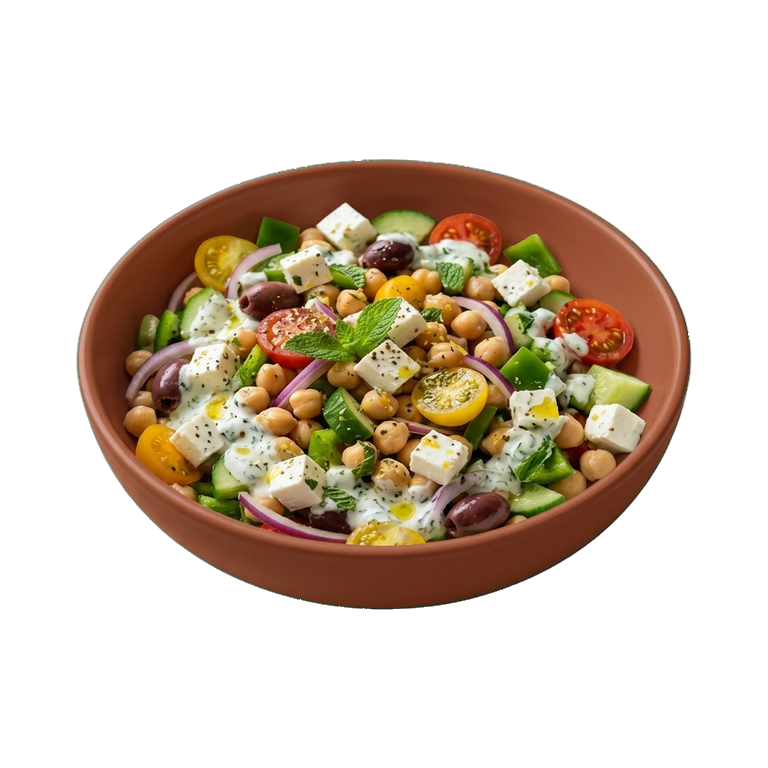
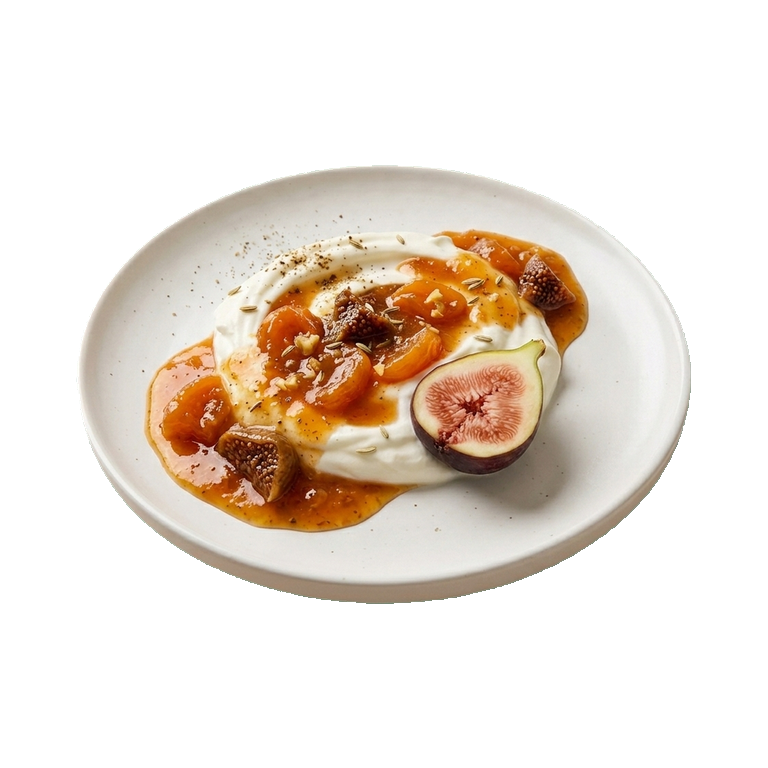
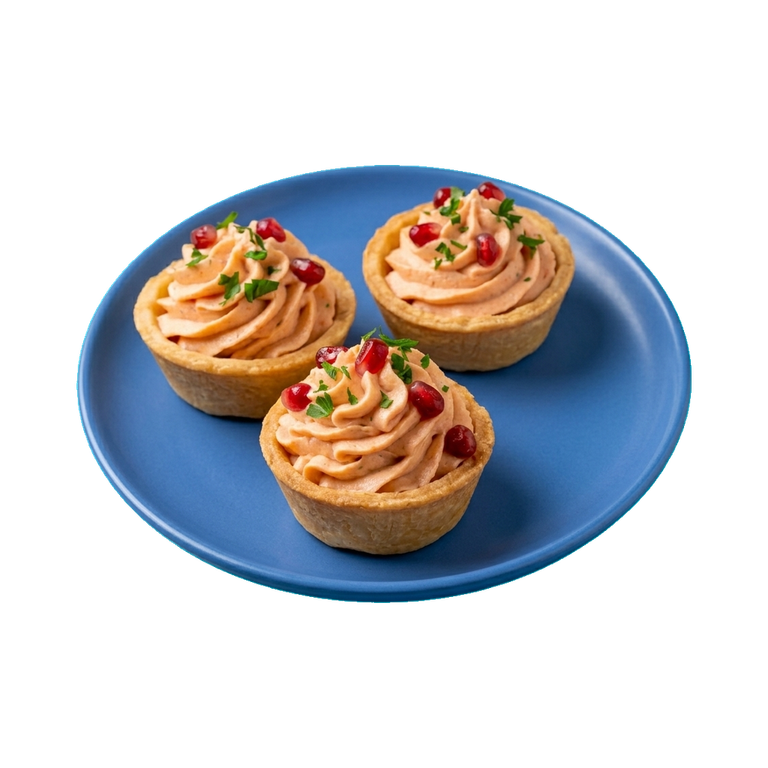
- Sauces and dips — base for tzatziki, lemon marinades, spicy seasonings for meat and vegetables
- Breakfasts — layer in granola and berry parfaits, base for smoothie bowls
- Baking — sour cream substitute in dough for kulich and cupcakes, adds moisture
- Desserts — cheesecakes without crust, mousses, frozen sweets
- Marinades for chicken, fish — lactic acid softens the fibers
Successful Pairings
Greek yogurt pairs well with bold spices — cumin, paprika, black pepper. Citrus (lemon, lime) enhances its acidity, creating a bright contrast. With herbs — dill, mint, parsley — it reveals freshness. Honey and nuts add depth to sweet versions. Horseradish, mustard, garlic in sauces find in it an ideal neutralizer of heat.
Selection and Storage
When buying, pay attention to the consistency — it should be uniform, without separation. Check the expiration date: the fresher, the brighter the taste. Full-fat yogurt (7–10% fat) is more versatile for sauces and sweet dishes, while fat-free is suitable for diet versions of dishes.
- Store in the coldest part of the refrigerator, not on the door
- Shelf life is usually 7–10 days after opening the package
- If you see liquid on top — this is normal, stir it or drain it depending on the recipe
- Freezes well, but after thawing the texture becomes more liquid — use in sauces rather than as a standalone product
Practical tip
If a recipe calls for yogurt but you only have regular yogurt on hand, strain it through cheesecloth for 2–3 hours to get a thicker version. For hot sauces, add yogurt at the end of cooking and don't bring it to a boil, otherwise it will separate. In cold dishes there are no restrictions — experiment freely.
Nutrition
per 100 ml
- Calories
- 59 kcal
- Protein
- 10.2 g
- Fat
- 0.4 g
- Carbs
- 3.3 g
Micronutrients
per 100 ml
Macronutrients
- Saturated fat
- 2.513 g
- Monounsaturated fat
- 1.005 g
- Cholesterol
- 17.68 mg
- Water
- 85.386 g
Minerals
- Sodium
- 35.45 mg
- Potassium
- 154.25 mg
- Calcium
- 116.45 mg
- Magnesium
- 11.24 mg
- Phosphorus
- 132.2 mg
- Iron
- 0 mg
- Zinc
- 0.5 mg
- Copper
- 0.01 mg
- Manganese
- 0.01 mg
- Iodine
- 44.4 mcg
Vitamins
- Vitamin D
- 0 mcg
- Vitamin K
- 0.2 mcg
- Vitamin B1 (thiamin)
- 0.06 mg
- Vitamin B2 (riboflavin)
- 0.26 mg
- Vitamin B3 (niacin)
- 0.24 mg
- Vitamin B6
- 0.05 mg
Measures and weight
- 1 tbsp
- 15.8 g
- 1 tsp
- 5.3 g
- 1 cup
- 262.5 g
Measure calculator
- Weight
- 100 g
- Calories
- 56 kcal