Usuba
Usuba
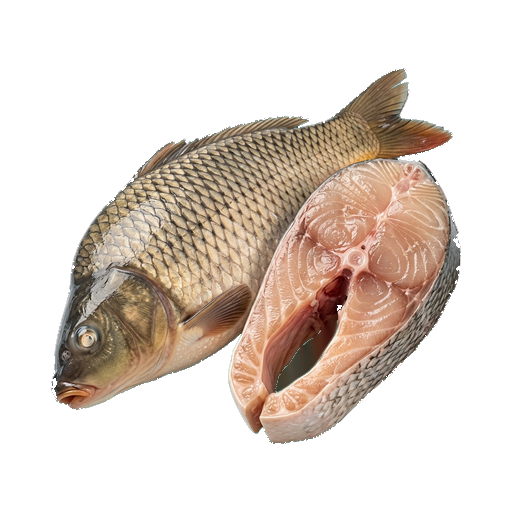
Carp
Carp is a freshwater fish with tender, slightly sweet meat and delicate flavor that readily absorbs the aromas of spices and sauces. Carp meat contains many bones, but larger specimens are easier to process; the fish requires thorough cleaning and scale removal before cooking. Carp is fried, boiled in soups, baked with vegetables and herbs, or prepared according to traditional recipes of Eastern European and Asian cuisine, where it is especially valued for its tender meat and versatility.
Micronutrients
per 100 g
Minerals
Vitamins
- AVitamin A (RAE)9mcg1% DV
- DVitamin D24.7mcg165% DV
- EVitamin E0.63mg4% DV
- KVitamin K0.1mcg0% DV
- CVitamin C1.6mg2% DV
- B1Vitamin B1 (thiamin)0.12mg8% DV
- B2Vitamin B2 (riboflavin)0.06mg3% DV
- B3Vitamin B3 (niacin)1.64mg8% DV
- B5Vitamin B5 (pantothenic acid)0.75mg15% DV
- B6Vitamin B60.19mg10% DV
- B9Vitamin B9 (folate, DFE)15mcg4% DV
- B12Vitamin B121.5mcg50% DV
About
Carp in the kitchen: meat that deserves respect
Carp is a fish that often evokes mixed feelings. Some are attracted to its dense, satisfying meat and its ability to absorb flavors, while others are put off by its distinctive smell and bony texture. But if you approach carp the right way, it becomes the foundation for serious dishes that demand time and attention. This is not a fish for hurrying, but a fish for thoughtful cooking.
Taste and Aroma
Carp meat is dense, white, with a pronounced fishy flavor that can seem too intense if the fish is not fresh or improperly processed. Smell is the main challenge: it can be muddy if the carp was raised in unsuitable conditions. This is easy to fix: soak the fillet in milk for an hour or rinse it in cold water with lemon. After such preparation, the taste becomes cleaner and the aroma milder.
Carp has medium fat content, but the oil is distributed evenly, which makes the meat moist when cooked properly. There are indeed many bones, but they are large and easy to remove. Carp roe is a separate delicacy—dense and tender, worth using separately or adding to sauces.
How to cook: methods and combinations
Carp works well in traditional recipes where its flavor is supported by spices and acidity. It is not afraid of strong sauces, spicy marinades, and smoking — on the contrary, it reveals itself best in such company.
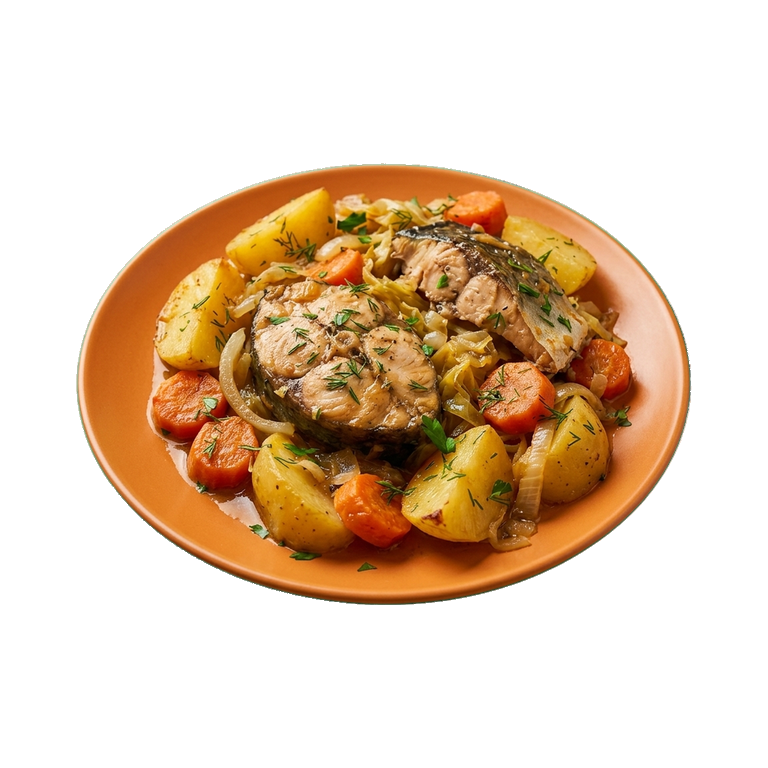
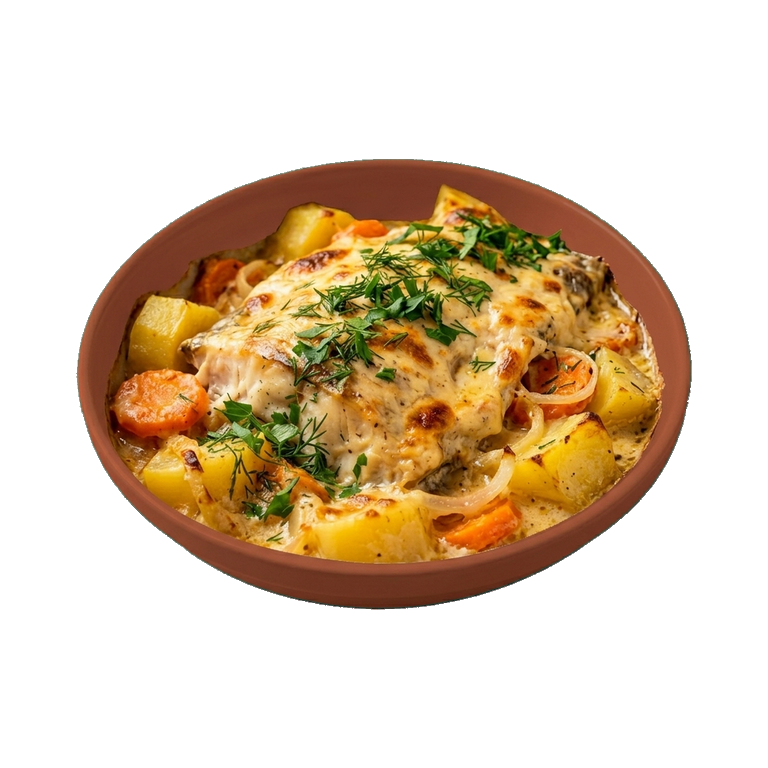
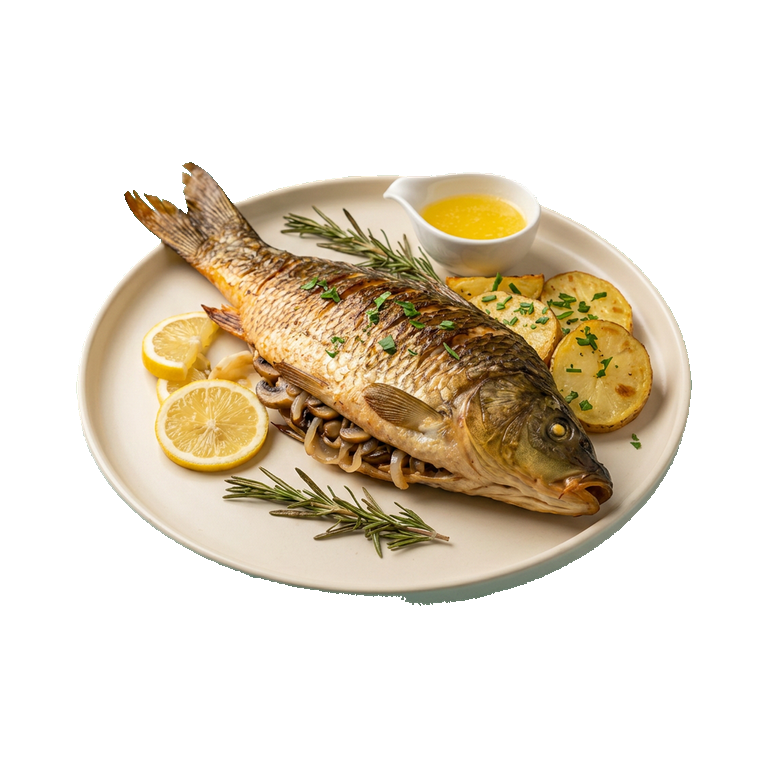
- Baked whole with lemon, herbs and vegetables — a classic method where the fish remains juicy and requires no complex manipulations.
- In soup or fish broth, carp gives a rich stock, especially if you use the head and bones. Add potatoes, onions and dill — you'll get a hearty, warming soup.
- Smoking — one of the best ways to deal with the specific aroma. Smoked carp becomes an appetizer that keeps longer and tastes completely different.
- Pan frying is suitable for fillets or steaks. Breading or dusting with flour will help you achieve a crispy crust on the outside and tender meat inside.
- Marinating before cooking — vinegar, wine or kefir for several hours will soften the taste and eliminate excess odor.
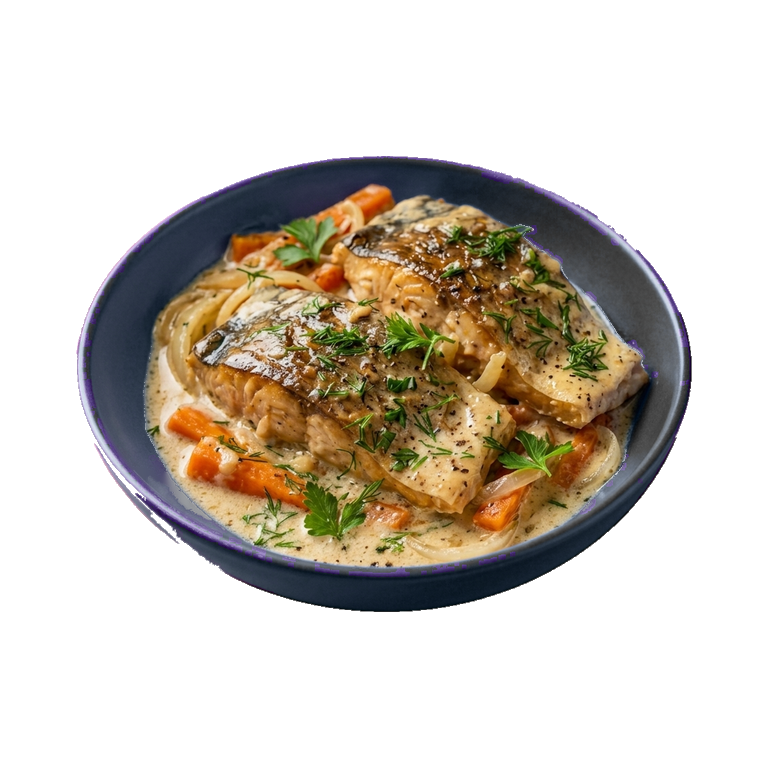
Carp pairs well with acidity: lemon, vinegar, tomatoes. Spices — black pepper, paprika, cloves — add depth. Choose herbs boldly: dill, parsley, thyme, bay leaf. Vegetables — potatoes, carrots, onions — become part of the dish, absorbing the fish juice.
Selection and Storage
Fresh carp should smell of the sea and water, but not of mud. The gills should be bright red, the eyes transparent, and the scales shiny. If the smell raises any doubts, it's better not to take the risk. Frozen carp is quite an acceptable option if thawed properly in the refrigerator, not at room temperature.
Keep fresh carp in the refrigerator for no more than two days, wrapped in paper or placed on ice. Before cooking, let it soak in cold water with lemon — this will help eliminate the muddy smell. Fillets and steaks can be frozen for several months, whole fish — for one to two months.
Carp is not for lazy cooks. It is a fish that requires preparation, respect for its flavor, and willingness to spend time. But the result is worth it: a dense, satisfying dish that warms and nourishes.
Nutrition
per 100 g
- Calories
- 112 kcal
- Protein
- 18.4 g
- Fat
- 5.3 g
- Carbs
- 0 g
Micronutrients
per 100 g
Macronutrients
- Fiber
- 0 g
- Sugars
- 0 g
- Saturated fat
- 1.083 g
- Monounsaturated fat
- 2.328 g
- Polyunsaturated fat
- 1.431 g
- Omega-3 (EPA + DHA)
- 0.352 g
- Cholesterol
- 66 mg
- Water
- 76.31 g
Minerals
- Sodium
- 49 mg
- Potassium
- 333 mg
- Calcium
- 41 mg
- Magnesium
- 29 mg
- Phosphorus
- 415 mg
- Iron
- 1.24 mg
- Zinc
- 1.48 mg
- Copper
- 0.06 mg
- Manganese
- 0.04 mg
- Selenium
- 12.6 mcg
Vitamins
- Vitamin A (RAE)
- 9 mcg
- Vitamin D
- 24.7 mcg
- Vitamin E
- 0.63 mg
- Vitamin K
- 0.1 mcg
- Vitamin C
- 1.6 mg
- Vitamin B1 (thiamin)
- 0.12 mg
- Vitamin B2 (riboflavin)
- 0.06 mg
- Vitamin B3 (niacin)
- 1.64 mg
- Vitamin B5 (pantothenic acid)
- 0.75 mg
- Vitamin B6
- 0.19 mg
- Vitamin B9 (folate, DFE)
- 15 mcg
- Vitamin B12
- 1.5 mcg
Measures and weight
- 1 pcs
- 1000 g
Measure calculator
- Weight
- 100 g
- Calories
- 112 kcal