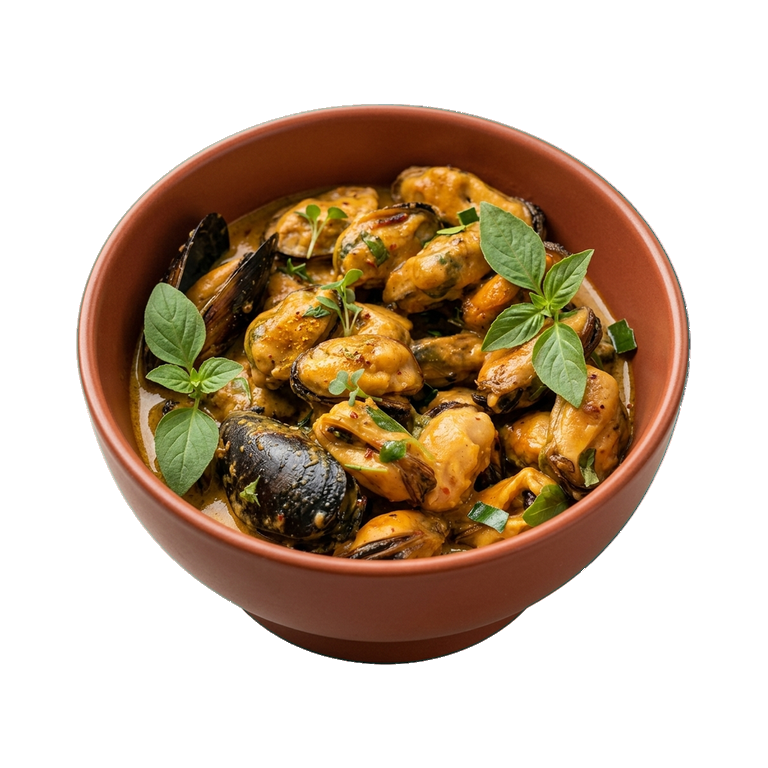
Usuba
Usuba
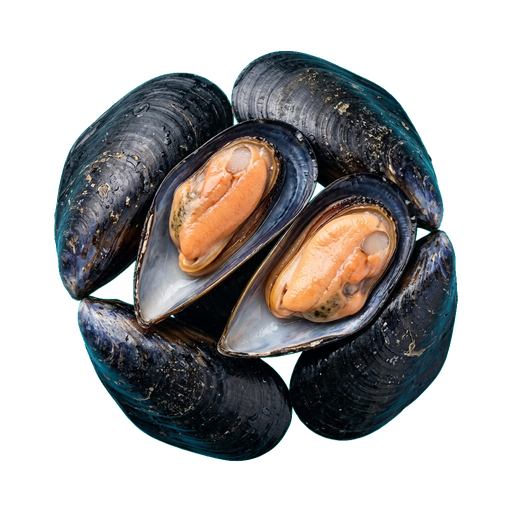
Mussels
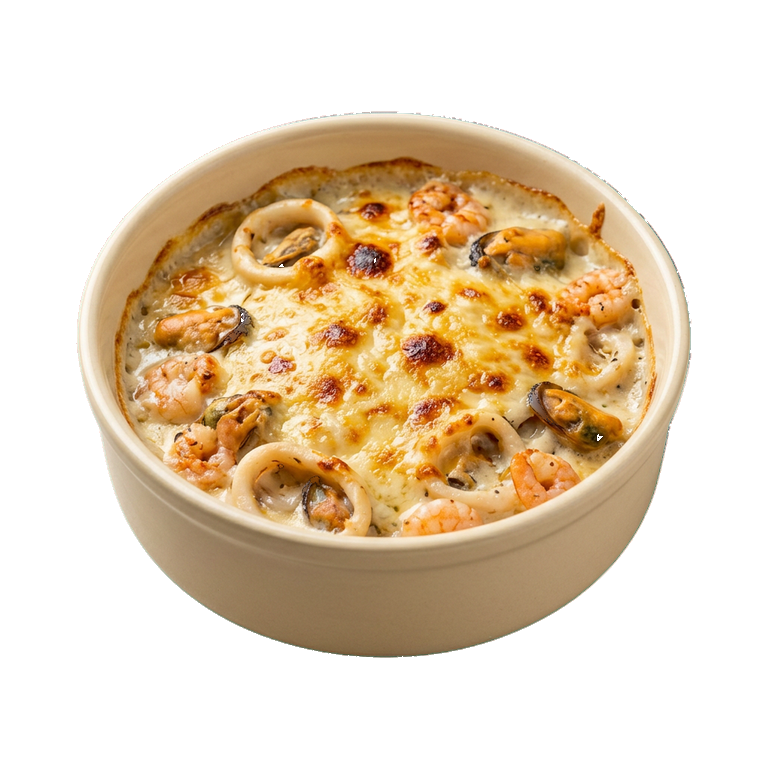
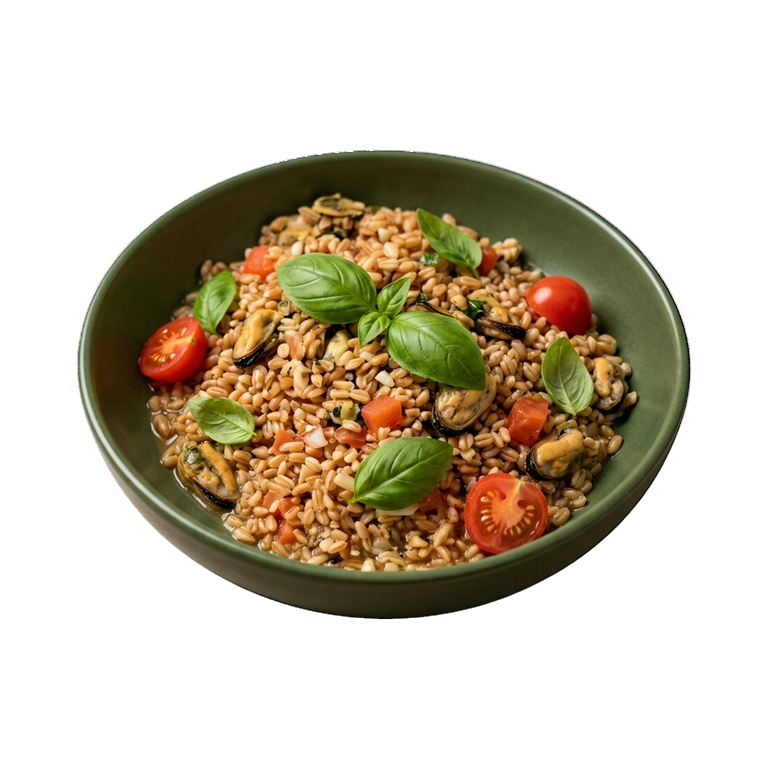
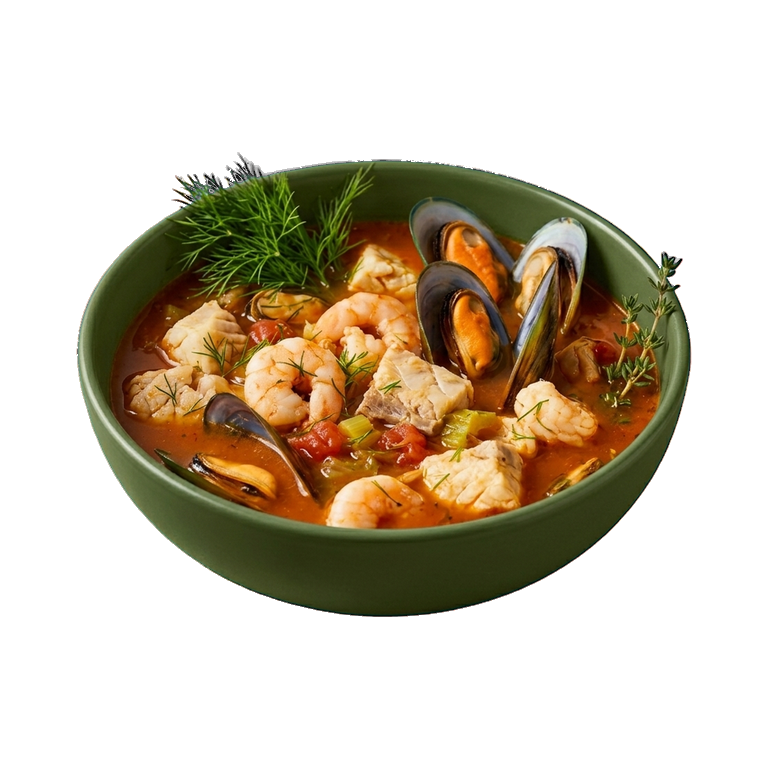
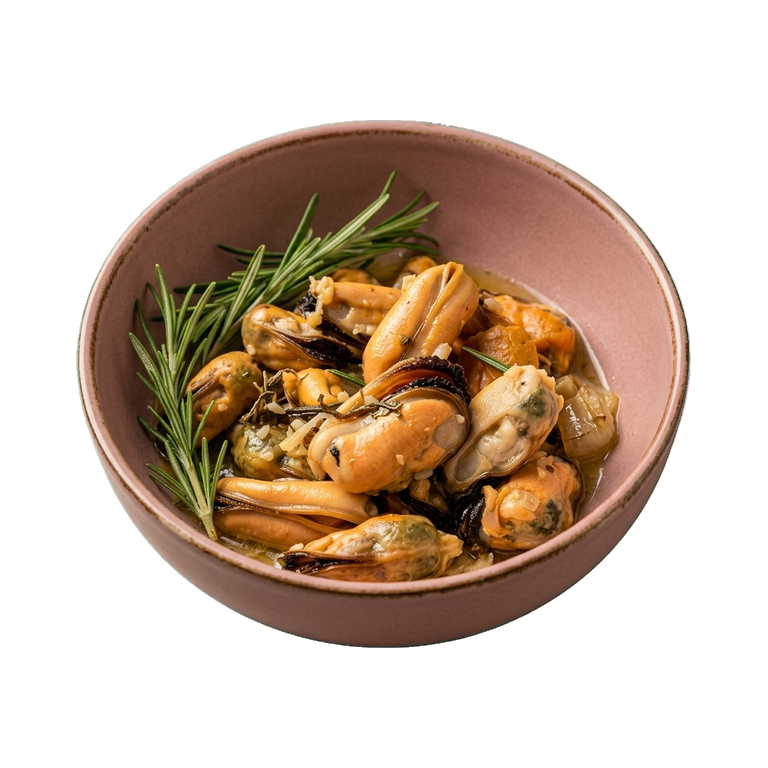
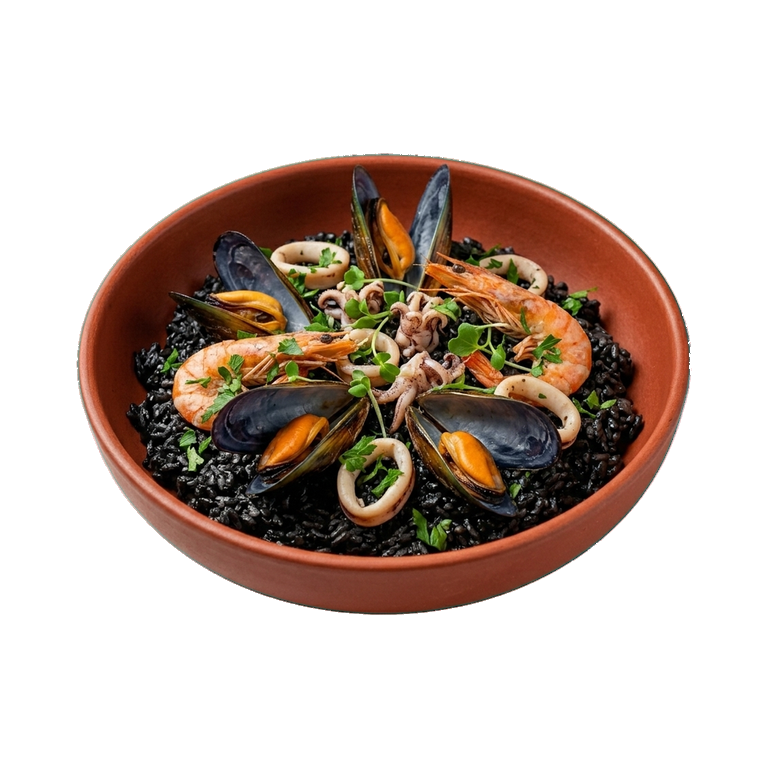
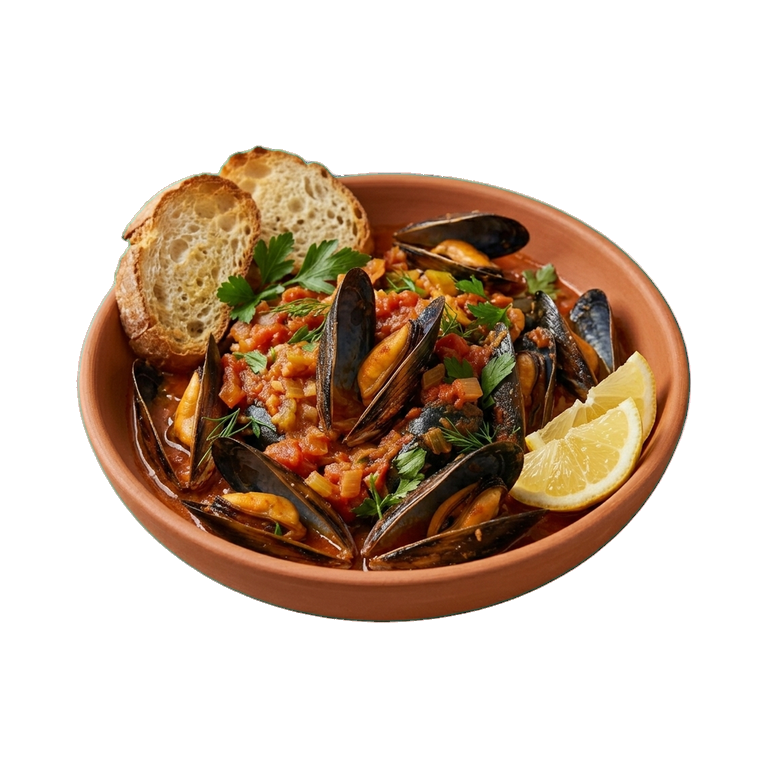
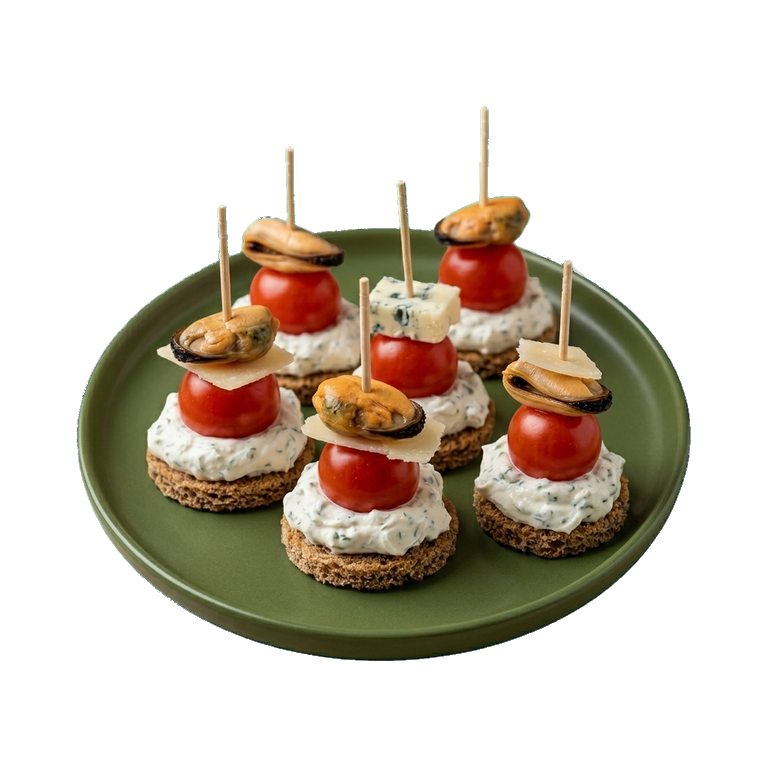
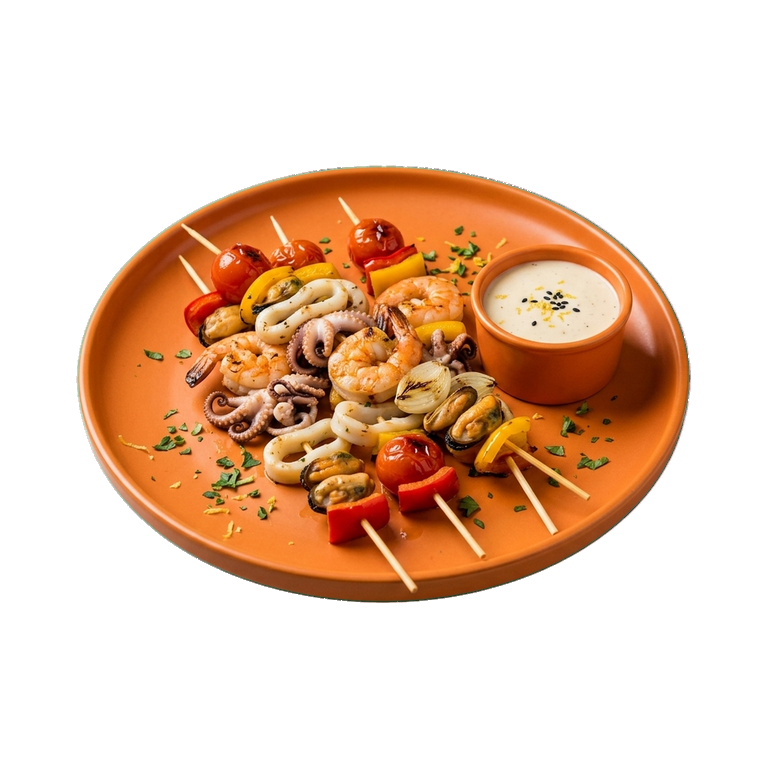
Mussels are bivalve mollusks with tender meat featuring a slightly sweet flavor and a light sea aroma. In cooking, they are used in pastas, risottos, soups, and appetizers, prepared by steaming, stewing, or sautéing. When selecting mussels, it is important to ensure that the shells are tightly closed, and when cooked they will open — mussels that remain closed after cooking should not be eaten.
Micronutrients
per 100 g
Minerals
Vitamins
- AVitamin A (RAE)48mcg6% DV
- EVitamin E0.55mg4% DV
- KVitamin K0.1mcg0% DV
- CVitamin C8mg8% DV
- B1Vitamin B1 (thiamin)0.16mg11% DV
- B2Vitamin B2 (riboflavin)0.21mg12% DV
- B3Vitamin B3 (niacin)1.6mg8% DV
- B5Vitamin B5 (pantothenic acid)0.5mg10% DV
- B6Vitamin B60.05mg3% DV
- B9Vitamin B9 (folate, DFE)42mcg11% DV
- B12Vitamin B1212mcg400% DV
About
Mussels are a seafood delicacy that is easy to cook and hard to spoil. Mussel meat is tender, with a light briny flavor and pleasant texture. They absorb the aromas of sauces and spices without overpowering them with their own taste — an ideal compromise for those who want seafood but are afraid of strong odors.
Aroma and Taste
Fresh mussels smell like the sea — this is normal and even desirable. The smell should be clean, without mustiness and ammonia. The taste is delicate, slightly sweet, with mineral notes. When boiled or stewed, mussels quickly release their juice, which becomes the basis of the sauce and becomes enriched with their natural salt.
Role in dishes
Mussels are versatile: they work in pasta, risotto, soups, salads, and as a standalone dish. The main rule is not to overcook them. Just 3–5 minutes after boiling is enough for the shells to open. Overcooked mussels become rubbery and lose their flavor.
Perfect Pairings
- White wine, garlic and parsley — a classic duo
- Tomatoes and basil for Mediterranean character
- Chili pepper and coconut milk for Asian flair
- Lemon and olive oil for simplicity and freshness
- Cream and nutmeg for a softer, more delicate taste
Selection and Storage
Buy mussels from trusted sources — supermarket seafood departments or specialized shops. Shells should be closed or close when touched. Open mussels that don't respond to stimulation are a sign that they are dead and unfit for consumption.
Store mussels in the refrigerator at a temperature of 0–4 °C in a bowl covered with a damp cloth, but not in a sealed container — they need air. Use within 1–2 days after purchase. Before cooking, rinse under cold water and remove the beard (thin threads by which the mussel attaches to the surface).
Preparation for cooking
- Rinse the mussels under running water, scrubbing the shells with a brush
- Remove the beard — pull it to the side or scrape it off with a knife
- Discard mussels with cracked shells and those that do not close
- Cook immediately or keep in the refrigerator until cooking
After cooking, discard any mussels that failed to open their shells — this is a sign that they were dead before cooking and are not suitable for consumption.
Nutrition
per 100 g
- Calories
- 77 kcal
- Protein
- 11.5 g
- Fat
- 2 g
- Carbs
- 3.3 g
Micronutrients
per 100 g
Macronutrients
- Fiber
- 0 g
- Sugars
- 0 g
- Saturated fat
- 0.425 g
- Monounsaturated fat
- 0.507 g
- Polyunsaturated fat
- 0.606 g
- Omega-3 (EPA + DHA)
- 0.441 g
- Cholesterol
- 28 mg
- Water
- 80.58 g
Minerals
- Sodium
- 286 mg
- Potassium
- 320 mg
- Calcium
- 26 mg
- Magnesium
- 34 mg
- Phosphorus
- 197 mg
- Iron
- 3.95 mg
- Zinc
- 1.6 mg
- Copper
- 0.09 mg
- Manganese
- 3.4 mg
- Selenium
- 44.8 mcg
Vitamins
- Vitamin A (RAE)
- 48 mcg
- Vitamin D
- 0 mcg
- Vitamin E
- 0.55 mg
- Vitamin K
- 0.1 mcg
- Vitamin C
- 8 mg
- Vitamin B1 (thiamin)
- 0.16 mg
- Vitamin B2 (riboflavin)
- 0.21 mg
- Vitamin B3 (niacin)
- 1.6 mg
- Vitamin B5 (pantothenic acid)
- 0.5 mg
- Vitamin B6
- 0.05 mg
- Vitamin B9 (folate, DFE)
- 42 mcg
- Vitamin B12
- 12 mcg
Measures and weight
- 1 pcs
- 15 g
- 1 can
- 200 g
Measure calculator
- Weight
- 100 g
- Calories
- 77 kcal