Usuba
Usuba
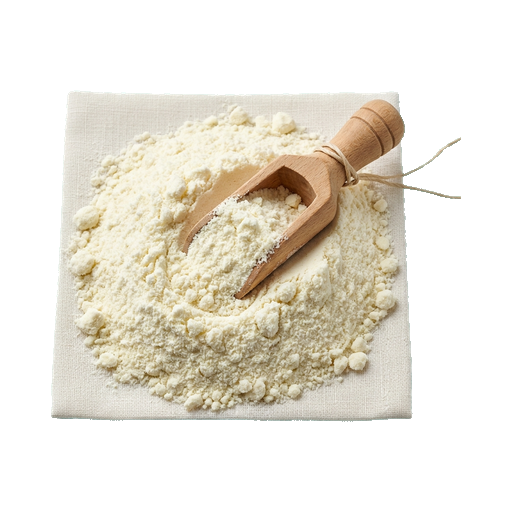
Dry milk
Dry milk is a dehydrated dairy product obtained by removing moisture from cow's milk, which allows it to be stored for long periods without refrigeration. In cooking, it is used for reconstituting milk, adding to dough, porridges, sauces, and baked goods, as well as for enhancing the flavor and texture of dishes. When choosing, pay attention to the color (should be creamy, without yellow or dark tones) and store in an airtight container in a cool place, as dry milk quickly absorbs moisture and foreign odors.
Micronutrients
per 100 g
Minerals
Vitamins
- AVitamin A (RAE)258mcg30% DV
- DVitamin D0.5mcg3% DV
- EVitamin E0.58mg4% DV
- KVitamin K2.2mcg2% DV
- CVitamin C8.6mg9% DV
- B1Vitamin B1 (thiamin)0.28mg19% DV
- B2Vitamin B2 (riboflavin)1.21mg67% DV
- B3Vitamin B3 (niacin)0.65mg3% DV
- B5Vitamin B5 (pantothenic acid)2.27mg45% DV
- B6Vitamin B60.3mg15% DV
- B9Vitamin B9 (folate, DFE)37mcg9% DV
- B12Vitamin B123.3mcg110% DV
About
Dry milk is a concentrated milk powder obtained by evaporating moisture from regular milk. In the kitchen, it works as a universal helper: it can be reconstituted into liquid for drinking, added to dough for baking, or used as a thickener and flavoring agent in sauces and creams. Its main advantage is a long shelf life and compactness, while the milk flavor remains recognizable.
Taste and Aroma
Dry milk has a sweet, slightly caramel flavor — a result of heat treatment during production. The aroma is milky, but more concentrated, sometimes with a subtle note of melted butter. When diluted with water, the taste approaches that of regular milk, although some notice a slight «dryness» in the flavor profile. This is normal and disappears if you use the milk as part of a dish rather than drinking it separately.
Where to use it
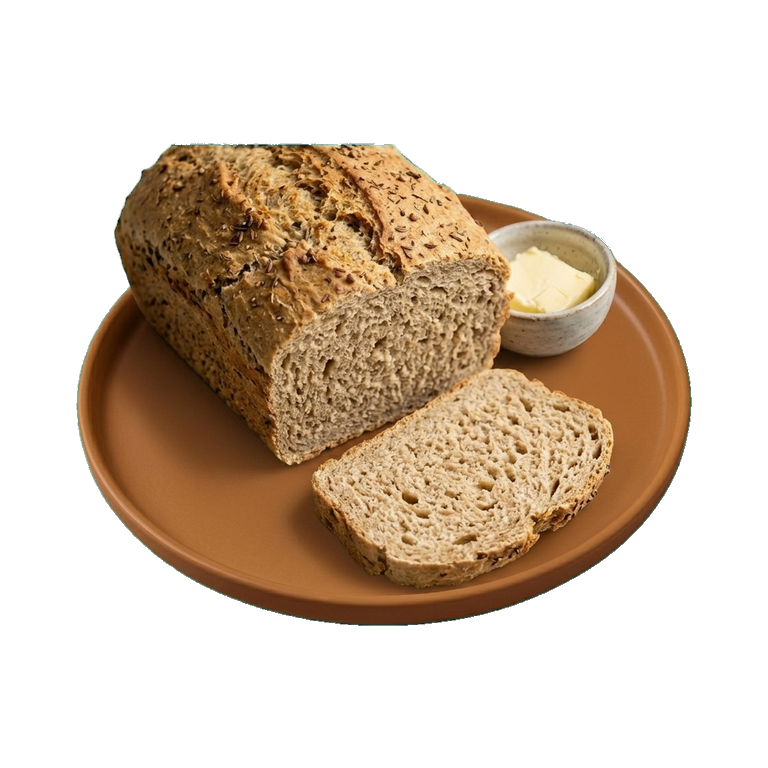
- Baking: add to dough for buns, cookies and bread — milk improves structure and makes the crumb softer
- Creamy sauces and gravies: dissolve in a small amount of water and use instead of fresh milk
- Porridges and milk soups: sprinkle directly into the dish or dilute in advance
- Creams and fillings: mix with butter and sugar for a rich milk flavor
- Milk drinks: dilute in a ratio of 1 part powder to 3–4 parts water
- Ice cream and desserts: provides creaminess and stabilizes structure
How to calculate the quantity
Standard ratio: 1 part powdered milk to 3–4 parts water gives milk similar in consistency to skim or semi-fat milk. If you need richer milk, reduce the water. In baking, powdered milk is often added to dry ingredients at a rate of 2–3 tablespoons per portion of dough. Start with a smaller amount and add to taste — the milk flavor can be overpowering if you use too much.
Food Pairings
Dry milk works well with vanilla, cinnamon, and nutmeg — they enhance its milky sweetness. In savory dishes, it pairs with garlic, onion, and herbs: add it to a creamy sauce for pasta or fish. Milk powder intensifies the creaminess of dishes, so it combines well with butter, eggs, and cheese. Avoid using it simultaneously with dairy products — the milky flavor can become too heavy.
Selection and Storage
When purchasing, pay attention to the color: good dry milk has a cream or light yellow tint. White color may indicate the addition of starch or other fillers. Check the production date — fresher milk reconstitutes better and has a cleaner taste. The packaging should be intact, without damp spots or lumps.
Store powdered milk in an airtight container in a cool, dry place, away from sunlight. Moisture is the number one enemy: even slight dampness will turn the powder into lumps. If the package is open, transfer the contents to a glass jar with a tight-fitting lid. When stored properly, milk maintains its quality for 1–2 years. A musty or rancid smell is a sign that the product has spoiled and should not be used.
If you're baking using a recipe that calls for fresh milk but you don't have any on hand, substitute it with powdered milk: use half the amount of powder dissolved in the same water specified in the recipe. The result will be practically identical, and sometimes even better — the milk won't curdle at high temperatures.
Nutrition
per 100 g
- Calories
- 496 kcal
- Protein
- 26.3 g
- Fat
- 6.9 g
- Carbs
- 38 g
Micronutrients
per 100 g
Macronutrients
- Fiber
- 0 g
- Sugars
- 38.42 g
- Saturated fat
- 16.742 g
- Monounsaturated fat
- 7.924 g
- Polyunsaturated fat
- 0.665 g
- Omega-3 (EPA + DHA)
- 0 g
- Cholesterol
- 97 mg
- Water
- 2.47 g
Minerals
- Sodium
- 371 mg
- Potassium
- 1330 mg
- Calcium
- 912 mg
- Magnesium
- 85 mg
- Phosphorus
- 776 mg
- Iron
- 0.47 mg
- Zinc
- 3.34 mg
- Copper
- 0.08 mg
- Manganese
- 0.04 mg
- Selenium
- 16.3 mcg
Vitamins
- Vitamin A (RAE)
- 258 mcg
- Vitamin D
- 0.5 mcg
- Vitamin E
- 0.58 mg
- Vitamin K
- 2.2 mcg
- Vitamin C
- 8.6 mg
- Vitamin B1 (thiamin)
- 0.28 mg
- Vitamin B2 (riboflavin)
- 1.21 mg
- Vitamin B3 (niacin)
- 0.65 mg
- Vitamin B5 (pantothenic acid)
- 2.27 mg
- Vitamin B6
- 0.3 mg
- Vitamin B9 (folate, DFE)
- 37 mcg
- Vitamin B12
- 3.3 mcg
Measures and weight
- 1 tbsp
- 8.3 g
- 1 tsp
- 2.8 g
- 1 cup
- 137.5 g
Measure calculator
- Weight
- 100 g
- Calories
- 496 kcal