Usuba
Usuba
Cream cheese
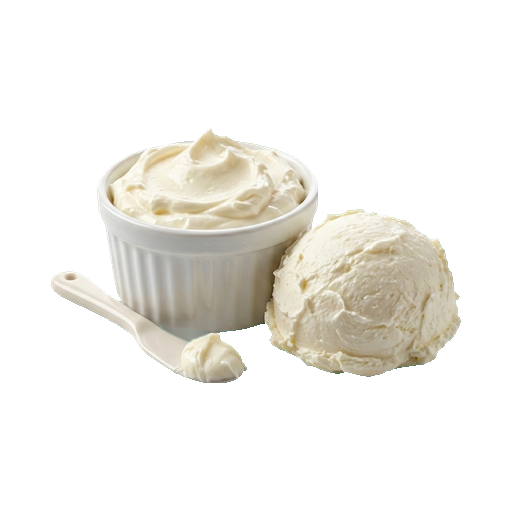
A soft fresh cheese with a delicate, almost creamy texture and slightly tangy flavor that spreads well on bread and mixes easily with other ingredients. Used in desserts, cheesecakes, pastas, and appetizers, as well as a base for creamy sauces and fillings. When choosing, pay attention to the expiration date, as this cheese is perishable, and when substituting, keep in mind that its consistency is thicker than yogurt but softer than hard cheese varieties.
Micronutrients
per 100 g
About
Cream cheese is one of the most versatile dairy products in the kitchen. Its delicate, creamy texture and mild buttery flavor make it ideal for both sweet and savory dishes. Unlike hard cheeses, it does not require long aging and is ready to use immediately after production.
Taste and Texture
Cream cheese has a delicate, slightly tangy flavor with pronounced milk sweetness. The texture is dense, yet spreads easily and mixes well with other ingredients. It has no sharp aromatic notes, which allows it to blend harmoniously into a wide variety of recipes.
Where to use
Cream cheese is a true helper in the kitchen. It is spread on bread and sandwiches, added to appetizers and pâtés, and used as a base for creams and glazes. In hot dishes, it creates delicate sauces, and in baking, it makes the dough softer and airier.
- Filling for cheesecakes, cupcakes and pies
- Base for creamy soups and sauces
- Component of dip sauces and pâtés
- Glaze for cakes and gingerbread
- Additive for pasta casseroles and lasagna
- Filling for pancakes and syrniki
How to Choose and Store
When purchasing, pay attention to the production date and expiration date — cream cheese is a perishable product. The packaging should be intact, without damage. Good cream cheese has a uniform color without spots or layers.
Store the product in the refrigerator at a temperature of 2–6 degrees. An unopened package can be kept for several weeks, but after opening, the cheese is best used within 7–10 days. Before use, let it warm up a bit at room temperature — this way it spreads better and mixes more easily with other ingredients.
Practical Tips
- For glazes and creams, mix cream cheese with butter in equal proportions — this will give you a more pliable consistency
- If the cheese is too hard, soften it in the microwave for 10–15 seconds or leave it at room temperature for 15–20 minutes
- Add cream cheese to sauces at the end of cooking to avoid lumps — pre-mix it with a small amount of liquid
- For savory dishes, it pairs well with herbs, garlic, lemon juice, and hot spices
Nutrition
per 100 g
- Calories
- 340 kcal
- Protein
- 5.9 g
- Fat
- 34.4 g
- Carbs
- 4.1 g
Micronutrients
per 100 g
Macronutrients
- Saturated fat
- 19.73 g
- Monounsaturated fat
- 6.924 g
- Cholesterol
- 101 mg
- Water
- 54.72 g
Minerals
- Sodium
- 367.8 mg
- Potassium
- 124.8 mg
- Calcium
- 97.11 mg
- Magnesium
- 8.91 mg
- Phosphorus
- 107.7 mg
- Iron
- 0 mg
- Zinc
- 0.59 mg
- Copper
- 0 mg
- Manganese
- 0 mg
- Iodine
- 34.9 mcg
Vitamins
- Vitamin K
- 2.4 mcg
- Vitamin B1 (thiamin)
- 0.04 mg
- Vitamin B3 (niacin)
- 0.09 mg
- Vitamin B6
- 0.04 mg
- Vitamin B12
- 0 mcg
Measures and weight
- 1 tbsp
- 15 g
- 1 tsp
- 5 g
- 1 cup
- 250 g
Measure calculator
- Weight
- 100 g
- Calories
- 340 kcal