Usuba
Usuba
Onion
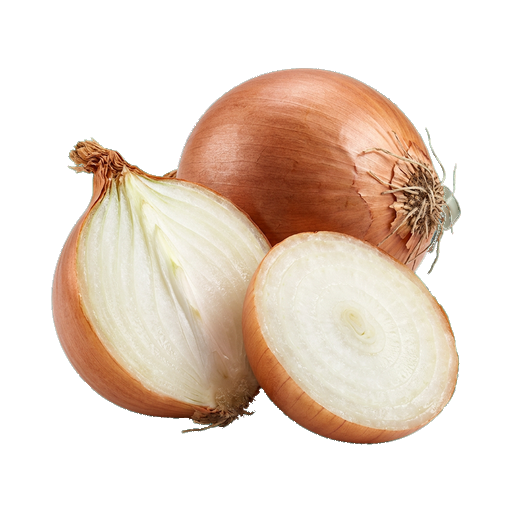
Onion is a versatile vegetable with a sharp, slightly sweet flavor that becomes milder when heat-treated. It serves as the foundation for most sauces, soups, and stews, adding depth and roundness to the taste. When selecting, prefer firm bulbs without soft spots, and store in a dry place to keep it fresh longer and prevent sprouting.
Micronutrients
per 100 g
Minerals
About
Onion in the Kitchen: A Universal Helper
Onion is one of those ingredients that can be found in almost every home and in almost every dish. It doesn't just add flavor, but completely transforms the base of any soup, sauce, or side dish. When onion is fried in oil, it loses its sharpness and becomes soft, slightly sweet, almost caramelized. When added raw, it gives the dish piquancy and freshness. It is this versatility that makes it irreplaceable.
Taste and Aroma
Fresh onion has a sharp, slightly bitter taste with pungent notes. When heated, it softens, sweetness becomes more pronounced, and sharpness fades away. The longer the onion cooks, the more it loses its aggressiveness and acquires depth. The smell of onion penetrates everywhere — into hands, into clothes, into breath — but this is the price for its culinary power.
Where and how to use it
- Sautéing at the beginning of cooking — a classic method for soups, stews, sauces, and gravies
- Raw form — in salads, marinades, on sandwiches for spiciness and freshness
- Caramelizing on low heat — for side dishes, pizza, pasta, when you need softness and sweetness
- In soups and broths — the flavor base, often combined with carrots and celery
- Baked whole or in halves — as a standalone dish or side dish
Different types — different tasks
Yellow onion is the most common and versatile. It stores well, has a balanced flavor, and is suitable for most dishes. White onion is milder and sweeter, often used raw or in light dishes. Red onion is beautiful and sweet, ideal for salads and marinades, where its color plays a role. Green onion (scallion) is a completely different ingredient, more delicate and fresh, suitable for final garnish and adding to cold dishes.
Selection and Storage
Choose onions with dry, tight skin without soft spots or signs of mold. The bulb should be heavy for its size — this is a sign of juiciness. Avoid onions with green sprouts, as they are already starting to spoil.
Onions keep well for a long time — in a cool, dry, dark place they can last several months. Basements, pantries, or shelves away from windows are ideal. The main thing is to avoid moisture and direct sunlight. Sliced onions are best used immediately, but in a closed container in the refrigerator they will last a day or two.
Practical cooking tips
- Chop onions immediately before use — this way it will retain maximum flavor and aroma
- If you need softness and sweetness — fry onions over medium heat for 10–15 minutes, stirring
- For caramelization, you will need 30–40 minutes over low heat with oil and a pinch of salt
- To avoid tears when chopping, chill the onion in the refrigerator before work or chop it under running water
- Onion pairs well with garlic, tomatoes, peppers, mushrooms and almost any spices
Onion is not just an ingredient, it's the foundation of flavor. Learn to work with it, and your dishes will shine in new ways.
Nutrition
per 100 g
- Calories
- 41 kcal
- Protein
- 1.4 g
- Fat
- 0.2 g
- Carbs
- 9.3 g
Micronutrients
per 100 g
Macronutrients
- Fiber
- 1.7 g
- Sugars
- 4.24 g
- Saturated fat
- 0.042 g
- Monounsaturated fat
- 0.013 g
- Polyunsaturated fat
- 0.017 g
- Omega-3 (EPA + DHA)
- 0 g
- Cholesterol
- 0 mg
- Water
- 89.11 g
Minerals
- Sodium
- 4 mg
- Potassium
- 146 mg
- Calcium
- 23 mg
- Magnesium
- 10 mg
- Phosphorus
- 29 mg
- Iron
- 0.21 mg
- Zinc
- 0.17 mg
- Copper
- 0.04 mg
- Manganese
- 0.13 mg
- Selenium
- 0.5 mcg
Vitamins
- Vitamin A (RAE)
- 0 mcg
- Vitamin D
- 0 mcg
- Vitamin E
- 0.02 mg
- Vitamin K
- 0.4 mcg
- Vitamin C
- 7.4 mg
- Vitamin B1 (thiamin)
- 0.05 mg
- Vitamin B2 (riboflavin)
- 0.03 mg
- Vitamin B3 (niacin)
- 0.12 mg
- Vitamin B5 (pantothenic acid)
- 0.12 mg
- Vitamin B6
- 0.12 mg
- Vitamin B9 (folate, DFE)
- 19 mcg
- Vitamin B12
- 0 mcg
Measures and weight
- 1 pcs
- 150 g
- 1 clove
- 5 g
- 1 head
- 150 g
Measure calculator
- Weight
- 100 g
- Calories
- 41 kcal